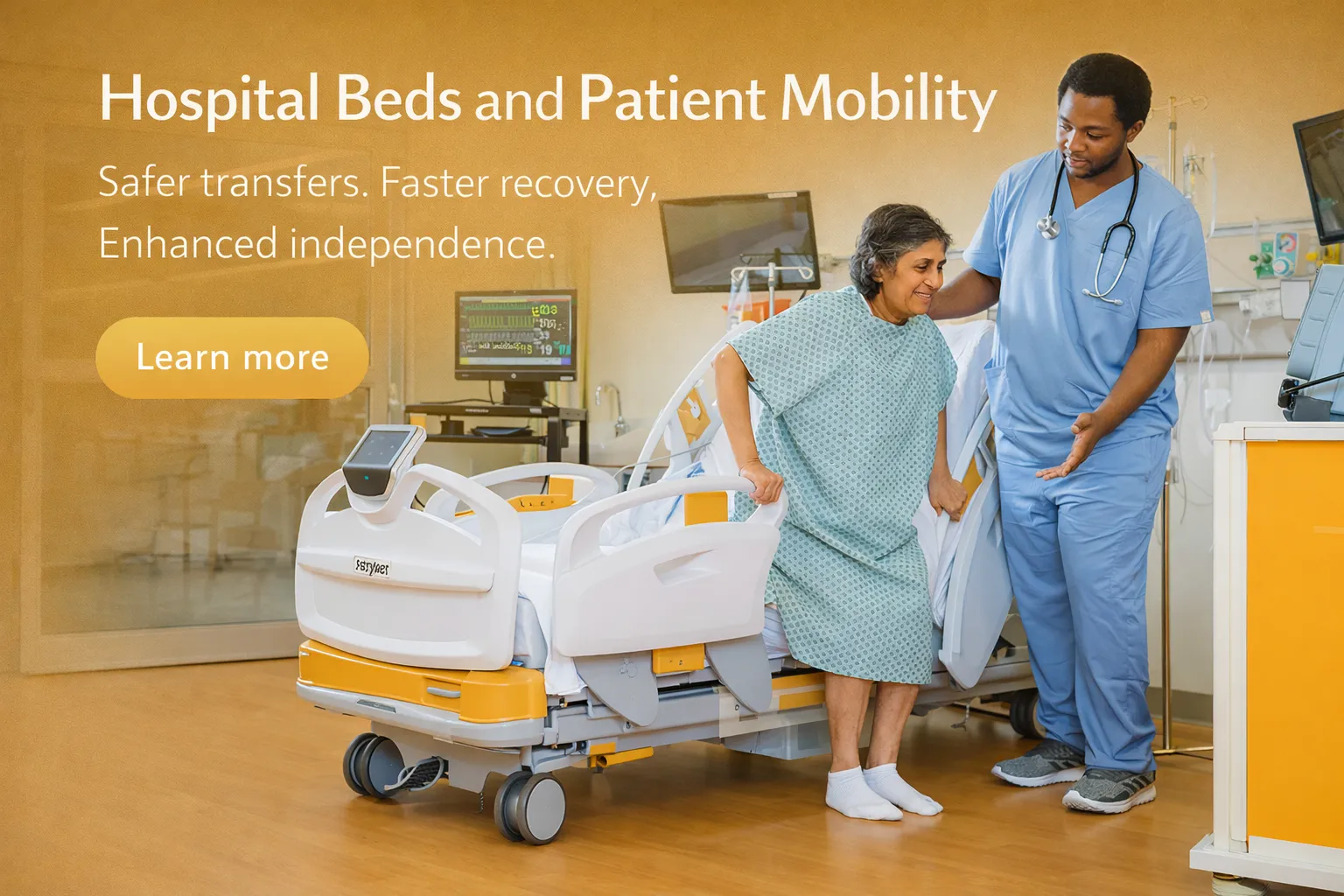
Understanding Patient Mobility in Medical Care
What Is Patient Mobility?
Patient mobility refers to a person’s ability to:
- Change
positions in bed
- Sit
up independently
- Stand
safely
- Transfer
to a wheelchair or commode
- Walk
short or long distances with or without support
Mobility is directly linked to:
- Faster
recovery
- Better
circulation
- Reduced
muscle loss
- Lower
risk of complications such as bedsores and blood clots
Why Mobility Often Declines During Illness
Many patients experience reduced mobility due to:
- Pain
or weakness after surgery
- Stroke
or neurological conditions
- Fear
of falling
- Muscle
loss from prolonged bed rest
- Lack
of proper support during movement
Without the right equipment, patients often avoid
movement, leading to further decline.
Why Normal Beds Restrict Patient Mobility
Standard household beds are designed for sleeping, not
recovery.
They limit mobility because:
- Bed
height is fixed and often too low
- No
support for sitting or standing transitions
- No
side assistance for turning or grip
- Difficult
transfers to wheelchair or commode
This makes patients dependent on caregivers and increases
fear of movement.
How Hospital Beds Actively Support Patient Mobility
Hospital beds are designed to assist movement, not
restrict it. Their features enable patients to move safely and confidently.
Adjustable Height: The Foundation of Safe Movement
Height adjustment is one of the most important mobility
features.
Hospital beds allow:
- Lowering
the bed to a safe sitting height
- Raising
the bed for easy standing and transfers
- Gradual
height changes to suit patient strength
This reduces strain on joints and lowers fall risk during
transfers.
Head Elevation: Supporting Sitting and Upright Posture
Being able to sit up is often the first step toward
mobility.
Hospital beds help patients:
- Move
from lying to sitting without full assistance
- Maintain
upright posture for longer periods
- Prepare
safely for standing or wheelchair transfers
This encourages confidence and gradual independence.
Leg Adjustment: Improving Circulation and Strength
Leg elevation and positioning help:
- Reduce
swelling
- Improve
blood circulation
- Prepare
muscles for standing
Better circulation reduces stiffness and discomfort, making
movement easier.
Side Rails: Mobility Support, Not Barriers
Side rails are often misunderstood as restraints.
In reality, they:
- Provide
handholds for turning and sitting
- Offer
balance support during movement
- Prevent
falls during weak moments
Used correctly, side rails promote self-movement
rather than restrict it.
Enabling Safe Transfers to Wheelchair or Commode
Transfers are one of the most mobility-critical moments.
- Adjust
to wheelchair height
- Reduce
stepping distance
- Provide
stable support during movement
This makes transfers safer for both patients and caregivers.
Encouraging Gradual Independence
Hospital beds allow mobility to be built step-by-step:
- First
sitting independently
- Then
standing with support
- Then
short assisted walks
This structured progression improves recovery outcomes.
Mobility Benefits for Different Patient Groups
Elderly Patients
- Reduced
fear of falling
- Better
joint support
- Increased
confidence in movement
Post-Surgery Patients
- Faster
return to sitting and standing
- Reduced
stiffness
- Lower
complication risk
Stroke and Neurological Patients
- Supported
repositioning
- Safe
posture training
- Improved
rehabilitation participation
Long-Term Bedridden Patients
- Prevents
total immobility
- Maintains
muscle activity
- Reduces
secondary complications
Role of Hospital Beds in Physiotherapy and Rehabilitation
Hospital beds support rehabilitation by:
- Allowing
controlled posture changes
- Supporting
assisted exercises
- Making
therapy safer and more effective
This is especially important for home-based physiotherapy.
Psychological Impact of Improved Mobility
Mobility affects mental health.
When patients can move safely:
- Confidence
improves
- Anxiety
reduces
- Dependence
decreases
- Motivation
to recover increases
Hospital beds create a sense of control and dignity,
which is vital for healing.
Caregiver Benefits: Mobility Without Injury
When patients move more independently:
- Caregiver
lifting reduces
- Injury
risk drops
- Care
becomes less exhausting
Hospital beds support sustainable caregiving.
Choosing the Right Hospital Bed for Mobility Support
For mobility-focused care, look for:
- Height-adjustable
beds
- Smooth
head and leg adjustment
- Stable
side rails
- Easy-to-use
controls
Fully electric hospital beds are often the most effective
for mobility support.
Common Mistakes That Reduce Mobility Benefits
- Keeping
the bed too low or too high
- Not
encouraging patient participation
- Using
side rails incorrectly
- Avoiding
movement due to fear
Proper usage is key to mobility success.
Conclusion: Mobility Begins with the Right Support
Patient mobility is not about pushing someone to move it is
about making movement safe, achievable, and confidence-building.
A hospital bed designed for mobility enables patients to:
- Sit
safely
- Stand
confidently
- Transfer
with support
- Regain
independence gradually
For families caring for patients at home, a hospital bed is
more than comfort equipment it is a mobility partner that supports recovery,
dignity, and long-term wellbeing.
When mobility is supported correctly, patients recover
faster, caregivers remain safer, and home care becomes more effective and
humane.
A well-chosen hospital bed doesn’t keep patients in bed it
helps them get out of it safely.