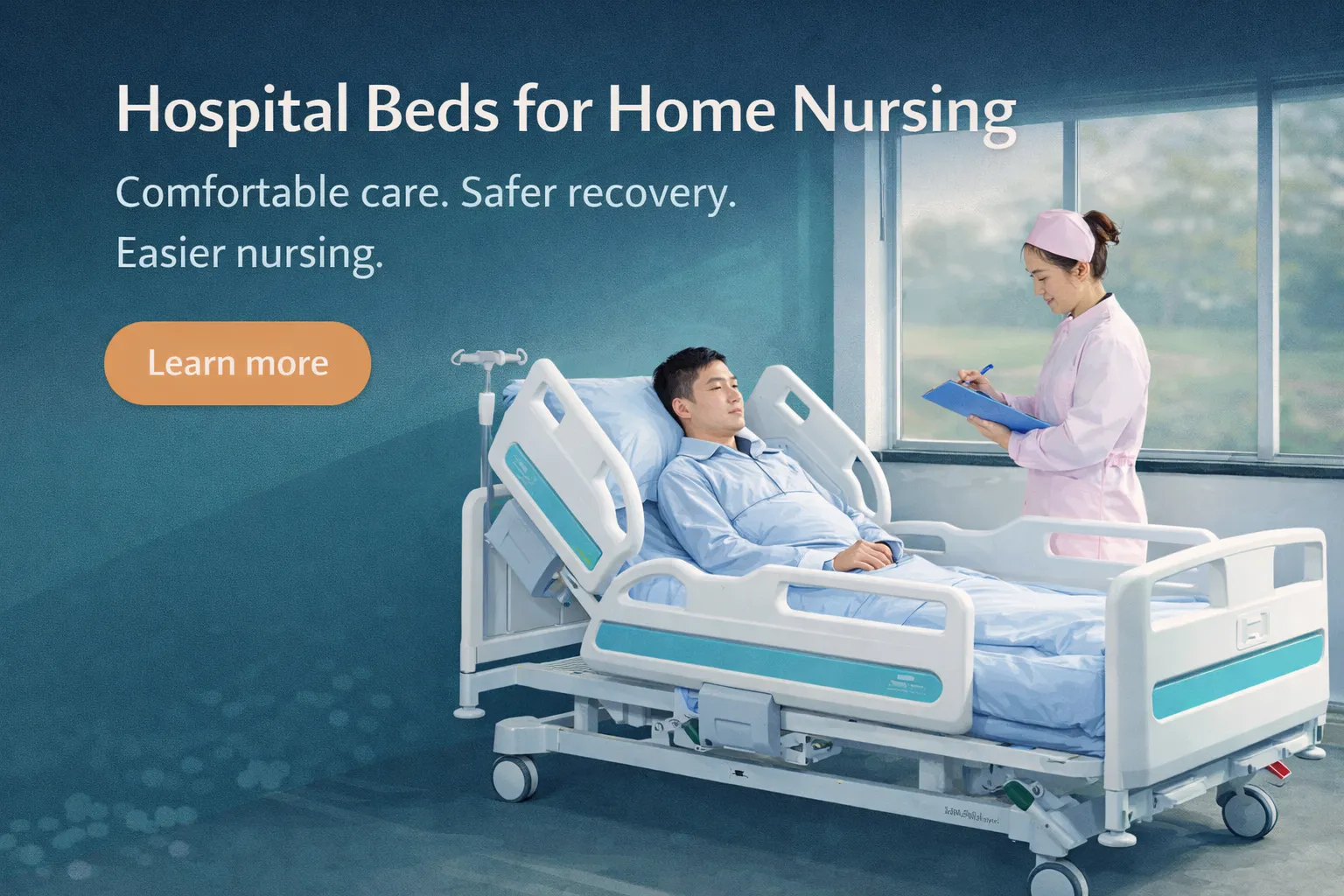
Understanding Home Nursing in the Indian Context
What Is Home Nursing?
Home nursing involves medical and personal care provided at
home by trained nurses or caregivers. Services may include:
- Medication
administration
- Wound
and catheter care
- Monitoring
vital signs
- Post-surgical
recovery support
- Elderly
and chronic illness care
- Palliative
and end-of-life care
Home nursing bridges the gap between hospital treatment and
independent living but only when the home setup supports clinical needs.
Why Normal Beds Are Inadequate for Home Nursing
Most Indian homes use standard household beds, which are not
designed for medical care.
Problems nurses face with normal beds include:
- Fixed
height causing constant bending
- Difficulty
turning or repositioning patients
- Poor
access for wound care and hygiene
- Increased
risk of falls and bedsores
- Slower
response during emergencies
These limitations increase nurse fatigue, caregiver strain,
and patient discomfort, often leading to avoidable complications.
How Hospital Beds Transform Home Nursing Care
Hospital beds are engineered to meet clinical care standards
while fitting into home environments. They enable nurses to work efficiently
and safely while ensuring patients receive proper care.
Adjustable Height: A Foundation for Safe Nursing Care
Height adjustment is one of the most important features for
home nursing.
Hospital beds allow:
- Raising
the bed to waist level for nursing procedures
- Reducing
back, shoulder, and knee strain for nurses
- Safer
transfers from bed to wheelchair or commode
This feature alone prevents long-term musculoskeletal
injuries among caregivers and nurses.
Head and Leg Elevation for Medical Comfort
Patients under home nursing often need:
- Upright
positioning for feeding and medication
- Head
elevation for breathing support
- Leg
elevation to manage swelling and circulation
Hospital beds allow precise positioning without manual
lifting, improving patient comfort and treatment effectiveness.
Side Rails for Safety and Assisted Mobility
Side rails play a vital role in home nursing.
They help by:
- Preventing
accidental falls
- Supporting
patients during movement
- Allowing
partial self-mobility
- Providing
confidence to weak or anxious patients
This reduces fall risk and improves patient independence.
Supporting Long-Term Bedridden and Chronic Care Patients
Home nursing is commonly required for patients with:
- Stroke
or paralysis
- Parkinson’s
disease
- Neurological
disorders
- Severe
arthritis
- Long-term
post-surgical recovery
Hospital beds make daily nursing tasks turning, cleaning,
dressing, and monitoring significantly easier and safer over months or years.
Preventing Bed Sores and Complications
One of the biggest challenges in home nursing is bedsore
prevention.
Hospital beds help by:
- Enabling
frequent repositioning
- Supporting
anti-bedsore mattresses
- Reducing
pressure on vulnerable areas
- Improving
circulation
This dramatically lowers the risk of pressure ulcers and
infections.
Infection Control and Hygiene Support
Maintaining hygiene is critical in-home nursing.
Hospital beds:
- Allow
easier cleaning around the patient
- Support
waterproof and medical-grade mattresses
- Enable
proper patient positioning during hygiene care
This helps maintain hospital-level hygiene standards at
home.
Types of Hospital Beds Suitable for Home Nursing
Manual Hospital Beds
- Basic
functionality
- Suitable
for short-term or mild care
- Requires
physical effort
Semi-Electric Hospital Beds
- Electric
head and leg adjustment
- Manual
height control
- Ideal
for moderate home nursing needs
Fully Electric Hospital Beds (Most Recommended)
- Complete
electric adjustment
- Minimal
physical strain
- Best
for long-term and intensive home nursing
Cost vs Value in Home Nursing Setup
While hospital beds involve an upfront cost, they provide:
- Reduced
nursing injuries and fatigue
- Lower
complication rates
- Faster
patient recovery
- Fewer
emergency hospital visits
For families relying on long-term home nursing, a hospital
bed is a cost-effective healthcare investment.
Psychological Comfort for Patients Receiving Home Nursing
Patients often feel vulnerable during illness.
Hospital beds help by:
- Offering
a sense of medical security
- Improving
comfort and posture
- Allowing
patients to sit, eat, and interact normally
This boosts morale, cooperation with care, and emotional
wellbeing.
Who Should Consider Hospital Beds for Home Nursing?
Hospital beds are strongly recommended for:
- Elderly
patients receiving home nursing
- Post-surgery
recovery patients
- Stroke
and paralysis patients
- Chronic
illness management
- Palliative
and end-of-life care
Conclusion: Creating a Professional Nursing Environment
at Home
Effective home nursing requires more than skilled caregivers
it requires the right infrastructure. A hospital bed is the foundation of safe,
dignified, and efficient nursing care at home.
By supporting proper positioning, reducing physical strain,
preventing complications, and improving patient comfort, hospital beds allow
home nursing to meet hospital-level standards without leaving the comfort of
home.
For families managing medical care at home, investing in a
hospital bed for home nursing is a decision that protects:
- Patient
safety
- Nurse
and caregiver health
- Recovery
outcomes
- Long-term
peace of mind