Imagine someone suddenly collapses in front of you—no pulse, no breathing. Every second counts. In such moments, knowing how to give CPR (Cardiopulmonary Resuscitation) can mean the difference between life and death.
CPR is a critical emergency procedure that keeps blood and oxygen flowing to the brain and vital organs when the heart stops. While many assume it's just for doctors, CPR is something anyone can learn—and everyone should.
This blog will walk you through the exact steps to perform CPR, including hands-only CPR and rescue breathing, with tips for adults, children, and infants.
What Is CPR?
CPR stands for Cardiopulmonary Resuscitation—a life-saving technique used during emergencies such as:
Cardiac arrest
Drowning
Electric shock
Choking
The process includes two main components:
Chest compressions to manually pump the heart
Rescue breaths to provide oxygen (optional for laypersons)
When Should You Give CPR?
You should perform CPR when a person:
Is unconscious
Not breathing, or breathing abnormally (gasping)
Has no pulse
Always check the scene for safety first. Then check the person’s response and breathing. If they’re unresponsive and not breathing—start CPR immediately.
Step-by-Step Guide: How to Give CPR to an Adult
1. Call for Help
Dial 112 or 102 in India (or 911 internationally)
If others are around, ask someone to call emergency services and get an AED (Automated External Defibrillator) if available.
2. Check Responsiveness
Gently tap the person and shout: “Are you okay?”
No response? Check for breathing. If not breathing or only gasping, start CPR.
3. Position the Person
Lay them on a firm, flat surface
Kneel beside them
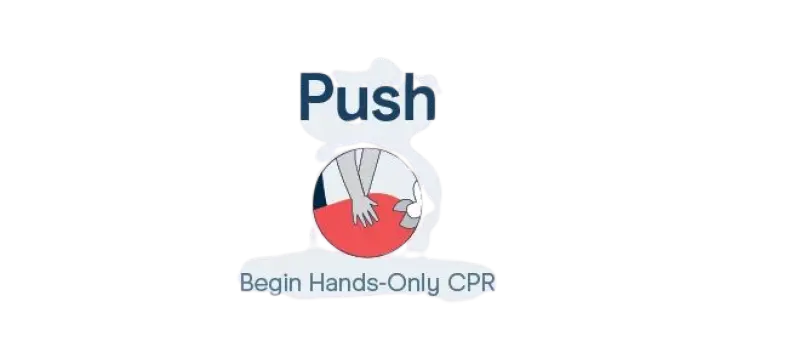
4. Begin Chest Compressions
Place the heel of one hand on the center of the chest (just below the nipples)
Place your other hand on top, interlocking your fingers
Keep your elbows straight and shoulders directly above your hands
Push hard and fast:
Depth: About 2 inches (5 cm)
Rate: 100–120 compressions per minute (same beat as the song “Stayin’ Alive”)
5. Give Rescue Breaths (If Trained)
After 30 compressions, give 2 breaths:
Tilt the head back slightly, lift the chin
Pinch the nose shut
Give a breath lasting 1 second; watch for the chest to rise
Repeat for a second breath
If you're not trained in rescue breathing, stick to chest compressions only. This is called hands-only CPR and is still highly effective.
6. Repeat the Cycle
Continue with 30 compressions and 2 breaths until:
Medical help arrives
The person begins to breathe/move
You are too exhausted to continue
How to Give CPR to a Child (1–12 Years)
Use one hand instead of two for compressions
Compression depth: about 2 inches
Give gentle breaths—don’t overinflate the lungs
Perform 30 compressions and 2 breaths
How to Give CPR to an Infant (Under 1 Year)
Use two fingers for chest compressions
Compression depth: 1.5 inches (4 cm)
Give soft, mouth-to-mouth-and-nose breaths
Perform 30 compressions and 2 gentle puffs of air
Using an AED with CPR
If an AED is available:
Turn it on and follow voice instructions
Expose the chest and attach pads as shown in the diagram
Stand clear while it analyzes the heart rhythm
If advised, deliver a shock
Resume CPR immediately after the shock
AEDs are designed to be used by the general public—they guide you through each step.
Important Tips
Don’t be afraid to act. It’s better to try than to do nothing.
CPR is physically tiring. If possible, rotate with another person every 2 minutes.
Always ensure chest recoil between compressions.
Avoid excessive force while breathing into the person.
Hands-only CPR is perfectly fine if you’re unsure about giving breaths.
CPR Training Matters
While this blog provides a solid foundation, nothing replaces hands-on CPR training. Consider enrolling in a certified first aid and CPR course through:
Indian Red Cross Society
St. John Ambulance India
Private medical training centers
Online certification platforms like AHA or WHO-based courses
Final Thoughts
Cardiac arrest can happen to anyone, anywhere, anytime—at home, on the road, or even in the workplace. By learning how to give CPR, you equip yourself with the power to save lives.
CPR is not just a medical procedure—it’s an act of humanity.
For medical training kits, CPR manikins, or first responder kits, visit Aarogyaa Bharat to get affordable, hospital-grade equipment delivered to your doorstep.