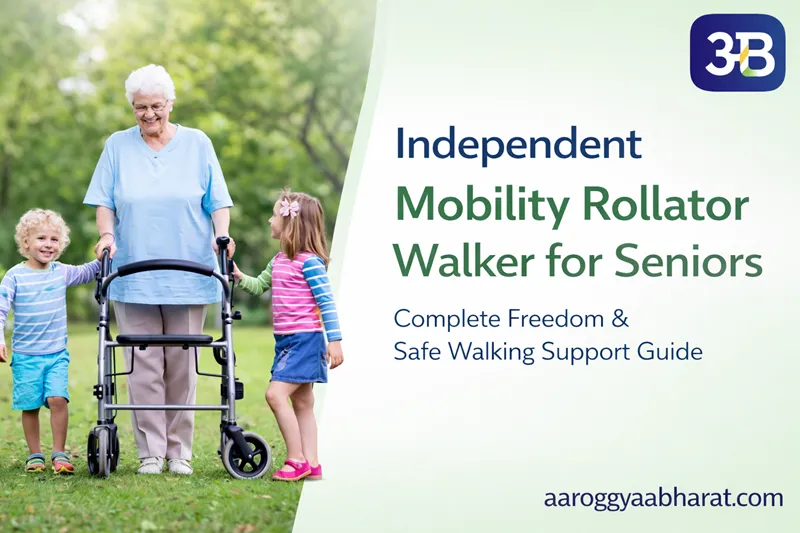
Unlike traditional walkers that require lifting with each
step, rollator walkers glide forward easily, making them ideal for seniors who
want to move independently without excessive effort. Families exploring
hospital pages and home care equipment guides frequently discover that rollator
walkers are recommended by physiotherapists for seniors who still have moderate
walking ability but require balance support. Aarogyaa Bharat’s rehabilitation
section highlights rollator walkers as advanced mobility aids that help seniors
maintain independence while reducing the risk of falls. Healthcare calculators
used to evaluate mobility safety often recommend rollators for elderly
individuals who want to remain active while managing mobility limitations.
Understanding the Role of Rollator Walkers in Senior
Independence
Mobility plays a major role in maintaining independence for
elderly individuals. When seniors can walk safely and move around their homes
or communities without assistance, they retain a sense of control and
confidence in daily life. Rollator walkers support this independence by
providing balance assistance while allowing natural walking movement.
Physiotherapists listed on hospital pages often recommend rollators for seniors
who require stability but do not want the restrictive movement associated with
traditional walkers. Aarogyaa Bharat’s home care equipment guides explain that
rollator walkers allow seniors to perform daily tasks such as shopping, walking
outdoors, or visiting healthcare facilities without relying entirely on
caregivers. Healthcare calculators designed to measure fall risk frequently
indicate that rollator walkers improve mobility confidence for seniors who
experience mild to moderate balance challenges.
How Rollator Walkers Improve Independent Walking
Rollator walkers are specifically designed to allow seniors
to walk with minimal effort while maintaining stability. The four-wheel design
enables the walker to move smoothly across indoor and outdoor surfaces,
eliminating the need to lift the device between steps. This design allows
seniors to maintain a natural walking rhythm while relying on the rollator for
balance. Hospital pages that guide rehabilitation programs often recommend
rollator walkers during later stages of recovery when patients regain enough
strength to walk independently. Aarogyaa Bharat’s rehabilitation section
highlights rollators as mobility aids that support freedom of movement while
maintaining safety. Healthcare calculators used to measure mobility endurance
often show improved walking performance when seniors use rollator walkers.
Key Features of Rollator Walkers for Elderly Independence
Rollator walkers include several features that enhance both
safety and usability. The four-wheel structure allows smooth movement across
various surfaces, while hand brakes provide control during walking. Many
rollators also include built-in seats that allow seniors to rest during long
walks. Adjustable handle heights ensure the walker aligns correctly with the
user’s posture, reducing strain on shoulders and wrists. Lightweight aluminium
frames make rollators easy to manoeuvre while maintaining durability. Aarogyaa
Bharat’s rehabilitation equipment guides highlight rollators with ergonomic
grips because they improve comfort during extended use. Families reviewing
hospital pages for mobility solutions often prioritize rollator walkers that
combine stability, comfort, and convenience.
Typical Features of Rollator Walkers
|
Feature |
Description |
|
Wheel
Configuration |
Four wheels
for smooth movement |
|
Braking
System |
Hand brakes
for speed control |
|
Frame
Material |
Lightweight
aluminium construction |
|
Seat Option |
Built-in seat
for resting |
|
Height
Adjustment |
Adjustable
handle levels |
|
Storage |
Basket or
pouch for personal items |
Daily Activities Where Rollator Walkers Promote
Independence
Rollator walkers allow elderly individuals to perform
everyday activities without constant assistance. Seniors can use rollators to
move around their homes, walk in nearby parks, shop at local markets, or attend
healthcare appointments. The ability to move independently helps seniors
maintain both physical health and emotional well-being. Aarogyaa Bharat’s home
care equipment guides explain that rollators encourage seniors to stay active
while reducing the risk of falls. Hospital pages often emphasize the importance
of safe mobility aids for elderly individuals who wish to remain independent.
Healthcare calculators used to evaluate fall risk frequently recommend rollator
walkers as preventive mobility devices that support active lifestyles.
Benefits of Rollator Walkers for Elderly Independence
- Encourage
independent mobility for seniors
- Provide
stable balance support during walking
- Allow
smooth movement on indoor and outdoor surfaces
- Reduce
fatigue compared to traditional walkers
- Built-in
seat provides resting support during walks
- Improve
confidence while walking independently
- Suitable
for rehabilitation and physiotherapy programs
- Lightweight
design makes manoeuvring easier
Rollator Walker vs Standard Walker
Different mobility aids offer different levels of support
depending on the user’s physical condition. Standard walkers provide strong
stability but require lifting with each step, which may limit natural walking
movement. Rollator walkers allow continuous rolling movement, making them more
suitable for seniors who want smoother mobility. Patients consulting hospital
pages often transition from standard walkers to rollators as their balance and
strength improve. Aarogyaa Bharat’s rehabilitation section highlights rollator
walkers as ideal mobility aids for seniors who require both stability and
independence. Healthcare calculators used to track mobility progress frequently
indicate that rollators improve walking endurance and flexibility.
Rollator Walker vs Standard Walker
|
Feature |
Rollator
Walker |
Standard
Walker |
|
Wheels |
Four wheels |
Usually, no
wheels |
|
Movement |
Smooth
rolling motion |
Lift and step
motion |
|
Independence |
Encourages
natural walking |
More
restrictive movement |
|
Stability |
Moderate
stability |
Very high
stability |
|
Comfort |
May include
seat and storage |
Basic walking
support |
Choosing the Right Rollator Walker for Independent Living
Selecting the correct rollator walker requires evaluating
the user’s mobility condition, living environment, and lifestyle preferences.
Seniors who frequently walk outdoors may benefit from rollators with larger
wheels that move easily across uneven surfaces. Individuals participating in
physiotherapy programs listed on hospital pages may prefer rollators with
adjustable handles and ergonomic grips. Aarogyaa Bharat recommends reviewing
rollator specifications carefully before purchasing mobility equipment. Healthcare
calculators designed to evaluate fall risk and walking stability can help
families determine whether a rollator walker is the most appropriate mobility
aid for independent living.
Role of Rollator Walkers in Rehabilitation and Active
Aging
Rehabilitation programs often focus on restoring walking
endurance, balance, and coordination after illness or surgery. Rollator walkers
play an important role in these programs because they allow patients to
practice walking while maintaining independence. Physiotherapists listed on
hospital pages frequently recommend rollators during later stages of
rehabilitation when patients begin walking longer distances. Aarogyaa Bharat’s
rehabilitation section explains that rollator walkers help seniors regain walking
confidence while reducing fatigue. Healthcare calculators used to track
rehabilitation progress often measure improvements in walking stability and
endurance over time. With proper use and guidance, rollator walkers support
both recovery and long-term independent mobility.
Conclusion
Rollator walkers provide an excellent mobility solution for elderly individuals who want to maintain independence while ensuring safety during walking. Their four-wheel design allows smooth movement, while features such as hand brakes, adjustable handles, and optional seats improve comfort and usability. Unlike traditional walkers that require lifting, rollator walkers allow seniors to move naturally while maintaining reliable balance support. Aarogyaa Bharat’s home care and rehabilitation equipment collections emphasize the importance of choosing mobility aids that support independence and active aging. By consulting hospital pages, exploring cities pages, and using healthcare calculators to evaluate mobility requirements, families can select rollator walkers that provide safe and comfortable support. With the right rollator walker, elderly individuals can continue enjoying independent and active lifestyles.