Why Bathroom and Bedroom Mobility Is Risky for Seniors
Many elderly individuals experience mobility difficulties in
confined indoor spaces such as bathrooms and bedrooms. These areas often
contain slippery tiles, rugs, furniture edges, and narrow walking paths that
can easily cause imbalance. Bathroom floors become particularly hazardous when
wet, making it difficult for seniors to maintain stable footing. Similarly,
getting up from the bed during nighttime hours may lead to dizziness or muscle
stiffness that increases fall risk. Doctors and physiotherapists featured on Aarogyaa
Bharat hospital pages frequently report that a large percentage of elderly
falls occur inside the home, particularly in bathrooms and bedrooms. Using a
mobility walker in these spaces significantly reduces fall risk by providing
stable support during movement. Walkers help seniors maintain balance while
transitioning from sitting to standing positions or walking short distances
within the house.
How Indoor Walkers Improve Safety at Home
Indoor walkers are designed to provide stable support while
remaining compact enough to manoeuvre around furniture and narrow corridors.
Unlike outdoor walkers that require larger wheels, indoor walkers often feature
rubber-tipped legs that prevent slipping on smooth floors. These walkers
distribute body weight evenly, reducing strain on joints and improving balance
during movement. When seniors wake up during the night or move between rooms,
walkers act as a reliable mobility aid that prevents sudden imbalance.
Physiotherapists often recommend walkers for elderly patients recovering from
surgeries or illnesses who require additional stability during indoor movement.
Rehabilitation specialists listed on Aarogyaa Bharat hospital pages
frequently incorporate walker-assisted walking exercises into recovery programs
to help patients regain confidence and coordination. Over time, consistent use
of walkers improves muscle strength and stability.
Common Situations Where Walkers Help in Bedrooms
Bedrooms often contain obstacles such as bedside tables,
rugs, and furniture that can cause imbalance when seniors walk without support.
Elderly individuals frequently wake up during the night to visit the bathroom,
and sudden standing movements may cause dizziness. A walker placed next to the
bed provides immediate support for safe movement. Seniors can hold the walker
while standing up, ensuring stable balance before taking their first step.
Walkers also help seniors move safely toward wardrobes, chairs, or nearby
seating areas without risking falls. In cases where seniors are recovering from
hip or knee surgeries, doctors listed on Aarogyaa Bharat city pages
strongly recommend walkers for bedroom mobility. These walkers reduce pressure
on joints while supporting safe movement across short distances within the
house.
Importance of Walkers in Bathroom Safety
Bathrooms present one of the highest fall risks for elderly
individuals due to slippery surfaces and limited support structures. Getting up
from the toilet, entering the shower area, or moving across wet floors can be
challenging without mobility support. Walkers provide additional stability
during these activities by offering firm hand support. Seniors can hold the
walker while stepping in or out of the bathroom area, significantly reducing
the chances of slipping. Many walkers designed for bathroom use feature
corrosion-resistant materials that tolerate humid environments. Doctors from orthopaedic
and rehabilitation departments on Aarogyaa Bharat hospital pages often
recommend walkers alongside grab bars and anti-slip mats to improve bathroom
safety. Combining these safety tools creates a safer environment that allows
elderly individuals to perform daily hygiene routines independently.
Features of a Walker Designed for Indoor Use
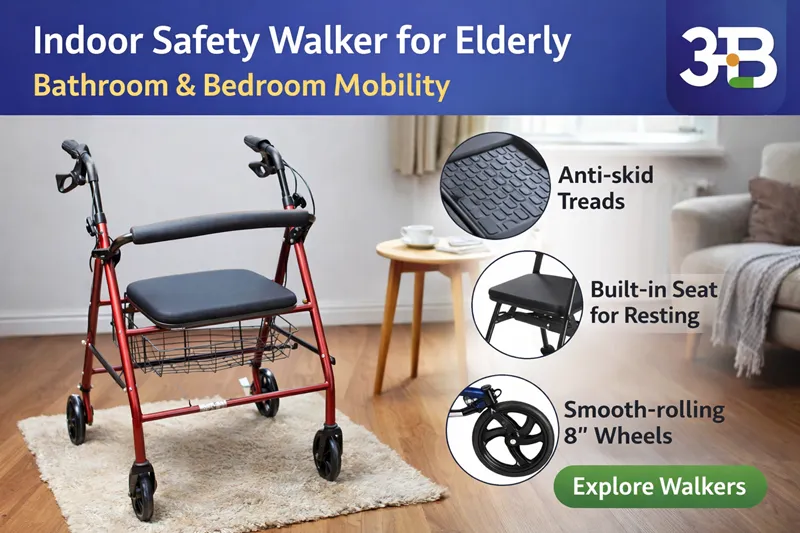
Indoor walkers include several design features that make
them suitable for bathroom and bedroom environments. Lightweight aluminium
frames allow seniors to move the walker easily without excessive effort.
Adjustable height handles ensure proper posture alignment during walking,
reducing strain on the back and shoulders. Non-slip rubber tips provide
excellent grip on tiled floors, preventing accidental slips. Foldable walker
designs allow easy storage when the device is not in use, making them ideal for
compact living spaces. Many physiotherapists listed on Aarogyaa Bharat
healthcare pages recommend walkers with ergonomic grips that reduce hand
fatigue during extended use. These features ensure that seniors can comfortably
use walkers during everyday activities inside the home.
Comparison Between Walking Stick and Indoor Walker
|
Feature |
Walking
Stick |
Indoor
Walker |
|
Support Level |
Mild balance
support |
Strong
stability support |
|
Weight
Distribution |
Limited |
Even body
weight support |
|
Bathroom
Safety |
Moderate |
High safety |
|
Bedroom
Mobility |
Limited |
Excellent |
|
Post-Surgery
Use |
Sometimes |
Frequently
recommended |
This comparison highlights why walkers are often preferred
for elderly individuals who require higher levels of stability during indoor
movement.
Benefits of Using Walkers at Home
• Provides stable support for bathroom and bedroom movement
• Reduces fall risks on slippery floors
• Supports post-surgery rehabilitation
• Improves balance and walking confidence
• Reduces strain on knees and hips
• Helps elderly individuals maintain independence
• Easy to use and manoeuvre indoors
These advantages make walkers one of the most important
mobility aids for elderly individuals living independently at home.
Walker Support in Physiotherapy Recovery Programs
Patients recovering from surgeries, fractures, or
neurological conditions often require structured mobility training.
Physiotherapists frequently incorporate walkers into rehabilitation programs
because they allow controlled walking with stable support. During early
recovery phases, walkers help patients practice walking while maintaining
proper posture and balance. Physiotherapy centers listed on Aarogyaa Bharat
hospital pages use walkers during therapy sessions to help patients regain
mobility after knee replacement, hip surgery, or stroke rehabilitation. These
training sessions gradually increase walking distance and endurance while
ensuring patient safety. Walkers provide the necessary stability that allows
patients to rebuild muscle strength and regain walking confidence.
Using Healthcare Calculators to Track Recovery Progress
Recovery from injuries or surgeries involves monitoring
several health parameters such as walking endurance, physiotherapy progress,
and rehabilitation timelines. Aarogyaa Bharat healthcare calculators
help families estimate recovery durations and mobility improvements based on
physiotherapy schedules and medical conditions. When combined with
walker-assisted mobility routines, these calculators help patients track
walking improvements and rehabilitation milestones. For example, knee
replacement recovery calculators estimate when patients can safely transition
from walkers to independent walking. By integrating healthcare calculators with
physiotherapy guidance and walker usage, seniors can follow a structured
recovery path that improves long-term mobility.
Choosing the Right Walker for Bathroom and Bedroom Use
Selecting the correct walker depends on the user’s height,
mobility needs, and available indoor space. Seniors should choose walkers with
adjustable handles to maintain proper posture during walking. Rubber-tipped
legs are essential for preventing slips on bathroom tiles and smooth flooring.
Lightweight walkers are easier to manoeuvre around furniture and narrow
corridors. Foldable walkers are also convenient because they allow easy storage
when the device is not required. Experts on Aarogyaa Bharat city pages
recommend selecting walkers with ergonomic grips that reduce wrist strain
during daily use. Choosing the right walker ensures safe and comfortable indoor
mobility.
Where to Buy Reliable Walkers in India
Reliable walkers should be purchased from trusted medical
equipment providers that offer clinically recommended mobility aids.
Hospital-grade walkers are designed with durable materials and ergonomic
features that support elderly safety. Aarogyaa Bharat provides high-quality
walkers specifically designed for indoor mobility, rehabilitation support, and
elderly care. With availability across major city pages including Pune,
Mumbai, Delhi, Bangalore, and Hyderabad, Aarogyaa Bharat ensures that
families across India can easily access reliable mobility equipment. These
walkers are selected based on safety standards and recommendations from
healthcare professionals.
Conclusion
Bathrooms and bedrooms are among the most common areas where elderly individuals experience slips and falls due to slippery floors, narrow spaces, and nighttime movement. Walkers designed for indoor use provide essential stability that helps seniors move safely during daily activities such as getting out of bed, visiting the bathroom, or walking across rooms. Lightweight indoor walkers improve balance, reduce strain on joints, and support safe rehabilitation during recovery periods. When combined with physiotherapy guidance, hospital consultations, and healthcare calculators available through Aarogyaa Bharat, walkers become a vital tool for ensuring safe and independent living at home. Choosing the right walker can significantly improve elderly mobility while reducing fall risks and enhancing overall quality of life.