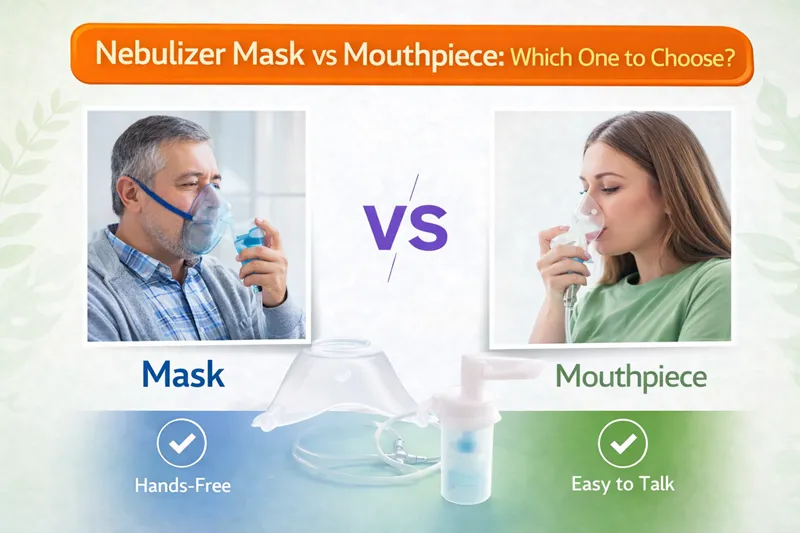
A Complete Guide to Selecting the Right Nebulizer
Accessory for Effective Respiratory Therapy
In Indian households, nebulizers are now widely used for
both children and adults due to rising air pollution, frequent viral
infections, and the growing awareness of early respiratory intervention. Yet
many patients use whichever accessory comes with the nebulizer box without
understanding whether it is actually suitable for their age, condition, or
breathing ability. This often leads to mist leakage, poor lung penetration, and
wasted medication.
At Aarogyaa Bharat - Live Healthy, Live Better, we regularly
guide families who are confused about whether a nebulizer mask or a mouthpiece
is better for their specific medical condition. In this in-depth guide, you
will learn what nebulizer masks and mouthpieces are, how they work, their pros
and cons, which one is better for children and elderly patients, and how to
choose the most effective option for long-term home respiratory care.
What Is a Nebulizer Mask?
A nebulizer mask is a soft, cup-shaped face mask made of
medical-grade plastic or silicone that covers the nose and mouth during
nebulization. It is connected to the nebulizer cup via tubing and allows the
patient to inhale the aerosol mist naturally while breathing normally.
Nebulizer masks are commonly used for infants, young children, elderly
patients, and individuals who struggle with mouth-breath coordination.
One of the biggest advantages of a nebulizer mask is its
ease of use. The patient does not need to actively hold a mouthpiece or
maintain a tight seal with the lips. This makes masks ideal for patients who
are anxious, breathless, bedridden, or unable to follow inhalation instructions
properly. Pediatric nebulizer masks are designed in smaller sizes and often
feature soft edges to improve comfort and reduce skin irritation.
Nebulizer masks are widely used in hospitals and home-care
settings because they are versatile and suitable for a wide range of patients.
They are especially useful for night-time therapy sessions when patients are
sleeping lightly or resting. Caregivers can simply place the mask over the
patient’s face without disturbing them too much.
However, nebulizer masks also have certain limitations. Mist
leakage around the edges can reduce medication delivery efficiency, and some
patients find masks uncomfortable or claustrophobic. Understanding these
trade-offs is essential before choosing a nebulizer mask for long-term use.
What Is a Nebulizer Mouthpiece?
A nebulizer mouthpiece is a small, tube-shaped plastic
device that the patient holds between their lips during nebulization. It
delivers medication directly into the mouth, allowing the patient to inhale the
mist straight into the lungs. Mouthpieces are commonly used by adults and older
children who can follow breathing instructions and maintain a proper seal with
their lips.
One of the biggest advantages of a mouthpiece is its higher
medication delivery efficiency. Because the mist is directed straight into the
mouth with minimal leakage, more medication reaches the lungs compared to a
mask. This makes mouthpieces ideal for patients who require precise dosing and
maximum therapeutic effectiveness.
Mouthpieces are also more hygienic and less prone to facial
skin irritation compared to masks. They do not cover the face, which reduces
the risk of condensation build-up and discomfort. Many patients prefer
mouthpieces because they feel less restrictive and allow easier communication
between breaths.
However, mouthpieces require active participation from the
patient. The user must sit upright, hold the mouthpiece correctly, and breathe
in slowly and deeply through the mouth. This makes mouthpieces unsuitable for
infants, very young children, elderly patients with weak grip strength, and
individuals experiencing severe breathlessness.
How Nebulizer Masks and Mouthpieces Deliver Medication
Both nebulizer masks and mouthpieces serve the same basic
function delivering aerosol medication into the lungs but their delivery
mechanisms differ significantly. Nebulizer masks disperse the mist into a small
enclosed space around the nose and mouth, allowing the patient to inhale it
naturally while breathing normally. This passive delivery method is ideal for patients
who cannot actively coordinate inhalation.
Mouthpieces, on the other hand, deliver medication directly
into the mouth, creating a more focused and efficient airflow path to the
lungs. This targeted delivery minimizes medication wastage and ensures deeper
lung penetration. However, it requires correct usage technique and patient
cooperation.
For patients with nasal congestion, mouthpieces are often
more effective because they bypass the nose and deliver medication straight
into the lungs. In contrast, masks may be less effective in such cases because
nasal blockage can reduce airflow and medication absorption.
Understanding these delivery differences helps patients and
caregivers choose the most suitable accessory for their specific medical and
physical needs.
Nebulizer Mask vs Mouthpiece: Key Differences Table
|
Feature |
Nebulizer
Mask |
Nebulizer
Mouthpiece |
|
Ease of Use |
Very easy,
passive breathing |
Requires
correct technique |
|
Medication
Efficiency |
Moderate |
High |
|
Portability |
Medium |
High |
|
Comfort |
High for kids
& seniors |
High for
adults |
|
Leakage Risk |
Moderate |
Low |
|
Hygiene |
Moderate |
High |
|
Best For |
Infants,
kids, elderly, bedridden |
Adults, older
children |
|
Communication
During Use |
Difficult |
Easier |
|
Skin
Irritation Risk |
Possible |
None |
Advantages of Using a Nebulizer Mask
Nebulizer masks offer several important advantages,
especially for paediatric and geriatric patients. One of the biggest benefits
is ease of use. Patients simply need to breathe normally while wearing the
mask, making it ideal for infants, toddlers, elderly individuals, and people
with coordination difficulties.
Another major advantage is comfort during severe respiratory
distress. During asthma attacks or COPD flare-ups, patients often struggle to
hold a mouthpiece or breathe deeply. A mask allows them to receive medication
passively without any additional effort.
Nebulizer masks are also versatile and suitable for a wide
range of patients. They can be used while the patient is sitting, lying down,
or resting, which makes them convenient for bedridden individuals and
night-time therapy sessions. Pediatric masks are designed with soft edges and
playful designs to reduce fear and anxiety in young children.
However, masks may cause mist leakage and facial
condensation, which can reduce medication delivery efficiency and cause
discomfort over time. Regular cleaning is essential to maintain hygiene and
prevent skin irritation.
Advantages of Using a Nebulizer Mouthpiece
- Nebulizer mouthpieces are preferred by adults and older children because of their higher medication delivery efficiency. The direct airflow path minimizes mist wastage and ensures that more medication reaches the lungs. This makes mouthpieces ideal for patients who require precise dosing and fast symptom relief.
- Another advantage is improved hygiene. Mouthpieces are easier to clean and less likely to cause bacterial growth compared to masks, which have larger surface areas and more contact with the face. They also reduce the risk of facial skin irritation and eye exposure to medication mist.
- Mouthpieces are also more portable and compact. They take up less space and are easier to carry during travel. Many patients prefer mouthpieces because they feel less restrictive and allow them to talk or sip water between breaths.
- However, mouthpieces require proper technique and patient cooperation. They are unsuitable for infants, very young children, and individuals who cannot maintain a tight seal with their lips.
Which One Is Better for Children?
- For children, especially infants and toddlers, a nebulizer mask is almost always the better choice. Young children cannot coordinate inhalation or hold a mouthpiece correctly, which makes masks far more practical and effective. Pediatric masks are designed in smaller sizes and made from soft, skin-friendly materials to improve comfort and reduce irritation.
- Masks also reduce therapy resistance in children who are scared of medical devices. Parents can distract children with cartoons or toys while the mask delivers medication passively. This improves treatment compliance and overall effectiveness.
- Older children who can follow breathing instructions may transition to a mouthpiece over time. However, this should be done only after consulting a paediatrician to ensure proper technique and safety.
- For most paediatric patients, keeping both a mask and a mouthpiece at home provides flexibility as the child grows and their needs change.
Which One Is Better for Adults and Elderly Patients?
- For adults, a nebulizer mouthpiece is generally the better option because of its higher medication delivery efficiency and hygiene advantages. Adults can follow correct breathing technique and maintain a proper seal with their lips, which ensures deeper lung penetration and faster symptom relief.
- Elderly patients, however, may benefit more from a nebulizer mask, especially if they have weak grip strength, arthritis, or coordination difficulties. Masks allow passive therapy and reduce physical strain during nebulization sessions.
- Patients with nasal congestion or sinus blockage often find mouthpieces more effective because they bypass the nose and deliver medication directly into the lungs. In contrast, patients who panic during breathlessness episodes may prefer masks because they feel less restrictive.
Ultimately, the best choice depends on the patient’s age,
physical ability, comfort level, and medical condition.
How to Choose the Right Option for Your Needs
Choosing between a nebulizer mask and a mouthpiece should be
based on practical factors rather than just personal preference. Consider the
patient’s age, coordination ability, breathing comfort, and condition severity.
Infants, toddlers, elderly patients, and bedridden individuals are better
suited for masks, while adults and older children benefit more from
mouthpieces.
Medical condition also plays a role. Patients with nasal
congestion, sinus infections, or severe breathlessness may benefit more from
mouthpieces. Those with anxiety, panic during attacks, or physical weakness may
find masks more comfortable and effective.
Hygiene and maintenance should also be considered.
Mouthpieces are easier to clean and more hygienic, while masks require more
thorough cleaning to prevent bacterial growth. Budget-conscious buyers should
note that both accessories are usually inexpensive and often included with
nebulizer machines.
At Aarogyaa Bharat, we recommend keeping both a nebulizer
mask and a mouthpiece at home. This provides flexibility and ensures that
therapy can continue comfortably under different circumstances.
Cleaning and Maintaining Nebulizer Masks and Mouthpieces
Proper cleaning is essential to prevent bacterial growth and
ensure safe nebulization. After every use, wash the mask or mouthpiece with
warm water and mild soap. Rinse thoroughly and allow it to air dry completely
before the next session.
Once a week, disinfect the accessory using a vinegar-water
solution or manufacturer-recommended disinfectant. Never use harsh chemicals or
boiling water unless specifically advised by the manufacturer.
Inspect the mask or mouthpiece regularly for cracks,
discoloration, or mold buildup. Damaged accessories should be replaced
immediately to prevent infections and ensure safe therapy.
Always store nebulizer accessories in a clean, dust-free
container after drying to maintain hygiene and extend their lifespan.
Conclusion
There is no single “better” option for everyone when it comes to choosing
between a nebulizer mask and a mouthpiece. A nebulizer mask is better for
infants, young children, elderly patients, and individuals who need passive
therapy. A nebulizer mouthpiece is better for adults and older children who can
follow proper breathing technique and require maximum medication delivery
efficiency.
For most households, the best solution is to keep both:
A mask for emergencies, night-time use, and elderly care
A mouthpiece for daily therapy and maximum efficiency
At Aarogyaa Bharat, we believe that the right nebulizer
accessory is not just about comfort it is about treatment effectiveness,
patient safety, and long-term respiratory health.