1. What is an Oxygen Concentrator?
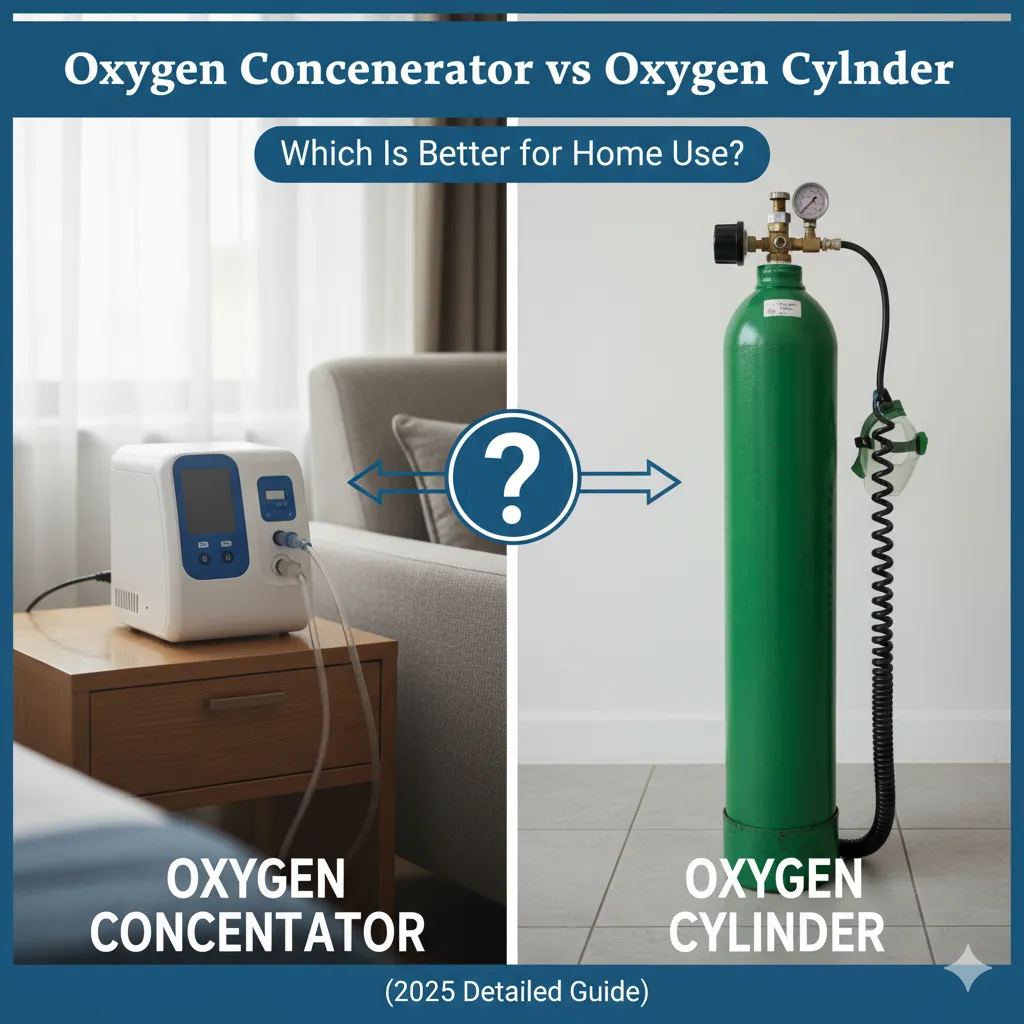
An oxygen concentrator is an electrically powered device that takes room air and filters out nitrogen, delivering 90–96% pure oxygen to the patient. Unlike cylinders, it does not require refilling.
How It Works
Sucks in room air
Removes nitrogen using molecular sieves
Provides continuous oxygen flow
Works 24/7 with electricity
Best For:
Long-term oxygen therapy
Mild to moderate breathing issues
Home use
Elderly patients
Types:
5L concentrators (for normal oxygen therapy)
10L concentrators (for higher flow patients)
2. What is an Oxygen Cylinder?
An oxygen cylinder stores compressed oxygen and provides immediate delivery through a regulator. It does not require power supply, making it suitable for emergencies.
Best For:
Emergency use
High oxygen requirement
Backup for concentrator users
Types:
5L small cylinder
10L home-use cylinder
47L jumbo cylinder (long usage)
3. Detailed Comparison: Concentrator vs Cylinder
A. Refilling & Convenience
Oxygen Concentrator
✔ No refilling needed
✔ Runs continuously
✔ Minimal maintenance
Oxygen Cylinder
✘ Requires frequent refilling
✘ Logistics and availability challenges
✘ Refilling cost adds up
Winner: Concentrator
B. Running Cost
Concentrator – One-time purchase, no refilling
Cylinder – Continuous refilling cost
Winner: Concentrator (90% cheaper long-term)
C. Oxygen Flow
Concentrator
Suitable for 1–5 LPM
High-flow models can give up to 10 LPM
Cylinder
Can give high flow (up to 15 LPM)
Better for critical patients
Winner: Cylinder (for high-flow)
Winner: Concentrator (for regular use)
D. Safety
Concentrator
- Very safe
- No risk of leakage
Cylinder
⚠ Risk of oxygen leakage
⚠ Needs careful handling
Winner: Concentrator
E. Availability in India
During COVID waves, cylinders were often in shortage.
Concentrators remained widely available.
4. Price Comparison in India (2025)
Oxygen Concentrators:
5L models: ₹30,000 – ₹45,000
10L models: ₹55,000 – ₹90,000
Rental: ₹2,500–₹4,000 per month
Oxygen Cylinders:
10L cylinder: ₹8,000 – ₹12,000
47L jumbo: ₹16,000 – ₹22,000
Refilling: ₹250–₹600 per refill
Rental: ₹400–₹800 per month (cylinder only)
5. When to Choose a Concentrator?
Choose an oxygen concentrator if:
- The patient needs long-term oxygen therapy
- Usage is more than 8 hours a day
- Oxygen requirement is moderate
- You need a cost-effective home solution
6. When to Choose an Oxygen Cylinder?
Choose a cylinder if:
- The patient needs emergency oxygen
- High flow (10–15 LPM) is required
- You need a backup for power cuts
- For temporary recovery (short-term use)
7. Best Solution for Home Care – Combination Setup
Doctors recommend:
Concentrator + Backup Cylinder
This ensures:
✔ Constant oxygen supply
✔ Emergency backup
✔ Cost-effective long-term therapy
Why Buy from Aarogyaa Bharat?
100% certified oxygen concentrators
Budget-friendly rental plans
Free demonstration & installation
24×7 emergency support
Pan-India doorstep delivery
We aim to make home-care treatment safe, affordable, and accessible.
FAQs
1. Which is cheaper in the long run?
Concentrators are far cheaper because they eliminate refilling.
2. Which is better for elderly patients?
An oxygen concentrator is easier and safer for daily use.
3. Do concentrators work during power cuts?
You need a UPS or a backup cylinder.
4. Is cylinder oxygen more pure than concentrator oxygen?
Both provide medically acceptable purity.
5. Can I rent both together?
Yes. Aarogyaa Bharat provides both rent and buy options.
Conclusion
For long-term, daily oxygen therapy at home, the concentrator is clearly the best option. For emergencies or high-flow needs, cylinders play an important role. A combination of both offers the safest and most reliable setup.