



Why the Post-Surgery Period Is Exceptionally High Risk
The post-surgery period combines physical weakness, pain,
reduced balance, and restricted movement, making routine activities
unexpectedly hazardous. Even patients who were fully independent before surgery
may struggle to stand, walk, or sit safely afterward. Sudden movements can
strain surgical wounds, disrupt stitches, or dislocate implants. Fatigue builds
quickly, and dizziness is common, especially when standing up from bed.
Toileting requires walking, turning, bending, and sitting all movements that doctors
often advise limiting. Without proper support, this phase carries a high risk
of falls, wound complications, and setbacks that can undo surgical progress.
Toileting Challenges Immediately After Surgery
Toileting is often the first daily task where patients
realise the extent of their temporary disability. Pain, stiffness, fear of
tearing stitches, and limited joint movement make bathroom trips stressful and
exhausting. Urgency increases anxiety, leading to rushed and unsafe movements.
Indian bathrooms may require stepping over thresholds, navigating wet floors,
or using low toilet seats, all of which are unsafe after surgery. A commode
chair removes these challenges by bringing the toilet to the patient rather
than forcing the patient to reach the toilet.
Role of a Commode Chair in Post-Surgical Recovery
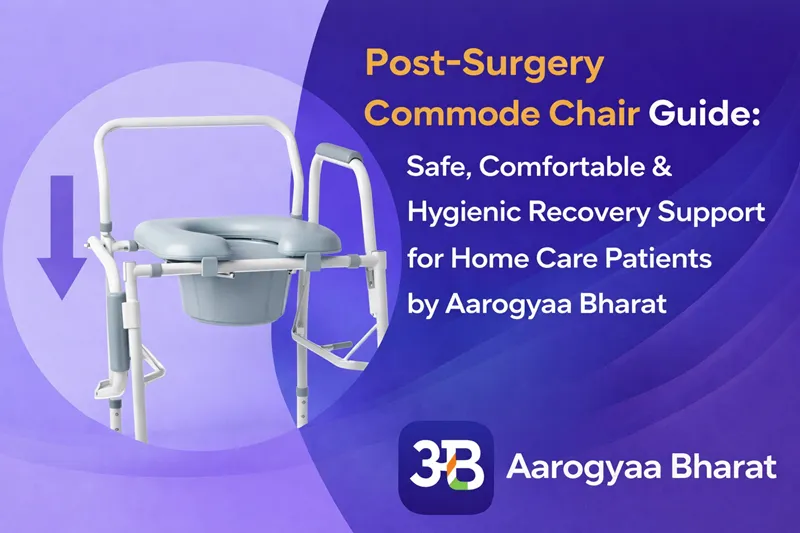
A commode chair acts as a protective recovery aid that
allows safe toileting without unnecessary movement. Placed near the bed or
recovery area, it eliminates long walks and reduces strain on healing areas.
Armrests support controlled sitting and standing, backrests maintain posture,
and stable legs prevent slipping. This controlled environment allows patients
to follow medical advice more closely, protecting surgical outcomes.
Protecting Surgical Wounds and Implants
After surgery, protecting wounds, sutures, staples, or
implants is critical. Sudden bending, twisting, or pressure can cause bleeding,
infection, or implant displacement. A commode chair allows patients to sit and
stand in a controlled manner, reducing strain on vulnerable areas such as
knees, hips, abdomen, spine, or chest. This protection directly supports faster
and safer healing.
Recovery After Orthopaedic Surgeries
Orthopaedic surgeries such as knee replacement, hip
replacement, fracture fixation, or spinal procedures significantly limit
mobility. Low toilet seats are particularly dangerous after these surgeries. A
commode chair provides appropriate height and support, allowing patients to
maintain correct joint angles and avoid excessive bending. This is essential
for pain control, implant safety, and rehabilitation success.
Recovery After Abdominal and General Surgeries
Abdominal surgeries, including hernia repair, gallbladder
surgery, caesarean section, or appendix removal, restrict bending and
straining. Using a standard toilet can cause pain and increase risk of wound
stress. A commode chair allows upright posture with minimal strain, reducing
discomfort and protecting internal healing structures.
Post-Surgery Recovery for Elderly Patients
Elderly patients recover more slowly due to reduced muscle
mass, balance issues, and existing health conditions. Night-time toileting is
especially dangerous due to stiffness and low blood pressure upon waking. A
bedside commode chair significantly reduces fall risk for elderly post-surgery
patients and allows recovery to progress without fear.
Night-Time Safety During Surgical Recovery
Many serious post-surgery accidents occur at night when
patients wake up groggy, in pain, and disoriented. Walking to the bathroom in
the dark greatly increases fall risk. A commode chair placed near the bed
allows safe night-time toileting without walking, improving safety and sleep
quality for both patient and caregivers.
Supporting Independence Without Compromising Safety
Patients recovering from surgery often want to regain
independence quickly, but premature independence can be dangerous. A commode
chair offers a balanced solution, allowing patients to toilet independently
within safe limits. This controlled independence boosts confidence while still
protecting recovery.
Reducing Caregiver Physical Strain
Post-surgery caregiving often requires frequent bathroom
assistance, which can strain family caregivers physically and emotionally.
Lifting, supporting, or rushing to help increases injury risk for caregivers as
well. A commode chair reduces lifting and urgency, making caregiving safer and
more sustainable.
Preventing Hospital Readmission and Complications
Falls, wound reopening, or implant issues during recovery
often lead to emergency hospital visits or readmission. A commode chair
significantly reduces these risks by eliminating unsafe bathroom trips.
Preventing even one complication justifies the use of proper recovery
equipment.
Temporary vs Extended Use After Surgery
Some surgeries require only short-term recovery support,
while others involve extended rehabilitation. Commode chairs are suitable for
both scenarios. Once recovery is complete, the chair can be folded, stored, or
repurposed, making it a flexible solution.
Types of Commode Chairs Suitable for Post-Surgical
Recovery
|
Surgery
Type |
Recommended
Chair Type |
Key
Benefit |
|
Knee / Hip
Surgery |
Adjustable-height
commode chair |
Correct
posture |
|
Spine Surgery |
High-back
stable commode chair |
Balance
support |
|
Abdominal
Surgery |
Cushioned
seat commode chair |
Reduced
strain |
|
Elderly
Surgery |
Bedside
commode chair |
Fall
prevention |
|
Temporary
Recovery |
Foldable
commode chair |
Easy removal |
Hygiene and Infection Prevention During Recovery
Post-surgical patients are more vulnerable to infections.
Commode chairs with removable buckets and easy-to-clean surfaces allow hygienic
waste management without exposing wounds to bathroom bacteria. Maintaining
cleanliness supports faster healing and reduces complications.
Psychological Comfort and Recovery Confidence
Fear of pain or falling can slow recovery by causing
patients to restrict movement or delay toileting. A commode chair provides
reassurance that toileting can be done safely, reducing anxiety and improving
mental well-being. Psychological comfort plays a direct role in physical
healing.
Cost-Effectiveness in Post-Surgery Care
While a commode chair is a small upfront investment, it can
prevent costly complications, readmissions, or extended recovery. Compared to
hospital bills and lost recovery time, it is a highly cost-effective recovery
aid.
Why Aarogyaa Bharat Focuses on Post-Surgery Solutions
Aarogyaa Bharat understands that surgery does not end at
hospital discharge; recovery continues at home where risks are often higher.
Our commode chairs are selected to support safe recovery in real Indian home
environments, focusing on stability, comfort, and dignity. By preventing
avoidable setbacks, Aarogyaa Bharat helps patients recover faster and safer.
Conclusion
Recovery after surgery is a critical period where safety,
dignity, and controlled independence must be carefully balanced. A commode
chair for recovery after surgery provides a safe toileting solution that
protects surgical outcomes, prevents falls, reduces caregiver burden, and
supports faster healing. By eliminating unnecessary movement and risk during
daily toileting, commode chairs play a vital role in successful home recovery.
Aarogyaa Bharat remains committed to delivering recovery-focused home-care solutions
that protect patients when they are most vulnerable.





