Understanding Long-Term Mobility Challenges in Seniors
Many elderly individuals face mobility challenges that
persist for years due to chronic conditions such as arthritis, osteoporosis,
neurological disorders, or cardiovascular problems. These conditions gradually
reduce muscle strength, coordination, and walking endurance. Seniors who
require long-term care often struggle with fatigue during walking or standing
for extended periods. Without proper mobility support, these challenges can
lead to falls, injuries, and loss of independence. Doctors and geriatric specialists
listed on Aarogyaa Bharat hospital pages emphasize that maintaining safe
mobility is a key component of long-term elderly care. Mobility aids such as
rollator walkers allow seniors to move safely while conserving energy and
reducing strain on joints. These walkers help individuals remain active while
minimizing the risks associated with limited balance and endurance.
What Is a Rollator Walker and Why It Is Ideal for
Long-Term Care
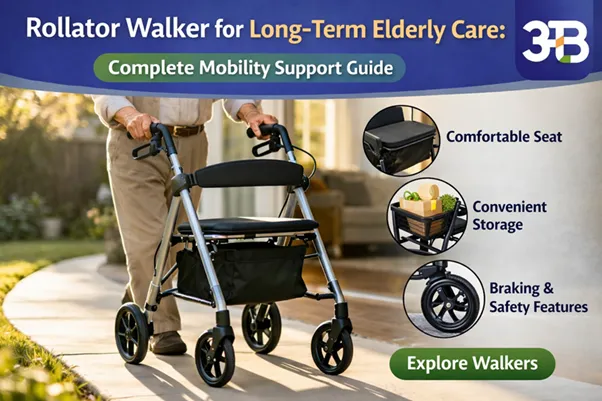
A rollator walker is a mobility aid designed with four
wheels, ergonomic handles, braking systems, and often a built-in seat. Unlike
traditional walkers that require lifting with each step, rollator walkers glide
forward smoothly on wheels. This design allows seniors to walk with minimal
effort while maintaining stability. The integrated seat provides a convenient
resting option whenever fatigue occurs, making rollators particularly suitable
for long-term mobility support. Physiotherapists listed on Aarogyaa Bharat
hospital pages frequently recommend rollator walkers for patients who
require ongoing mobility assistance but still wish to maintain independence.
Rollators combine walking support with comfort features that make them
practical for everyday use.
Common Long-Term Conditions That Require Rollator Walkers
Several medical conditions commonly require long-term
mobility assistance for elderly individuals. Osteoarthritis causes persistent
joint pain and stiffness that can limit walking ability. Parkinson’s disease
affects coordination and balance, making stable walking support essential.
Chronic back pain and spinal disorders can reduce endurance during walking.
Stroke survivors often require mobility aids during long-term rehabilitation. Orthopaedic
specialists listed on Aarogyaa Bharat city pages frequently recommend
rollator walkers for patients managing these conditions because the device
provides stable support while allowing smoother movement compared to
traditional walkers. The ability to rest during walking sessions makes
rollators particularly valuable for seniors with limited stamina.
Key Features of Rollator Walkers for Long-Term Use
Rollator walkers designed for long-term care include several
features that improve safety, durability, and comfort. Four large wheels allow
smooth movement across indoor floors, sidewalks, and hospital corridors.
Adjustable handles ensure proper posture alignment, preventing strain on the
back and shoulders. Reliable braking systems allow seniors to control speed and
stop safely when needed. The integrated seat provides resting support during
long walks or extended outings. Many rollator walkers also include storage
baskets that allow users to carry groceries, medicines, or personal belongings.
Experts listed on Aarogyaa Bharat hospital pages often recommend
rollators with reinforced frames to ensure durability for long-term daily use.
Comparison Between Traditional Walker and Rollator Walker
|
Feature |
Traditional
Walker |
Rollator
Walker |
|
Wheel Design |
Usually, no
wheels |
Four wheels |
|
Movement
Style |
Requires
lifting |
Smooth
rolling motion |
|
Resting
Option |
Not available |
Built-in seat |
|
Outdoor
Mobility |
Limited |
Excellent |
|
Long-Term
Comfort |
Moderate |
High comfort |
This comparison shows why rollator walkers are often the
preferred choice for seniors requiring long-term mobility support.
Benefits of Rollator Walkers for Long-Term Care
• Provides stable support for daily walking
• Allows seniors to rest using built-in seating
• Reduces fatigue during long walks
• Improves balance and walking confidence
• Encourages physical activity and independence
• Supports long-term rehabilitation programs
• Helps prevent falls and injuries
These benefits highlight why rollator walkers are widely
used in long-term elderly care programs.
Role of Rollator Walkers in Physiotherapy Rehabilitation
Physiotherapy programs often focus on improving mobility,
strength, and coordination for elderly individuals managing chronic conditions.
Rollator walkers provide stable support during these exercises while allowing
patients to rest when needed. Physiotherapists listed on Aarogyaa Bharat
hospital pages frequently use rollator walkers during rehabilitation
sessions for patients recovering from stroke, joint replacement surgeries, or
neurological disorders. These programs gradually increase walking distance and
endurance while ensuring patient safety. With consistent rehabilitation and
rollator support, seniors can maintain mobility and improve overall physical
health even during long-term care.
Tracking Mobility Improvement with Healthcare Calculators
Monitoring mobility progress is essential for evaluating
long-term rehabilitation success. Aarogyaa Bharat healthcare calculators
help families estimate recovery timelines, physiotherapy costs, and expected
mobility milestones. These calculators allow caregivers to track improvements
in walking endurance and balance stability over time. For example, a joint
replacement recovery calculator may estimate how long patients will require
walker support before transitioning to independent walking. By combining rollator
walker usage with physiotherapy programs and healthcare calculators, seniors
can follow structured mobility improvement plans.
Choosing the Right Rollator Walker for Long-Term Use
Selecting the correct rollator walker requires careful
consideration of the user’s physical condition and lifestyle. Seniors should
choose rollators with adjustable handles that match their height to maintain
proper posture. Durable aluminium frames are recommended for long-term
reliability. Strong braking systems are essential for controlling movement
safely on slopes or uneven surfaces. Experts listed on Aarogyaa Bharat city
pages often recommend rollator walkers with comfortable padded seats and
ergonomic grips that reduce hand fatigue. Foldable designs are also useful for
transportation during hospital visits or travel.
Where to Buy Reliable Rollator Walkers in India
Reliable mobility aids should always be purchased from
trusted medical equipment providers that follow healthcare safety standards.
Hospital-grade rollator walkers are designed with durable materials and
ergonomic features that support long-term elderly mobility safely. Aarogyaa
Bharat provides medically recommended rollator walkers designed for long-term
care, rehabilitation recovery, and daily mobility assistance. With availability
across major city pages including Pune, Mumbai, Delhi, Bangalore, and Hyderabad,
Aarogyaa Bharat ensures families across India can easily access high-quality
mobility equipment.
Conclusion
Long-term mobility challenges require reliable support solutions that help seniors maintain independence and safety during daily activities. Rollator walkers provide an effective mobility aid by combining smooth walking support with convenient resting options. These devices help elderly individuals manage fatigue, improve balance, and remain active despite chronic health conditions. When combined with physiotherapy programs, hospital consultations, and healthcare calculators available through Aarogyaa Bharat, rollator walkers become an essential component of long-term elderly care. Choosing the right rollator walker can significantly improve mobility confidence and overall quality of life for seniors.