For these situations, an oxygen concentrator offers a safe, reliable, and cost-effective way to deliver supplemental oxygen at home without the inconvenience, refill dependency, physical danger, and long-term expense associated with oxygen cylinders. A concentrator provides a continuous oxygen supply as long as electricity is available, making it ideal for patients who need oxygen for a few hours a day, overnight support, or temporary full-day therapy during recovery.
However, many families remain deeply confused about whether an oxygen concentrator is suitable for short-term use, how long it should be used, whether renting or buying is better, how to install and operate it safely, what oxygen levels should be monitored, how to know when therapy can be stopped, and whether temporary oxygen use can create dependency or long-term lung weakness. This comprehensive, long-form guide by Aarogyaa Bharat explains everything you need to know about using an oxygen concentrator for short-term oxygen therapy, including who needs temporary oxygen support, why oxygen levels drop temporarily, how concentrators work, how long therapy usually lasts, how to choose the right machine, how to use it safely at home, what recovery signs to monitor, how to stop therapy correctly, how to manage costs intelligently, and how to protect both patient safety and family peace of mind throughout the recovery journey.
What Is Short-Term Oxygen Therapy
Short-term oxygen therapy refers to the temporary medical
use of supplemental oxygen for a limited duration, usually ranging from a few
hours to several weeks, to stabilize patients whose blood oxygen levels have
fallen below safe ranges due to an acute illness, injury, infection, surgery,
or environmental stressor. Unlike long-term oxygen therapy, which is prescribed
for chronic and irreversible lung diseases, short-term oxygen therapy is
intended to bridge a recovery phase and is gradually discontinued once normal
oxygen levels return. This type of therapy is commonly prescribed after viral or
bacterial pneumonia, COVID-19 infection, lung surgery, heart surgery, major
abdominal surgery, orthopedic procedures, asthma attacks, chest infections,
heart failure flare-ups, and high-altitude exposure. It is also used for
patients who develop hypoxemia due to dehydration, anemia, medication side
effects, prolonged bed rest, or fluid overload. Short-term oxygen therapy plays a critical role in
preventing dangerous complications such as organ damage, delayed wound healing,
cardiac strain, confusion, dizziness, severe fatigue, and hospital readmission.
By ensuring that tissues receive adequate oxygen during recovery, it
accelerates healing, restores physical strength faster, and reduces the risk of
long-term respiratory damage.
Why Oxygen Levels Drop Temporarily
Temporary drops in blood oxygen levels are far more common
than most people realize and are not always a sign of permanent lung disease.
In many medical conditions, hypoxemia develops because the lungs, heart, or
blood temporarily cannot deliver enough oxygen to the body even though
long-term lung capacity may be normal.
Acute infections such as pneumonia, bronchitis, and COVID-19
cause inflammation and fluid buildup in the lungs, reducing oxygen exchange
efficiency. After surgery, anesthesia suppresses breathing reflexes, pain
medications slow respiration, and reduced mobility limits lung expansion,
leading to shallow breathing and partial lung collapse known as atelectasis. Heart failure episodes reduce the heart’s ability to pump
oxygen-rich blood efficiently, causing temporary hypoxemia even when lung
function is normal. Asthma attacks cause airway constriction and mucus buildup
that block airflow, leading to short-term oxygen deficiency. High-altitude
exposure reduces oxygen availability in the air itself, causing altitude
sickness and low oxygen saturation in people who are not acclimatized. In most of these situations, oxygen levels improve gradually
as the underlying condition resolves. Short-term oxygen therapy does not treat
the root cause but provides vital respiratory support during the recovery
window to prevent secondary damage.
How an Oxygen Concentrator Supports Short-Term Oxygen
Therapy
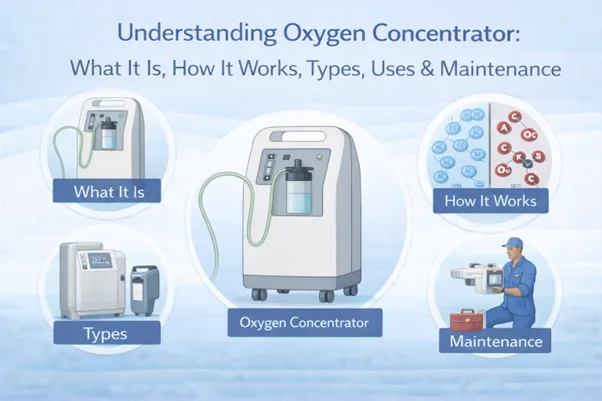
An oxygen concentrator is an electrically powered medical
device that draws in surrounding air, filters out nitrogen using molecular
sieve technology, and delivers concentrated oxygen to the patient through a
nasal cannula or oxygen mask. Unlike oxygen cylinders, which store a fixed
amount of compressed gas and require constant refilling, a concentrator
generates oxygen continuously as long as it is connected to a power source. For short-term therapy, this continuous oxygen supply offers
several powerful advantages. It eliminates refill logistics, reduces caregiver
stress, and ensures uninterrupted therapy even during nighttime hours. It
allows flexible oxygen schedules, enabling patients to use oxygen only when
needed rather than being limited by cylinder capacity. It also removes the
anxiety of “running out of oxygen” during recovery. Using an oxygen concentrator for short-term therapy is
especially useful in home recovery environments where patients may need oxygen
intermittently rather than continuously. It supports safer recovery, reduces
emergency hospital visits, and allows patients to heal in the comfort of their
homes.
Who Needs Short-Term Oxygen Therapy at Home
- Short-term oxygen therapy is prescribed for patients experiencing temporary respiratory compromise who are expected to recover normal lung function over time.
- Post-COVID patients with lingering lung inflammation and breathlessness often require oxygen for several days or weeks. Patients recovering from pneumonia or severe chest infections use oxygen therapy to stabilize breathing while the lungs heal. Post-surgical patients, especially after lung, heart, or major abdominal surgery, benefit from temporary oxygen support to prevent complications and improve wound healing.
- Asthma patients experiencing severe flare-ups may require oxygen for a short period until airway inflammation subsides. Heart failure patients with pulmonary fluid buildup often need short-term oxygen during acute episodes. Travelers exposed to high-altitude environments may require temporary oxygen to manage altitude sickness.
- Elderly patients, smokers, obese individuals, and people with anemia or sleep apnea are also more vulnerable to temporary oxygen drops and may benefit from short-term oxygen therapy.
How Long Is Short-Term Oxygen Therapy Typically Needed
- The duration of short-term oxygen therapy varies widely depending on the underlying condition, patient age, overall health, lung resilience, and recovery speed.
- Post-viral and post-COVID patients often require oxygen for one to four weeks. Post-surgical patients may need oxygen support for a few days to two weeks. Pneumonia patients may require oxygen for several days to a few weeks depending on severity. Asthma flare-up cases may need oxygen only for a few hours or days. Altitude sickness cases may require oxygen for a few hours to a few days.
- Doctors usually reassess oxygen needs using pulse oximeter readings, arterial blood gas tests, clinical symptoms, and sometimes chest imaging before discontinuing therapy. Oxygen therapy should never be stopped abruptly without medical guidance, even if the patient feels better.
Choosing the Right Oxygen Concentrator for Short-Term Use
- Selecting the right oxygen concentrator for short-term therapy depends on medical needs, home environment, and financial considerations.
- Flow rate capacity is one of the most important factors. Most short-term therapy patients require one to five liters per minute of oxygen, making five-liter-per-minute concentrators the most commonly recommended option. Continuous flow capability is essential for nighttime use and patients with irregular breathing patterns.
- Noise level is an important comfort factor, especially for nighttime recovery. Machines below forty-five decibels support better sleep quality. Portability is useful for patients who need oxygen during short walks or doctor visits, but stationary concentrators remain the most reliable option for home therapy.
- Power backup compatibility is critical in regions with frequent power cuts. Choose a concentrator that can be connected to a voltage stabilizer or UPS system. Service support and warranty coverage should always be verified, even for short-term use.
Renting vs Buying an Oxygen Concentrator for Short-Term
Therapy
- One of the most common questions families ask is whether renting or buying an oxygen concentrator makes more sense for short-term oxygen therapy.
- Renting is usually the best option for therapy durations shorter than one to two months. It minimizes upfront cost, eliminates long-term maintenance responsibility, and allows easy return once therapy is complete. Buying may be more cost-effective if therapy extends beyond two to three months or if future oxygen needs are anticipated.
- Some families choose to buy a concentrator for short-term therapy and later resell it or keep it as a backup for future emergencies.
How to Use an Oxygen Concentrator Safely for Short-Term
Therapy
- Safe short-term oxygen therapy requires disciplined daily habits even if therapy duration is limited.
- Place the concentrator in a well-ventilated area with at least one foot of clearance on all sides. Keep it away from heat sources, open flames, and smoking zones. Plug it directly into a wall socket or voltage stabilizer rather than using extension cords.
- Use only the prescribed flow rate and never adjust settings without medical advice. Monitor oxygen saturation levels daily using a pulse oximeter. Clean air filters weekly and replace tubing and cannulas regularly.
- Always keep a backup oxygen cylinder available for power outages or machine failure.
When and How to Stop Short-Term Oxygen Therapy
Stopping oxygen therapy should always be done gradually
under medical supervision rather than abruptly. Doctors usually recommend reducing oxygen flow rates slowly
while monitoring oxygen saturation levels and symptoms. If oxygen levels remain
stable above ninety-four percent without supplemental oxygen, therapy may be
discontinued.
Any recurrence of breathlessness, dizziness, chest
discomfort, or low oxygen readings after stopping therapy should be reported
immediately to a doctor.
Oxygen Concentrator vs Oxygen Cylinder for Short-Term
Therapy
|
Feature |
Oxygen
Concentrator |
Oxygen
Cylinder |
|
Oxygen Supply |
Unlimited
with power |
Limited |
|
Refill
Requirement |
None |
Frequent |
|
Safety Risk |
Low |
High
(compressed gas) |
|
Long-Term
Cost |
Lower |
Higher |
|
Ease of Use |
Very easy |
Moderate |
|
Emergency
Readiness |
High (with
backup) |
Moderate |
|
Rental
Availability |
High |
High |
|
Noise Level |
Moderate |
Silent |
|
Portability |
Low |
Moderate |
|
Maintenance |
Low |
Moderate |
|
Environmental
Impact |
Low |
High |
Why Aarogyaa Bharat Recommends Oxygen Concentrators for
Short-Term Therapy
At Aarogyaa Bharat, we focus on matching oxygen therapy
solutions to real-world recovery needs rather than just selling equipment.
We recommend oxygen concentrators for short-term therapy
because they offer superior safety, convenience, lower long-term cost, and
easier daily management. We help families choose the right machine based on
medical needs, recovery duration, home environment, and budget.
Our team provides delivery, installation, training, and
service support so that short-term oxygen therapy is stress-free and medically
safe from day one.
Conclusion
An oxygen concentrator for short-term oxygen therapy is not
just a temporary medical device; it is a recovery partner that stabilizes
breathing, prevents complications, and accelerates healing during vulnerable
health phases.
Choosing the right concentrator, using it safely, and
stopping therapy correctly under medical guidance are critical for achieving
the best recovery outcomes.
With expert support, proper planning, and consistent monitoring, short-term oxygen therapy can be safe, effective, and financially sensible for patients and families