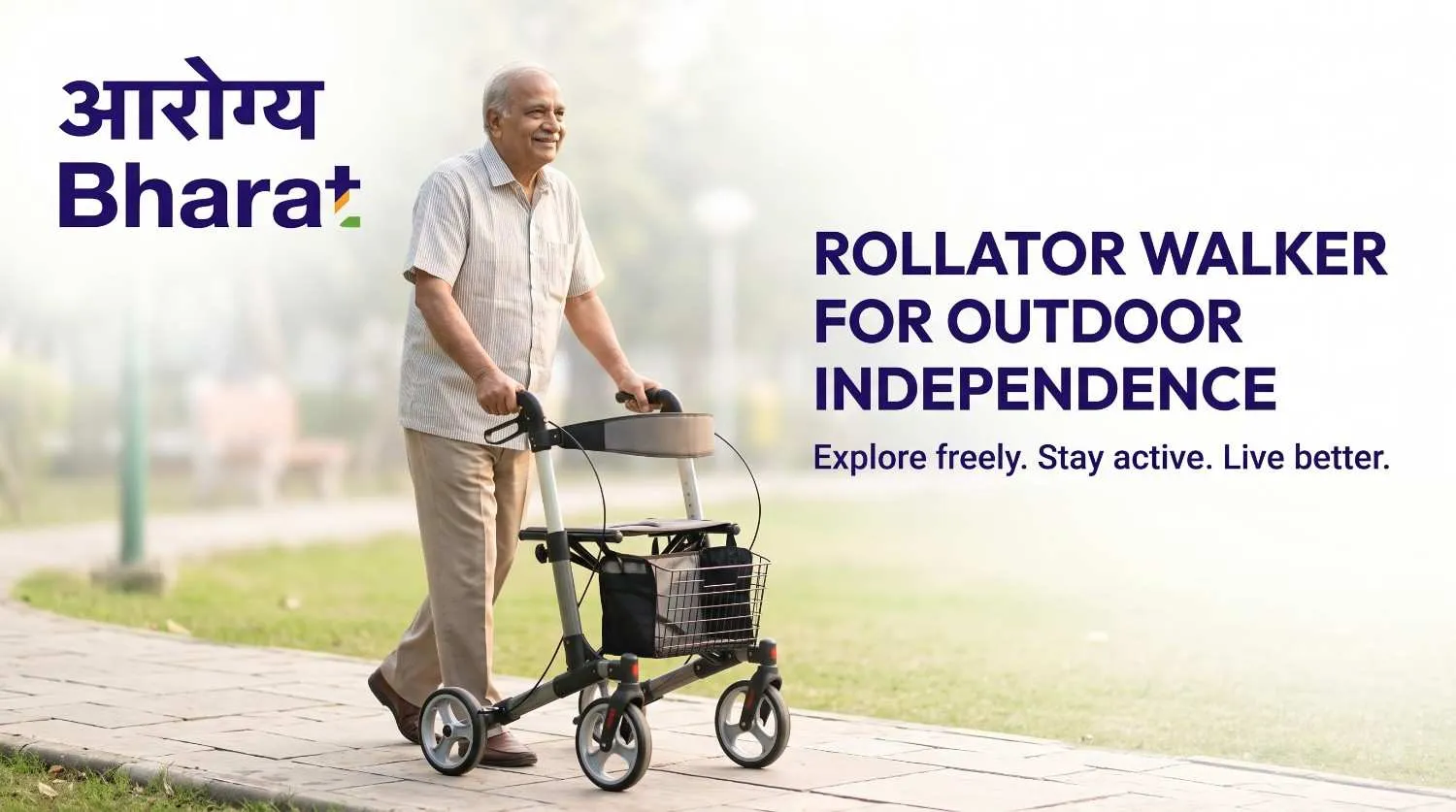
A rollator can support outdoor independence by providing a
stable walking aid that moves with the user instead of requiring them to lift
the entire frame repeatedly. This can make longer walks more manageable for
seniors who have enough balance and coordination to safely control a wheeled
device. Outdoor independence may include walking to a nearby shop, visiting
friends, attending appointments, going to a park, or simply taking a short walk
around the neighborhood. MedlinePlus notes that mobility aids can help people
with health conditions, injuries, disabilities, and age-related mobility
difficulties remain more independent. Seniors using Walking Aids can
maintain a greater sense of control over where and when they move, rather than
depending entirely on family members. A rollator can also provide reassurance
because users know that walking support is available whenever they need it.
However, outdoor independence should always remain within the individual's
physical abilities and medical advice. Professional assessment is recommended
when balance or mobility problems are significant.
Why Outdoor Mobility Is Important for Seniors
Being able to move outside the home can support
independence, social connection, physical activity, and participation in normal
daily activities. NIA describes mobility as critical to functioning well and
living independently as people age, while reduced physical function can make
everyday activities more difficult. Seniors may become less active when they
are worried about falling, feel weak, or find walking uncomfortable. A rollator
can provide physical support that makes appropriate outdoor movement feel more
manageable. Seniors participating in Rehabilitation Equipment programs
may also benefit from gradually increasing walking activity according to a
therapist's recommendations. Outdoor mobility can include simple activities
such as walking to a local store, attending social events, visiting a garden,
or accompanying family members. Regular movement should remain appropriate for
the person's health and endurance. A rollator is intended to support mobility
rather than encourage excessive activity. Seniors should take rest breaks when
needed and seek professional advice when walking becomes increasingly
difficult.
Benefits of Using a Rollator Outdoors
A rollator provides several practical features that can make
outdoor mobility more convenient for seniors. Four-wheeled models generally
allow smoother forward movement, while hand brakes provide a way to control the
frame when stopping or slowing down. Many rollators also include a seat that
allows users to take a short rest during longer activities, although the
equipment must be fully stopped and secured before sitting. Storage baskets or
pouches can provide additional convenience when carrying small personal
belongings. NHS guidance identifies rollators as a form of walking frame that
can provide additional support for people experiencing mobility difficulties.
Seniors using Patient Care Equipment may find a rollator useful when
attending appointments, visiting shopping areas, or participating in outdoor
social activities. The main benefits include greater walking support, easier
forward movement, convenient rest options on suitable models, and increased
confidence. However, the rollator must be appropriate for the user's ability
and the environment where it will be used. Wet, steep, loose, or uneven
surfaces may require additional caution.
Outdoor Activities Made Easier with a Rollator
A rollator can make many outdoor activities more manageable
by providing continuous walking support while allowing the user to stop and
rest when necessary. Seniors may use it for short neighborhood walks, shopping,
visiting family members, attending appointments, walking through parks, or
participating in community activities. Maintaining safe mobility can help older
adults remain involved in everyday life rather than avoiding outdoor activities
because of concerns about balance or fatigue. NIA notes that staying physically
active can provide health and functional benefits for older adults, while
mobility and balance are important considerations for reducing fall risk.
Seniors can combine their rollator with Daily Living Aids to support
independence across different daily activities. Outdoor routes should be
selected according to the person's physical ability and the condition of the
walking surface. Users should avoid rushing and should take breaks whenever
they become tired. A caregiver may accompany individuals who require additional
support while navigating unfamiliar or crowded environments.
Common outdoor activities where a rollator may be useful
include:
- Walking
around the neighborhood
- Visiting
nearby shops
- Going
to parks and gardens
- Attending
medical appointments
- Visiting
friends and relatives
- Walking
through shopping centers
- Participating
in community activities
- Taking
short family outings
- Attending
religious or social events
- Enjoying
controlled outdoor exercise
The appropriate activity level depends on the senior's
mobility, health condition, and professional recommendations.
How a Rollator Helps With Outdoor Balance
Outdoor walking can be more demanding than indoor walking
because surfaces and surroundings constantly change. Sidewalk cracks, small
slopes, wet flooring, uneven pathways, crowded spaces, and unexpected obstacles
can challenge balance. A rollator provides a wider support structure that can
help some seniors feel more stable while walking. NIA identifies balance
problems as one reason older adults may fall and recommends using a cane or
walker when additional stability is needed. Seniors using Fall Prevention
Products should also consider environmental safety rather than relying only
on the mobility aid. The wheels should move smoothly, and the user should know
how to operate the brakes before going outdoors. Walking speed should remain
controlled, especially when navigating turns or changes in surface level. The
rollator should stay close enough to the body to allow comfortable control
without excessive leaning. A healthcare professional can provide personalized
advice when balance problems are significant or the person has a history of
falls.
Using a Rollator for Shopping and Errands
Shopping and everyday errands can require prolonged walking
and standing, which may be difficult for seniors with reduced endurance or
balance. A rollator can provide support throughout the trip and, on models
designed with a seat, can offer a convenient place to rest during an
appropriate break. Some rollators also include storage baskets that allow users
to carry lightweight personal items while keeping their hands available for
controlling the equipment. Seniors using Home Healthcare Products may
find that a rollator complements other solutions designed to support safe and
independent daily living. Before shopping, users should make sure the rollator
is in good condition and that the route is suitable for their mobility level.
Crowded aisles and narrow spaces may require additional maneuvering skill.
Users should avoid overloading storage compartments because excessive weight
can affect stability or handling. Shopping trips can be divided into shorter
periods when necessary, with rest breaks taken before significant fatigue
develops. Family members can assist when the environment becomes too demanding
for independent navigation.
Choosing the Right Rollator for Outdoor Use
Choosing an appropriate outdoor rollator requires attention
to the user's physical condition as well as the environments in which it will
be used. Important factors can include wheel size, frame weight, handle height,
braking system, seat availability, storage, weight capacity, and overall
maneuverability. Larger wheels may be more suitable for certain outdoor
surfaces, while lighter frames can be easier to transport. Seniors exploring Orthopedic
Products should also consider existing conditions that may affect grip
strength, posture, balance, or walking endurance. The NHS recommends
considering the correct height, environment, and ability to safely use a
walking aid when selecting mobility equipment. MedlinePlus also recommends
seeking professional help when choosing and learning to use mobility aids. The
best rollator is not necessarily the largest or most feature-rich model. It
should provide the appropriate balance of stability, comfort, control, and portability
for the individual user.
Rollator Walker vs Walking Stick for Outdoor Mobility
A rollator and a walking stick can both support outdoor
mobility, but they provide different levels of assistance. A walking stick
offers a single additional point of support and may be suitable for people who
need only limited help with balance. A rollator provides a wider support base
and can be more appropriate for users who require greater assistance while
walking. The NHS states that walking frames provide more support than walking
sticks, while NIA recommends using a cane or walker when additional stability
is needed. Seniors considering Medical Equipment should select the
device based on their actual mobility requirements rather than portability
alone. A walking stick may be easier to carry, but it may not provide
sufficient support for someone with significant balance problems. A rollator
may be better suited to longer outdoor activities when the person can safely
control a wheeled frame. A healthcare professional can help assess gait,
strength, balance, and environmental needs before recommending the appropriate
device.
|
Feature |
Rollator Walker |
Walking Stick |
|
Support Level |
High |
Low to Moderate |
|
Support Base |
Wide |
Limited |
|
Wheels |
Yes |
No |
|
Rest Seat |
Available on Many Models |
No |
|
Outdoor Mobility |
Excellent |
Good |
|
Storage |
Often Available |
Minimal |
|
Best For |
Longer Outdoor Activities |
Mild Support Needs |
How a Rollator Supports Longer Outdoor Walks
A major advantage of a rollator is that it can help seniors
manage outdoor walking by allowing them to move at a comfortable pace and take
breaks when necessary. Some models include a built-in seat, which can provide a
practical rest option when the user becomes tired. The NHS identifies rollators
as walking frames with wheels, while some walking frames are designed with
seating for people who need to rest. Seniors using Physiotherapy Equipment
as part of a mobility program may gradually increase walking activity according
to their therapist's recommendations. A rollator should not be used to push
through severe fatigue or concerning symptoms. Users should plan shorter routes
initially and choose places where safe seating or rest opportunities are
available. Carrying water and keeping essential items accessible can also make
outdoor activities more comfortable, but heavy loads should be avoided. Regular
breaks can help users manage their energy while remaining active within
appropriate limits. Any new or worsening pain, dizziness, chest discomfort, or
unusual breathlessness should be assessed medically rather than simply managed
by continuing to walk.
Outdoor Safety Tips for Rollator Users
Outdoor safety is important because the environment can
contain hazards that are not present inside the home. Seniors should check that
the rollator wheels, frame, handles, and brakes are functioning properly before
starting an outing. NIA specifically advises checking that walker wheels roll
smoothly and recommends using walking aids when additional stability is needed.
Users should select routes with smooth, well-maintained surfaces whenever
possible and avoid wet, slippery, steep, or heavily obstructed areas when their
mobility makes these conditions difficult. A suitable Senior Care Products
setup can support a broader strategy for safer outdoor activity, but equipment
alone does not remove fall risk. Supportive nonskid footwear can improve
traction, while adequate lighting is important during early morning or evening
walks. Users should move slowly through crowded areas and pay attention when
crossing curbs or changes in surface height. A companion may be useful for
seniors who need additional assistance. Professional advice is recommended for
people with significant balance problems or repeated falls.
Common Mistakes to Avoid When Using a Rollator Outdoors
Several common mistakes can make outdoor rollator use less
safe or less comfortable. One mistake is choosing a rollator without
considering the user's ability to control the brakes and forward movement.
Another is pushing the frame too far ahead and leaning forward to keep up with
it. Users may also walk too quickly on downhill surfaces or attempt routes that
are too uneven for their equipment. NIA recommends checking the condition of
walking aids and improving environmental safety to help reduce fall hazards.
Seniors using Healthcare Products should also remember that mobility
equipment should be used according to its intended purpose and manufacturer's
instructions. Overloading a storage basket can affect maneuverability, while
ignoring worn wheels or faulty brakes can create additional risks. Users should
avoid sudden turns and should stop before sitting on a rollator seat. Regular
equipment checks and appropriate route planning can help prevent many avoidable
problems.
Maintaining a Rollator for Outdoor Independence
Regular maintenance is essential when a rollator is used
outside because outdoor surfaces can expose wheels and moving components to
dirt, moisture, dust, and increased wear. The frame should be inspected for
cracks, loose bolts, or bent components, while wheels should be checked for
smooth rotation and excessive wear. Brake systems should be tested regularly,
particularly on four-wheel models with hand brakes. NIA recommends checking
walker wheels to ensure they roll smoothly and keeping mobility equipment in
good working condition. Seniors using Home Safety Products can also
maintain safer storage areas by keeping the rollator in a clean, dry location
when it is not in use. Handles should remain secure, height-adjustment
mechanisms should lock properly, and the seat should not show signs of
structural damage. After outdoor use in wet conditions, the equipment should be
dried appropriately. Damaged components should be repaired or replaced
according to the manufacturer's instructions rather than modified
independently.
How a Rollator Promotes Independence and Confidence
A rollator can help seniors maintain greater independence by
giving them a practical way to move through outdoor environments without
depending entirely on another person for walking support. Being able to visit
friends, attend appointments, shop for necessities, or take a short walk can
contribute to a greater sense of participation in normal life. NIA describes
mobility as important for functioning well and living independently as people
age, while regular physical activity can support health and quality of life. A
suitable Outdoor Mobility Products solution can therefore become part of
an individual's broader plan for maintaining safe activity. Confidence should
still be based on actual ability rather than assuming the rollator makes every
environment safe. Seniors should continue to use appropriate caution and accept
assistance when needed. Gradually increasing outdoor activity may help some
users become more comfortable with different environments. The rollator
provides support, but independence ultimately depends on the person's health,
abilities, environment, and appropriate rehabilitation.
Why Buy Rollator Walker from Aarogyaa Bharat?
Aarogyaa Bharat provides healthcare and mobility solutions for seniors, patients, caregivers, and families managing everyday healthcare needs. Customers can explore mobility products according to walking ability, comfort requirements, support needs, and professional recommendations. When choosing a rollator for outdoor use, important considerations include wheel size, frame weight, handle height, braking system, seat requirements, storage, and overall maneuverability. Customers exploring the Walker Collection can compare suitable mobility options according to their specific requirements and intended environment. Aarogyaa Bharat also provides products across mobility, rehabilitation, home healthcare, orthopedic care, patient support, and wellness categories. Families can explore related products to create a more supportive environment for elderly mobility and daily care. Healthcare products are available through Pune Healthcare Store, Mumbai Healthcare Store, Delhi Healthcare Store, Bengaluru Healthcare Store, Chennai Healthcare Store, Hyderabad Healthcare Store, Kolkata Healthcare Store, and Ahmedabad Healthcare Store. Product selection should always be based on the user's individual mobility condition and professional recommendations when required.
Conclusion
A rollator walker can be a valuable mobility aid for elderly
individuals who want to remain active and independent outside the home. Its
wheeled design can make forward movement easier, while features such as hand
brakes, storage, and a seat can provide additional convenience for suitable
users. The NHS and NIA recognize walking aids as useful tools for people who
need additional mobility or balance support. A rollator can help seniors
participate in shopping, outdoor walks, family visits, appointments, and
community activities while maintaining greater control over their daily
movement. However, safe outdoor use depends on selecting the right model,
learning correct technique, checking the equipment regularly, and choosing
suitable walking environments. Seniors with significant balance problems or
repeated falls should seek professional assessment. With appropriate support
and sensible precautions, a rollator can help make outdoor mobility more
manageable while supporting independence and confidence.
Medical Disclaimer
This article is intended for educational purposes only and should not replace professional medical advice. Always consult a doctor, physiotherapist, occupational therapist, or other qualified healthcare professional before choosing or using a rollator walker, especially if you have significant balance problems, weakness, pain, dizziness, or a history of falls.