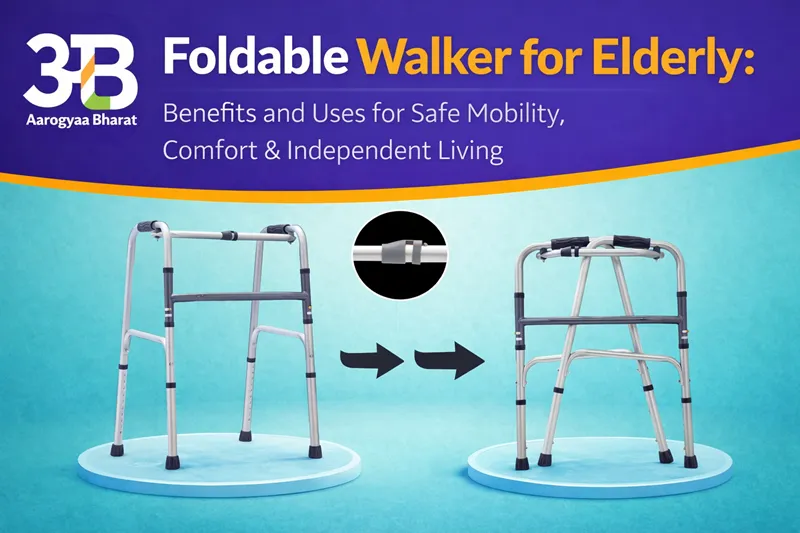
Aarogyaa Bharat (aarogyaabharat.com) offers lightweight, foldable walkers designed for safe mobility, enhanced comfort, and confident independent living for seniors across India.
Understanding the Importance of Foldable Walkers for
Seniors
As seniors age, maintaining balance and stability becomes
increasingly challenging, especially during recovery from surgery, injury, or
chronic health conditions. A foldable walker provides the support needed for
safe walking while offering the flexibility of easy storage and transportation.
Unlike traditional walkers, foldable designs are lightweight and compact,
making them suitable for modern Indian homes where space may be limited. Many
caregivers choose foldable walkers because they combine strong support with
portability, allowing seniors to move confidently without feeling restricted.
Families planning elderly care often explore hospital pages alongside
mobility aid sections to ensure that walkers integrate well with beds, transfer
aids, and other supportive equipment.
Key Benefits of Using a Foldable Walker
Foldable walkers offer multiple advantages that make them
one of the most popular mobility aids for elderly users. The lightweight
structure reduces strain on arms and shoulders, allowing seniors to handle the
walker easily during daily activities. Compact folding mechanisms make storage
simple, especially in smaller living spaces or when traveling to clinics or
physiotherapy sessions. Adjustable height settings ensure proper posture and
prevent discomfort, while durable frames provide reliable stability during
walking. Caregivers often combine foldable walkers with rehabilitation
categories and physiotherapy equipment to create a supportive environment that
encourages regular movement and gradual recovery.
Common Uses of Foldable Walkers in Elderly Care
Foldable walkers are widely used in various elderly care
situations, including post-surgery recovery, arthritis management, balance
training, and general mobility support. Seniors recovering from joint
replacement surgeries often use foldable walkers during early rehabilitation
stages to maintain stability while regaining strength. Individuals with mild
neurological conditions may rely on foldable walkers to improve coordination
during physiotherapy exercises. Many families also use foldable walkers for outdoor
visits because they can be easily folded and placed in a car. Exploring
mobility aid categories and elderly care sections helps caregivers understand
how foldable walkers fit into broader home healthcare plans.
Foldable Walker Types and Ideal Usage Comparison
|
Foldable
Walker Type |
Ideal User
Condition |
Key
Benefit |
Recommended
Use |
|
Standard
Foldable Walker |
Weak balance
or early recovery |
Strong
stability |
Indoor
rehabilitation |
|
Foldable
Front-Wheel Walker |
Moderate
mobility support |
Smooth
movement |
Daily home
walking |
|
Foldable
Rollator Walker |
Active
seniors |
Wheels and
seat for rest |
Indoor &
outdoor use |
|
Lightweight
Travel Walker |
Frequent
travel needs |
Easy
portability |
Small homes
and transport |
Features to Consider Before Buying a Foldable Walker
Choosing the right foldable walker involves evaluating
features that affect safety and usability. Adjustable height ensures proper
posture and prevents back strain, while ergonomic hand grips improve comfort
during prolonged use. Anti-slip rubber tips or smooth wheels enhance stability
on tiled or marble flooring commonly found in Indian homes. Foldable locking
mechanisms should be easy to operate yet secure enough to prevent accidental
collapse during use. Many families review healthcare calculators and elderly
care planning tools to estimate costs when combining foldable walkers with
hospital beds, wheelchairs, or rehabilitation equipment, ensuring a balanced
and effective mobility solution.
How Foldable Walkers Improve Daily Independence
Foldable walkers allow seniors to move confidently without
relying heavily on caregivers, which improves emotional well-being and
encourages active living. The ability to fold and store the walker easily makes
it convenient for daily use, especially in homes where space is limited.
Seniors who feel secure while walking are more likely to participate in routine
activities such as light exercise, social interaction, and physiotherapy
sessions. Caregivers often combine foldable walkers with hospital support accessories
like bedside commodes, anti-slip mats, and grab bars available within elderly
care sections to create a comprehensive safety environment that promotes
independence.
Foldable Walker vs Standard Walker: Key Differences
While both foldable and standard walkers provide mobility
support, foldable walkers offer added convenience due to their compact design
and portability. Standard walkers may provide slightly stronger stability, but
foldable models balance support with ease of handling, making them suitable for
seniors who require flexibility. Families frequently compare walker options
within mobility aid categories and hospital pages to determine which
design aligns best with their parent’s lifestyle and physical condition.
Understanding these differences helps caregivers select a walker that supports
both safety and convenience.
Role of Foldable Walkers in Rehabilitation and Recovery
Foldable walkers play a significant role in rehabilitation
by allowing seniors to practice walking safely while gradually improving
strength and coordination. Physiotherapists often recommend foldable walkers
because they are easy to transport to therapy sessions and adjust according to
progress. Combining foldable walkers with rehabilitation categories such as
exercise pedals and physiotherapy aids helps create a structured recovery plan
that encourages consistent improvement without excessive strain.
Important Feature Checklist Before Final Selection
|
Feature |
Why It
Matters |
What to
Verify |
|
Adjustable
Height |
Proper
posture alignment |
Wrist-level
handle position |
|
Lightweight
Frame |
Easy handling |
Aluminium
construction |
|
Foldable
Mechanism |
Storage
convenience |
Secure
locking system |
|
Grip Comfort |
Reduced wrist
strain |
Padded
ergonomic handles |
|
Anti-Slip
Tips/Wheels |
Stable
walking |
Durable
rubber or smooth wheels |
Safety Tips for Using a Foldable Walker
Using a foldable walker safely requires proper adjustment
and awareness of surroundings. The walker should be adjusted to a height that
allows elbows to bend slightly while holding the handles, ensuring a natural
walking posture. Seniors should walk slowly and avoid sudden turns, especially
on uneven surfaces. Caregivers should regularly check folding joints and rubber
tips to ensure stability during daily use. Combining foldable walkers with
hospital safety accessories such as grab bars and bedside rails available
within elderly care categories further enhances safety and reduces fall risks.
Conclusion
A foldable walker for elderly individuals offers the perfect
balance of mobility support, convenience, and safety. By understanding its
benefits, uses, and key features, families can make informed decisions that
improve daily independence and overall well-being. Exploring hospital pages, mobility aid categories, rehabilitation sections, and healthcare
planning tools helps caregivers create a complete home care environment that
supports safe walking and long-term comfort for seniors.