Understanding the Importance of Stability in Elderly
Mobility
As people age, muscle strength, joint flexibility, and
reaction time gradually decline, increasing the risk of imbalance during
walking. Stability becomes one of the most critical factors in preventing falls
and maintaining independence. Many seniors begin using walls, furniture, or
caregivers for support, which may not provide consistent safety. Mobility aids
such as walking sticks and walkers offer structured support by improving
balance and encouraging controlled movement. Families planning mobility solutions
often explore Aarogyaa Bharat Hospital Page alongside Rehabilitation
Sections to combine walking aids with physiotherapy tools, supportive beds, and
safety accessories that enhance overall stability.
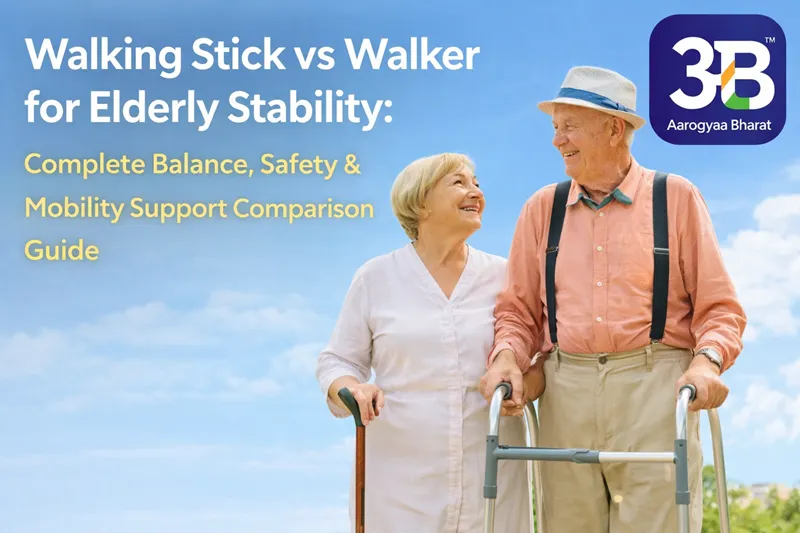
What Is a Walking Stick and How It Supports Stability
A walking stick, also known as a cane, is a lightweight
mobility aid that provides a single additional point of support during walking.
It is most suitable for seniors who still have moderate strength but require
extra balance assistance. Walking sticks help redistribute body weight, reduce
strain on weak legs, and improve walking rhythm. Adjustable height and
ergonomic handles allow comfortable use during daily activities. Many
caregivers explore Aarogyaa Bharat Mobility Aid Categories to select walking sticks
designed for indoor mobility, outdoor walking, or rehabilitation support.
What Is a Walker and Why It Offers Greater Stability
A walker is a four-point support mobility aid designed to
provide maximum stability for seniors with significant balance challenges.
Unlike walking sticks, walkers distribute weight evenly across multiple support
points, making them ideal for individuals recovering from surgery, stroke, or
severe weakness. Walkers encourage slow and controlled movement, reducing the
risk of sudden imbalance. Families frequently integrate walkers with Aarogyaa
Bharat Rehabilitation Categories and Hospital Page equipment to create a
comprehensive recovery environment that supports strength rebuilding and safe
mobility.
Walking Stick vs Walker Stability Comparison
|
Feature |
Walking
Stick |
|
|
Support
Points |
Single point |
Four-point
support |
|
Stability
Level |
Moderate |
Maximum |
|
Weight
Bearing Support |
Partial |
High |
|
Ideal User |
Mild weakness |
Limited
mobility |
|
Indoor
Manoeuvrability |
High |
Moderate |
|
Rehabilitation
Use |
Later stages |
Early stages |
When a Walking Stick Is the Right Choice for Stability
Walking sticks are best suited for seniors who can walk
independently but require minor balance assistance. They are lightweight and
easy to carry, making them practical for short indoor walks or outdoor
activities such as visiting parks or hospitals. Seniors with mild joint pain,
early-stage arthritis, or slight leg weakness often benefit from the
flexibility of a walking stick. Families exploring Aarogyaa Bharat Product
Category Pages often choose walking sticks when the goal is maintaining
independence without adding bulk to daily mobility routines.
When a Walker Provides Better Stability Than a Walking
Stick
Walkers are recommended for seniors who experience
significant balance issues, fatigue, or fear of falling. They are particularly
beneficial during rehabilitation after surgery or illness because they provide
a stable support base that prevents sudden loss of balance. Standard walkers
without wheels offer maximum control, while wheeled walkers allow smoother
movement with reduced effort. Families frequently compare walker options within
Aarogyaa Bharat Mobility Aid Sections and Hospital Page listings to ensure
stability aligns with the user’s mobility level.
Impact on Posture and Weight Distribution
Proper posture plays a major role in preventing long-term
pain and fatigue. Walking sticks encourage natural arm movement and upright
posture when adjusted correctly, but excessive reliance on a single side may
cause imbalance if used improperly. Walkers distribute weight evenly across
both arms, reducing strain on joints and supporting spinal alignment. Many
families use Aarogyaa Bharat Healthcare Calculator tools and Elderly Care
Planning Sections to evaluate posture-related mobility needs when selecting between
walking sticks and walkers.
Indoor Mobility Considerations for Stability
Indoor mobility often requires navigating tight spaces such
as hallways, bathrooms, and kitchens. Walking sticks offer greater
manoeuvrability in compact environments because of their slim design. Walkers
provide stronger support but may require more turning space. Families planning
safer indoor environments frequently combine mobility aids with Aarogyaa Bharat
Elderly Care Solutions such as grab bars, anti-slip mats, and transfer supports
to enhance safety during movement.
Outdoor Walking and Lifestyle Independence
Outdoor environments present different stability challenges
such as uneven surfaces, slopes, and longer walking distances. Walking sticks
provide flexibility and lightweight support for active seniors, while walkers
with wheels or rollator designs offer better control during extended outdoor
mobility. Families exploring Aarogyaa Bharat Hospital Page often
compare walking aids to determine which option provides the right balance of
independence and safety for outdoor use.
Role of Walking Sticks and Walkers in Rehabilitation
Rehabilitation programs often begin with walkers to provide
maximum stability during early recovery stages. As strength improves, seniors
may transition to walking sticks to regain independence and natural walking
patterns. Physiotherapists frequently combine walking aids with Aarogyaa Bharat
Rehabilitation Categories such as resistance bands, balance training tools, and
physiotherapy accessories to support gradual mobility improvement.
Safety Tips for Choosing Between a Walking Stick and a
Walker
Safety should always guide mobility aid selection. Seniors
should choose a walking stick only if they maintain good balance and
coordination. Walkers are more suitable for individuals with frequent
instability or recent medical recovery. Proper height adjustment, ergonomic
grips, and anti-slip bases enhance safety in both options. Adding Aarogyaa
Bharat Elderly Care Accessories such as supportive footwear and floor safety
equipment further reduces fall risk.
Emotional and Psychological Benefits of the Right
Mobility Aid
Using the correct mobility aid improves confidence and
encourages seniors to remain active. Walking sticks provide a sense of
independence for individuals who require minimal assistance, while walkers
offer reassurance for those who feel insecure while walking. Families often
integrate mobility aids with Aarogyaa Bharat Rehabilitation Sections and
Hospital Page equipment to create a supportive environment that promotes
emotional well-being alongside physical safety.
Cost and Long-Term Planning Considerations
Walking sticks are generally more affordable and require
minimal maintenance, making them suitable for mild mobility needs. Walkers may
involve higher investment but provide greater stability and long-term value for
seniors with limited mobility. Families often use Aarogyaa Bharat Healthcare
Calculator tools to estimate overall mobility planning costs when combining
walking aids with physiotherapy equipment and hospital safety solutions.
Important Feature Checklist Before Final Selection
|
Feature |
Why It
Matters |
What to
Check |
|
Adjustable
Height |
Maintains
posture |
Wrist-level
alignment |
|
Ergonomic
Handle |
Comfortable
grip |
Non-slip
padded design |
|
Anti-Slip
Base |
Prevents
slipping |
Durable
rubber tip |
|
Lightweight
Frame |
Easy handling |
Aluminum
construction |
|
Stability
Level |
Matches
mobility needs |
Walking stick
vs walker support |
Conclusion
Choosing between a walking stick and a walker for elderly stability depends on balance level, rehabilitation stage, and daily mobility needs. Walking sticks provide lightweight support for mild weakness, while walkers offer maximum stability for individuals requiring stronger assistance. By understanding these differences and integrating mobility aids with Aarogyaa Bharat Hospital Page solutions, Rehabilitation Categories, Elderly Care Sections, Product Category Pages, and Healthcare Calculator tools, families can create a safe and structured mobility plan that enhances independence, stability, and overall quality of life.