Aarogyaa Bharat’s rehabilitation section highlights the
importance of choosing the right mobility device because the correct walker can
significantly reduce fall risk while supporting physiotherapy recovery and
daily movement. Healthcare calculators used in fall prevention planning
frequently recommend walkers as a primary mobility aid for individuals with
balance challenges. Whether a patient is recovering from surgery, undergoing
physiotherapy sessions, or simply seeking safer movement inside and outside the
home, understanding the difference between wheeled walkers and rollator walkers
helps families select the most appropriate mobility solution.
Understanding Walkers with Wheels
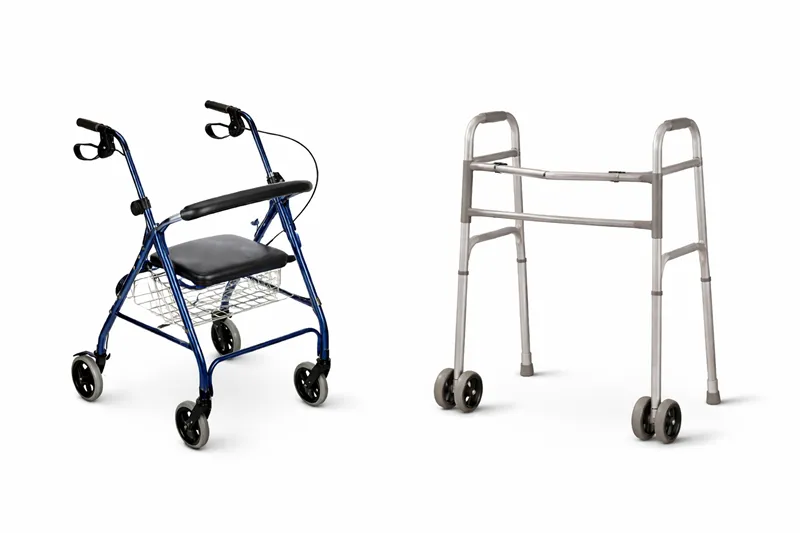
Walkers with wheels are mobility support devices that
typically feature two front wheels and two rear legs fitted with rubber tips.
This design allows the walker to move forward smoothly while maintaining a high
level of stability. Unlike traditional fixed walkers that must be lifted with
every step, wheeled walkers allow users to push the device forward without
lifting it entirely. This feature is particularly helpful for elderly
individuals who may not have the upper body strength required to lift a walker
repeatedly. Physiotherapists listed on hospital pages often recommend wheeled
walkers during early rehabilitation stages when patients require both balance
support and smoother movement. Aarogyaa Bharat’s home care equipment guides
emphasize wheeled walkers because they provide controlled mobility within
indoor environments such as homes, hospitals, and physiotherapy clinics.
Healthcare calculators designed to evaluate mobility limitations frequently
identify wheeled walkers as suitable for patients who require strong support
but still want improved walking convenience.
What Is a Rollator Walker
A rollator walker is a more advanced mobility device
designed with four wheels, hand brakes, and often a built-in seat. Unlike
standard walkers, rollators are intended for users who require mobility
assistance but also want greater independence and smoother movement across
longer distances. Rollators typically include handlebars similar to bicycle
grips along with braking systems that allow the user to control speed and stop
safely. Many rollator walkers also include storage baskets or pouches for carrying
personal items during outdoor walks or shopping trips. Aarogyaa Bharat’s
rehabilitation equipment section highlights rollators as ideal for elderly
individuals who remain relatively active but need walking support. Patients
visiting hospital pages for physiotherapy or neurological rehabilitation often
transition from standard walkers to rollators as their strength and balance
improve. Healthcare calculators that track mobility recovery often recommend
rollator walkers for individuals who can walk independently but still benefit
from additional support and stability.
Key Structural Differences Between Wheeled Walkers and
Rollators
While both mobility aids support walking stability, their
design structures differ significantly in terms of wheel configuration, braking
mechanisms, and overall mobility style. Wheeled walkers typically include two
wheels at the front and fixed legs at the back, ensuring that the walker
remains stable and does not roll away unintentionally. Rollator walkers, on the
other hand, include four wheels and are designed to move continuously while the
user walks behind the frame. Aarogyaa Bharat’s home care and rehabilitation
guides emphasize that wheeled walkers provide greater stability for individuals
who need stronger support, while rollators offer improved mobility for users
who can manage a rolling walker independently. Families often review hospital
pages and consult physiotherapists to determine which walker type matches the
patient’s recovery stage. Healthcare calculators used in fall risk evaluation
also consider factors such as balance, muscle strength, and walking endurance
when recommending specific mobility devices.
Table: Structural Comparison of Wheeled Walker and
Rollator Walker
|
Feature |
Walker
with Wheels |
Rollator
Walker |
|
Wheel
Configuration |
Two front
wheels |
Four wheels |
|
Braking
System |
Usually, no
hand brakes |
Equipped with
hand brakes |
|
Stability
Level |
Higher
stability |
Moderate
stability |
|
Seat
Availability |
Generally, no
seat |
Often
includes built-in seat |
|
Movement
Style |
Push forward
with support |
Continuous
rolling movement |
Mobility Performance and Walking Experience
The walking experience provided by each mobility device
varies based on its structural design. Wheeled walkers allow users to maintain
controlled forward movement while still relying on the rear legs for stability.
This makes them particularly suitable for individuals who are still recovering
strength or balance during rehabilitation programs. Physiotherapists listed on
hospital pages often recommend wheeled walkers for patients recovering from
surgeries such as knee replacement or hip replacement because they provide a
balance between movement assistance and strong structural support. Rollator
walkers offer a more fluid walking experience because the four wheels allow
continuous rolling movement without stopping between steps. Aarogyaa Bharat’s
rehabilitation section explains that rollators are commonly used by seniors who
can walk longer distances but require occasional support or rest. Healthcare
calculators that measure walking endurance often indicate rollator walkers as
suitable for active seniors who enjoy outdoor walks or travel across cities
pages.
Benefits of Walkers with Wheels
- Provide
strong structural support for users with limited balance
- Allow
smoother movement compared to fixed walkers
- Reduce
the need to lift the walker during walking
- Suitable
for indoor environments and physiotherapy clinics
- Recommended
for early rehabilitation stages
- Lightweight
and easier to control than rollators
- Often
used during post-surgery recovery programs
- Compatible
with home care and hospital mobility plans
Advantages of Rollator Walkers for Active Users
Rollator walkers provide several benefits for individuals
who maintain an active lifestyle but require mobility assistance for safety.
The four-wheel design allows users to walk smoothly across longer distances
without stopping repeatedly. Hand brakes provide additional safety by allowing
the user to slow down or stop the walker whenever necessary. Many rollators
also include comfortable seats that allow seniors to rest during longer walks
or while waiting in public spaces. Aarogyaa Bharat’s home care mobility
equipment listings highlight rollators as particularly useful for elderly
individuals who enjoy outdoor activities such as park walks or shopping trips.
Patients transitioning from physiotherapy recovery programs often begin using
rollator walkers once their balance improves. Hospital pages frequently mention
rollators as suitable mobility aids for seniors who need walking assistance but
prefer a more independent and mobile lifestyle.
Table: Functional Comparison of Walker Types
|
Feature |
Wheeled
Walker |
Rollator
Walker |
|
Best For |
Post-surgery
support |
Active
elderly mobility |
|
Indoor Use |
Excellent |
Good |
|
Outdoor Use |
Limited |
Excellent |
|
Control Level |
High
stability |
Requires
better balance |
|
Resting
Support |
No seat
available |
Seat often
included |
Choosing the Right Walker for Elderly Mobility
Selecting the appropriate walker requires understanding the
user’s mobility condition, physical strength, and lifestyle needs. Individuals
who require maximum support and balance stability are usually better suited for
walkers with wheels because these devices provide stronger structural
assistance. Patients recovering from surgery often begin rehabilitation with
wheeled walkers before transitioning to rollators later in their recovery
process. Aarogyaa Bharat recommends evaluating mobility needs carefully and
consulting healthcare professionals listed on hospital pages before selecting a
walker type. Individuals living in different cities pages may also consider
outdoor conditions when choosing mobility equipment, especially if the walker
will be used outside the home. Healthcare calculators designed for mobility
assessment can help determine whether a patient requires maximum support or
greater walking freedom.
How Mobility Aids Support Rehabilitation and Recovery
Rehabilitation programs focus on restoring physical
strength, balance, and walking ability after injuries or surgical procedures.
Mobility aids such as walkers and rollators help patients practice safe walking
movements during this recovery period. Physiotherapists listed on hospital
pages often incorporate walkers into therapy exercises to ensure patients
maintain proper posture and balance while walking. Aarogyaa Bharat’s
rehabilitation section highlights the importance of selecting mobility aids
that match the patient’s recovery stage. Healthcare calculators used by
caregivers and healthcare providers often track walking progress and mobility
improvements during rehabilitation programs. As patients regain strength and
confidence, they may gradually transition from more stable walkers to rollators
that support longer walking distances and increased independence.
Conclusion
Both walkers with wheels and rollator walkers serve important roles in supporting safe mobility for elderly individuals and rehabilitation patients. Wheeled walkers provide strong stability and controlled movement, making them ideal for individuals who require significant balance support or are recovering from surgery. Rollator walkers, on the other hand, offer greater mobility and independence for seniors who can walk longer distances but still benefit from walking assistance and occasional rest. Aarogyaa Bharat’s home care and rehabilitation equipment collections emphasize the importance of choosing the right walker based on the user’s physical condition and lifestyle needs. By consulting hospital pages, reviewing healthcare calculators, and understanding mobility requirements, families can select the walker that provides the best combination of safety, comfort, and independence. With the right mobility aid, elderly individuals can maintain active lifestyles while reducing the risk of falls and injuries.