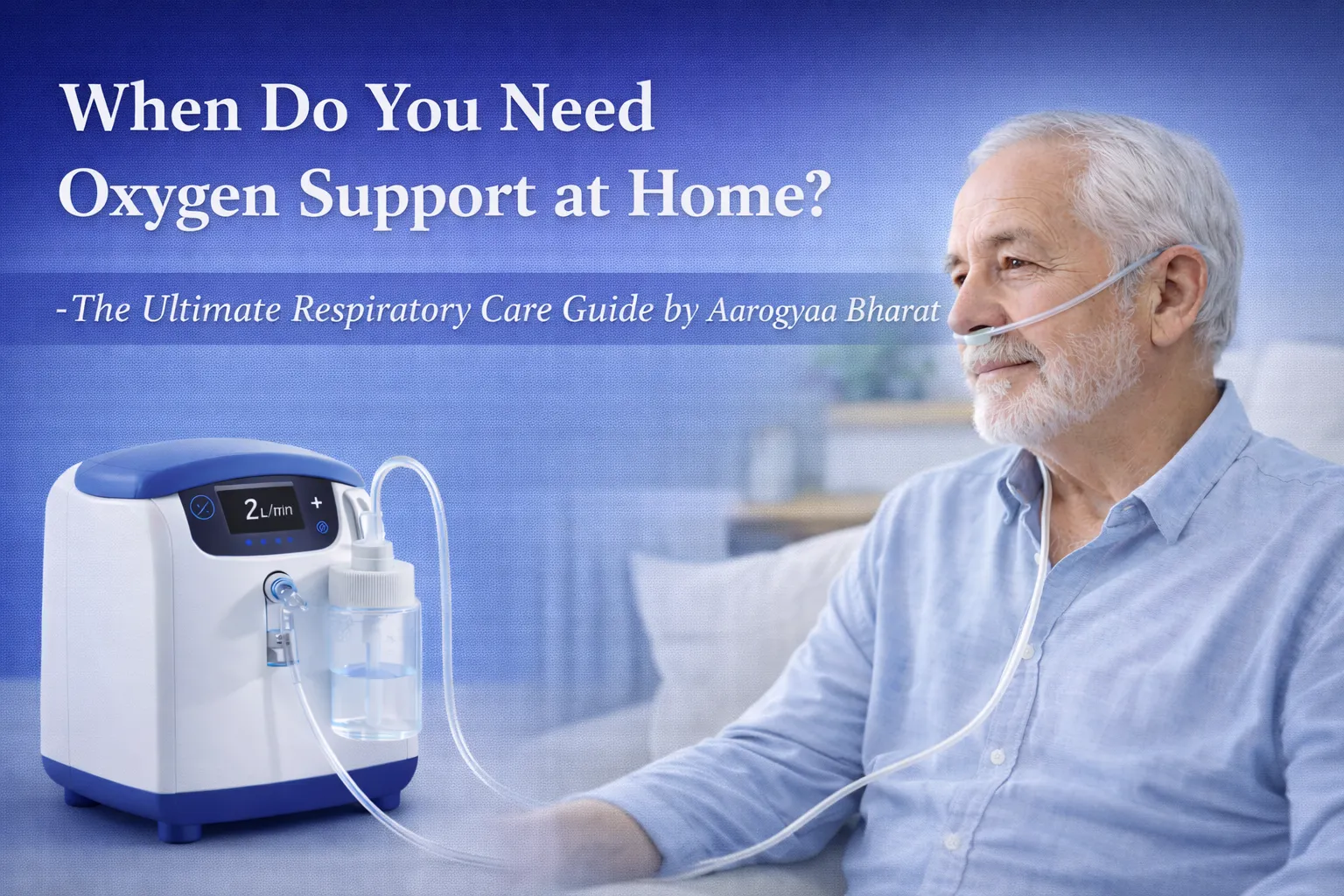
Oxygen support at home involves providing supplemental
oxygen to patients whose lungs are unable to maintain healthy blood oxygen
levels on their own. This therapy can be life-saving, comfort-enhancing, and
recovery-accelerating for people suffering from both acute and chronic medical
conditions. With the rise in air pollution, lifestyle diseases, and post-viral
lung damage, the number of people requiring oxygen support at home has
increased significantly.
Despite its growing importance, many families remain
confused about when oxygen support is actually needed. Some delay therapy until
symptoms becomes severe, while others start oxygen prematurely without medical
guidance. Both situations can be harmful. Delayed oxygen therapy can lead to
organ damage and emergency hospitalizations, while unnecessary oxygen use can
suppress natural breathing drive and cause oxygen toxicity in certain patients.
At Aarogyaa Bharat, we regularly help families make informed
decisions about home oxygen therapy. This comprehensive guide explains exactly
when oxygen support at home is needed, how to recognize warning signs, which
medical conditions require oxygen therapy, how oxygen support works, the
different home oxygen options available, safety guidelines, and how to choose
the right setup for long-term respiratory wellness.
What Is Oxygen Support and Why It Matters
Oxygen support refers to the medical practice of supplying
additional oxygen to a patient whose body is not receiving enough oxygen from
normal breathing. This supplemental oxygen increases the concentration of
oxygen in the air the patient inhales, helping raise blood oxygen saturation
levels and ensuring that vital organs such as the brain, heart, and kidneys
receive sufficient oxygen to function properly.
In healthy individuals, blood oxygen saturation (SpO₂)
levels typically range between 95% and 100%. When oxygen levels drop below this
range, the body begins to experience hypoxemia, which can cause fatigue,
confusion, shortness of breath, chest pain, and in severe cases, loss of
consciousness or organ failure. Long-term hypoxemia places immense strain on
the heart and lungs, significantly increasing the risk of heart attacks,
strokes, and respiratory failure.
Oxygen support at home allows patients to stabilize their
oxygen levels without being confined to a hospital bed. This not only improves
comfort and quality of life but also reduces healthcare costs, lowers infection
risk, and supports faster recovery. For elderly individuals and patients with
chronic conditions, home oxygen therapy often becomes a long-term companion
that enables them to live more independently.
However, oxygen support must always be administered based on
medical assessment and prescription. Oxygen is a drug, and like any drug, it
can have side effects and risks if misused. Understanding when oxygen therapy
is truly needed is the first step toward safe and effective respiratory care.
Key Warning Signs That You May Need Oxygen Support at
Home
One of the biggest challenges in respiratory care is
recognizing the early warning signs that indicate a need for oxygen support.
Many patients ignore or underestimate symptoms, assuming that breathlessness or
fatigue is a normal part of aging or illness. In reality, these symptoms may
signal dangerously low oxygen levels that require immediate medical attention.
Persistent shortness of breath is one of the most common
signs. If you feel breathless while resting, talking, or performing minimal
physical activity such as walking across a room, it may indicate that your
lungs are not delivering enough oxygen to your bloodstream. Breathlessness that
worsens at night or while lying flat is particularly concerning.
Chronic fatigue and weakness are another major warning sign.
Low oxygen levels reduce energy production in the body, leading to constant
tiredness, muscle weakness, and difficulty concentrating. Many patients with
hypoxemia report feeling “drained” even after a full night’s sleep.
Other critical symptoms include bluish lips or fingertips
(cyanosis), frequent headaches, dizziness, confusion, rapid heartbeat, chest
tightness, and persistent coughing. These signs suggest that oxygen deprivation
is already affecting vital organs and requires urgent evaluation.
If you or a loved one experience any of these symptoms
regularly, a pulse oximeter test and medical consultation are essential to
determine whether oxygen support at home is needed.
Understanding Blood Oxygen Levels and When They Are
Dangerous
Blood oxygen saturation (SpO₂) is a key metric used to
assess whether a patient needs oxygen support. This value represents the
percentage of hemoglobin in the blood that is carrying oxygen. It is typically
measured using a pulse oximeter, a small, non-invasive device that clips onto a
finger.
In general, the following SpO₂ ranges are used as
guidelines:
- 95%-100%:
Normal oxygen levels
- 90%-94%:
Mild hypoxemia (monitor closely)
- 85%-89%:
Moderate hypoxemia (medical evaluation needed)
- Below
85%: Severe hypoxemia (emergency situation)
Most doctors recommend starting oxygen therapy when SpO₂
levels consistently fall below 88%-90%, especially at rest or during sleep. At
these levels, the risk of organ damage and cardiac strain increases
significantly.
However, SpO₂ numbers alone should not be the only deciding
factor. Some patients, such as those with chronic lung disease, may naturally
have slightly lower baseline oxygen levels. In such cases, doctors assess
symptoms, lung function tests, arterial blood gas (ABG) results, and overall
clinical condition before prescribing oxygen support.
Understanding these thresholds helps families make timely
and informed decisions rather than waiting for a crisis to occur.
Medical Conditions That Commonly Require Oxygen Support
at Home
Chronic Obstructive Pulmonary Disease (COPD) is the leading
cause of long-term home oxygen therapy worldwide. COPD damages lung tissue and
restricts airflow, making it difficult for oxygen to enter the bloodstream. As
the disease progresses, many patients require supplemental oxygen for several
hours a day or even continuously.
Post-COVID lung damage has emerged as a major reason for
home oxygen support, especially among elderly patients. Many individuals
experience lung fibrosis, reduced lung capacity, and persistent breathlessness
months after recovering from COVID-19. Oxygen therapy supports gradual lung
healing and reduces strain on the heart and other organs.
Pulmonary fibrosis, interstitial lung disease, and
bronchiectasis are other chronic lung conditions that frequently require oxygen
support. These diseases cause scarring and inflammation in lung tissue,
reducing oxygen absorption efficiency.
Heart failure patients may also need oxygen therapy when
poor cardiac output leads to inadequate oxygen delivery to tissues. In such
cases, supplemental oxygen improves circulation efficiency and reduces cardiac
workload.
Severe asthma, pneumonia recovery, neuromuscular disorders,
obesity hypoventilation syndrome, and advanced age-related respiratory decline
are additional conditions where oxygen support at home may be medically
necessary.
Acute Situations That May Temporarily Require Home Oxygen
Not all oxygen therapy is permanent. Many patients require
temporary oxygen support during acute illness or recovery phases. Severe
pneumonia, COVID-19, influenza, and bronchitis can cause temporary lung
inflammation that reduces oxygen absorption.
Post-surgical patients, especially those who have undergone
chest surgery or anaesthesia, may experience short-term oxygen deprivation that
requires supplemental oxygen during recovery.
High-altitude travel or relocation can also trigger
hypoxemia in individuals who are sensitive to reduced oxygen pressure.
Temporary home oxygen therapy may be prescribed until the body adapts to the
new environment.
In these cases, oxygen support is usually gradually reduced
and discontinued as lung function improves under medical supervision.
Different Types of Home Oxygen Support Options
There are three main types of oxygen support options used at
home: oxygen concentrators, oxygen cylinders, and portable oxygen
concentrators. Each option serves a specific purpose and may be used alone or
in combination depending on the patient’s needs.
Oxygen concentrators are the most popular choice for
long-term home therapy. They generate oxygen from room air and provide an
unlimited supply as long as electricity is available. They are safer, more
economical, and more convenient than cylinders.
Oxygen cylinders store compressed oxygen and provide
immediate high-flow oxygen support. They are commonly used as backup solutions
during power outages or emergencies. However, they require regular refilling
and are heavy to handle.
Portable oxygen concentrators are compact, battery-powered
devices that allow patients to move freely while receiving oxygen therapy. They
are ideal for travel, outdoor mobility, and emergency backup use.
Choosing the right combination of these options is essential
for ensuring uninterrupted oxygen therapy at home.
How Doctors Decide If You Need Oxygen Support at Home
Doctors use a combination of tests and clinical assessments
to determine whether a patient needs home oxygen therapy. Pulse oximetry is the
most common initial screening tool, providing quick SpO₂ readings.
Arterial blood gas (ABG) tests offer more precise
measurements of oxygen and carbon dioxide levels in the blood. These tests help
identify both hypoxemia and hypercapnia (CO₂ retention), guiding treatment
decisions.
Pulmonary function tests, chest X-rays, CT scans, and
echocardiograms may also be used to diagnose underlying lung or heart
conditions and assess disease severity.
Doctors consider factors such as symptom severity, activity
tolerance, sleep oxygen levels, and response to short-term oxygen therapy
before prescribing long-term home oxygen support.
Benefits of Starting Oxygen Support at the Right Time
- Starting oxygen therapy at the right time offers numerous physical and psychological benefits. It reduces breathlessness, improves sleep quality, increases energy levels, and enhances overall quality of life.
- Oxygen therapy also protects vital organs from damage caused by chronic hypoxemia. It reduces strain on the heart, lowers the risk of pulmonary hypertension, and improves cognitive function.
- For chronic lung disease patients, timely oxygen support significantly reduces hospital admissions and emergency visits. It also slows disease progression and improves long-term survival rates.
- Perhaps most importantly, oxygen therapy restores confidence and independence, allowing patients to engage in daily activities with less fear and discomfort.
Safety Guidelines for Home Oxygen Support
- Oxygen is highly flammable, so strict safety precautions must be followed. Never allow smoking, candles, incense, or open flames near oxygen equipment.
- Ensure proper ventilation around oxygen concentrators and avoid placing them near heat sources or direct sunlight.
- Use only doctor-prescribed flow rates and never adjust oxygen levels without medical guidance.
- Secure tubing neatly to prevent tripping hazards, especially for elderly patients.
- Keep a backup oxygen cylinder or portable concentrator in case of power outages or equipment failure.
When Home Oxygen Is Not Enough
- In some cases, oxygen therapy alone may not be sufficient. Patients with severe breathing muscle weakness, CO₂ retention, or sleep-related breathing disorders may require additional respiratory support such as BiPAP or ventilator therapy.
- If symptoms persist or worsen despite oxygen support, immediate medical evaluation is necessary to reassess treatment strategy.
- Never assume that increasing oxygen flow will solve all breathing problems. In some conditions, excessive oxygen can be harmful.
Home Oxygen Decision Guide Table
|
Scenario |
Oxygen
Support Needed? |
Typical
Duration |
|
COPD with
SpO₂ < 88% |
Yes |
Long-term /
Permanent |
|
Post-COVID
Breathlessness |
Yes |
Temporary /
Gradual |
|
Pneumonia
Recovery |
Yes |
Short-term |
|
Mild Asthma |
No |
Not Usually
Required |
|
Heart Failure
with Hypoxemia |
Yes |
Long-term |
|
High-Altitude
Exposure |
Sometimes |
Temporary |
Conclusion
Knowing when you need oxygen support at home can mean the
difference between stable recovery and a life-threatening emergency. From
chronic lung diseases and post-COVID complications to heart failure and acute
respiratory infections, oxygen therapy plays a vital role in modern home
healthcare.
Recognizing early warning signs, understanding blood oxygen
levels, and seeking timely medical evaluation are critical for safe and
effective oxygen therapy. Starting oxygen support at the right time improves
quality of life, protects vital organs, and restores independence.
At Aarogyaa Bharat, we specialize in providing high-quality
oxygen concentrators, cylinders, portable oxygen solutions, and expert
consultation tailored to each patient’s medical condition and lifestyle. Our
mission is to ensure that every individual receives the right respiratory
support at the right time.