



At Aarogyaa Bharat, we support thousands of families caring for elderly patients, post-COVID survivors, and people living with COPD, pulmonary fibrosis, heart failure, and asthma. Based on medical guidelines, manufacturer standards, and real-world home-care experience, this guide explains whether 24/7 use is safe, when it is recommended, what precautions you must take, and how to protect both the patient and the machine.
Short Answer: Yes, But With Medical Guidance and Proper Setup
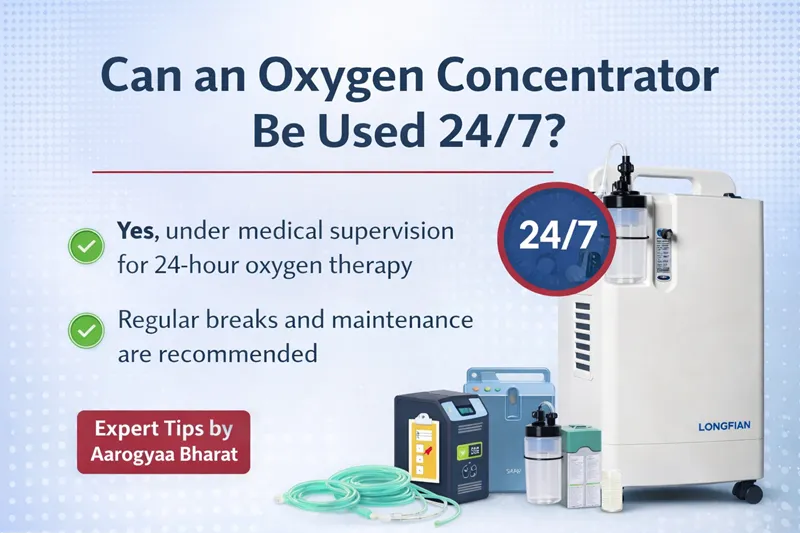
Yes, an oxygen concentrator can be used 24 hours a day, but only under doctor supervision and with the right machine, accessories, and maintenance routine. Many modern home oxygen concentrators are specifically designed for continuous operation and are used worldwide in hospitals, ICUs, and long-term home-care environments.
However, 24/7 usage is not something families should decide on their own. Oxygen therapy is a medical treatment, not just an appliance. The flow rate, duration, and delivery method must always be prescribed by a qualified doctor or pulmonologist based on the patient’s condition, oxygen saturation levels, and disease progression.
Continuous oxygen use without medical advice can lead to complications such as oxygen toxicity, carbon dioxide retention (in some COPD patients), nasal dryness, and reduced respiratory drive. So while the machine itself can run 24/7, the therapy plan must always be medically guided.
When Is 24/7 Oxygen Therapy Actually Required?
Not every patient needs oxygen around the clock. Continuous oxygen therapy is typically prescribed only in specific medical situations where blood oxygen levels remain low even at rest.
Doctors may recommend 24-hour oxygen use in conditions such as:
-
Severe COPD with chronic hypoxemia
-
Pulmonary fibrosis or interstitial lung disease
-
Advanced heart failure
-
Late-stage post-COVID lung damage
-
Neuromuscular disorders affecting breathing
-
Terminal respiratory illnesses requiring palliative care
In these cases, oxygen is not just a support—it becomes a life-sustaining therapy. The goal is to maintain oxygen saturation (SpO₂) above safe thresholds, reduce strain on the heart and brain, improve sleep quality, and prevent organ damage caused by long-term oxygen deprivation.
Are Oxygen Concentrators Built for Continuous Operation?
Yes, most standard 5L and 10L oxygen concentrators are designed for long-hour and continuous use, especially medical-grade models supplied for hospital or home-care use. These machines are engineered with internal cooling fans, heat sensors, compressors, and filtration systems that allow them to run for many hours without shutdown.
That said, not all concentrators are equal. Portable oxygen concentrators (POCs) meant for travel are not designed for heavy 24/7 stationary use. They are optimized for mobility, battery life, and short-term support, not continuous operation.
For round-the-clock therapy, families should always choose:
-
A stationary oxygen concentrator
-
Minimum 5 LPM capacity (or higher if prescribed)
-
High oxygen purity rating (90–95%)
-
Low-noise operation
-
Heavy-duty compressor design
-
Availability of spare parts and service support
At Aarogyaa Bharat, we only recommend models that are proven for long-term continuous use in Indian home conditions.
Will Running an Oxygen Concentrator 24/7 Damage the Machine?
Not if it is used correctly and maintained properly. Continuous use does put more mechanical stress on internal components such as the compressor, cooling fan, and filters, but medical-grade concentrators are built with this usage pattern in mind.
However, problems arise when families ignore maintenance routines or operate the machine in poor environmental conditions. Dust buildup, blocked air vents, overheating, voltage fluctuations, and neglected filters can significantly shorten the lifespan of a concentrator running 24/7.
To protect your machine during continuous use:
-
Keep at least 1–2 feet of clearance around air vents
-
Clean foam intake filters weekly
-
Replace HEPA filters every 6–12 months
-
Use a surge protector
-
Avoid placing the machine near walls, curtains, or heat sources
-
Keep the room well-ventilated
With proper care, a good-quality concentrator can safely run for years even with daily 24-hour usage.
Does 24/7 Use Increase Electricity Consumption Significantly?
Yes, continuous use does increase electricity consumption, but it is still far more economical than oxygen cylinders for long-term therapy.
On average:
-
A 5L oxygen concentrator consumes 300–600 watts per hour
-
A 10L concentrator consumes 600–900 watts per hour
If a 5L machine runs 24 hours daily, monthly electricity consumption may range between 220–400 units, depending on the model and local voltage conditions.
While this adds to the electricity bill, it is still significantly cheaper than the recurring cost and logistics of refilling oxygen cylinders, especially in urban Indian settings.
Using a voltage stabilizer and ensuring proper airflow around the machine can also improve energy efficiency and reduce power strain.
What Accessories Are Mandatory for 24/7 Oxygen Use?
Running a concentrator 24/7 without proper accessories is unsafe. A continuous oxygen setup must include:
-
Humidifier bottle - Prevents nasal dryness and nosebleeds
-
Multiple nasal cannulas - Changed every 7–15 days
-
Spare oxygen tubing - Prevents emergency interruptions
-
HEPA filters - Maintains oxygen purity
-
Pulse oximeter - Monitors SpO₂ levels at home
-
Power backup (UPS or inverter) - Protects during power cuts
-
Small oxygen cylinder backup - Emergency safety net
-
Surge protector - Protects machine from voltage spikes
These accessories are not optional luxuries they are safety requirements for long-duration oxygen therapy.
What Are the Health Risks of Using Oxygen 24/7?
While oxygen therapy saves lives, overuse or misuse can cause complications if not medically supervised.
Potential risks include:
-
Oxygen toxicity - Excess oxygen can damage lung tissues over time
-
Carbon dioxide retention - In some COPD patients
-
Nasal and throat dryness - Without humidification
-
Reduced respiratory drive - With uncontrolled oxygen flow
-
Infections - From dirty cannulas or tubing
This is why doctors always prescribe a specific flow rate and usage schedule, even for 24-hour therapy. Never increase oxygen flow on your own just because the patient feels breathless.
Should the Machine Be Switched Off Occasionally?
In most modern concentrators, short rest breaks are not medically necessary, but they are sometimes recommended for mechanical longevity especially in hot or dusty environments.
If the patient can tolerate brief pauses (for example, during meals or bathroom breaks), giving the machine a 15-30 minute rest once or twice a day may help reduce internal heat buildup and mechanical wear.
However, in patients who are strictly dependent on oxygen, the machine should not be switched off unless an alternate oxygen source (like a cylinder) is ready and connected.
When Should You Call a Technician Immediately?
If your concentrator is running 24/7, you should contact service support immediately if you notice:
-
Oxygen purity remaining low
-
Continuous alarm beeping
-
Burning smell
-
Unusual vibration or loud noise
-
Overheating or auto shutdown
-
Reduced airflow despite correct settings
Ignoring these warning signs can lead to sudden machine failure and medical emergencies.
How Aarogyaa Bharat Supports 24/7 Oxygen Users
At Aarogyaa Bharat – Live Healthy, Live Better, we specialize in long-term home respiratory care. We don’t just sell machines we build complete oxygen ecosystems.
We provide:
-
Medical-grade concentrators suitable for 24/7 use
-
All essential accessories and backups
-
Doorstep installation and training
-
Maintenance guidance and filter schedules
-
Emergency replacement support
-
Rental and purchase options across India
Our mission is to ensure that families never face oxygen shortages, technical confusion, or panic-driven medical decisions.
Conclusion
Yes an oxygen concentrator can be used 24/7 safely, provided:
-
A doctor has prescribed continuous oxygen therapy
-
A medical-grade stationary concentrator is used
-
Proper accessories are installed
-
Power backup and cylinder backup are available
-
Filters and hygiene routines are followed
-
SpO₂ levels are regularly monitored
When used responsibly, 24-hour oxygen therapy can dramatically improve quality of life, reduce hospitalizations, and support long-term recovery.
If your loved one depends on oxygen day and night, let Aarogyaa Bharat help you build a safe, reliable, and stress-free home oxygen setup.





