Why Is Regular CPAP Cleaning Important?
CPAP equipment comes into close contact with the face and
continuously moves air through a mask and tubing during sleep, so routine
cleaning helps remove facial oils, moisture, dust, and other contaminants that
accumulate during everyday use. The FDA explains that germs from the mouth,
throat, lungs, or skin can reach CPAP accessories and that dust, mold, or
allergens may also enter the mask or hose, which is why regular cleaning is
recommended. Cleaning also supports equipment performance because facial oils
can interfere with a mask cushion's seal and damaged or heavily contaminated
components may become less comfortable to use. Aarogyaa Bharat's Understanding
CPAP and BiPAP for Home Therapy guide likewise recommends keeping masks,
tubing, and humidifiers clean and replacing filters and accessories according
to instructions. Cleaning does not mean sterilizing every component every day;
the objective is to follow a consistent routine appropriate for the specific
machine, mask, humidifier, tubing, and filter supplied by the manufacturer.
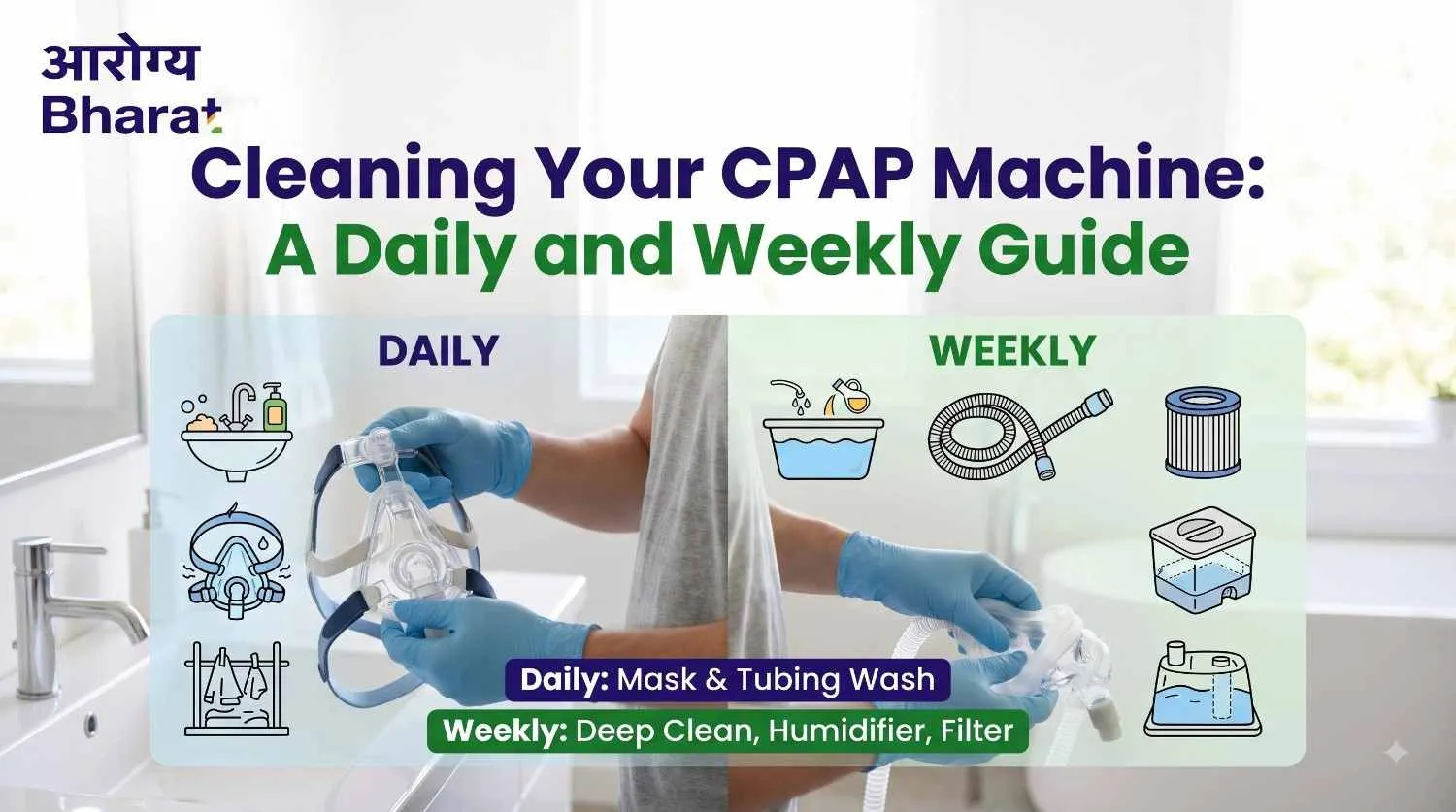
CPAP Daily and Weekly Cleaning Schedule
|
CPAP
Component |
Daily Care |
Weekly
Care |
Important
Point |
|
Mask
Cushion / Nasal Pillows |
Clean
according to mask instructions |
Inspect for
wear and leaks |
Facial oils
can affect the seal |
|
Mask Frame |
Wipe if
required |
Wash as
instructed |
Allow to
air-dry completely |
|
Headgear /
Straps |
Inspect |
Usually clean
weekly |
Do not damage
fastening material |
|
Air Tubing |
Check for
moisture or damage |
Usually clean
weekly |
Dry fully
before reconnecting |
|
Humidifier
Chamber |
Empty and
allow to dry |
Thorough
cleaning as instructed |
Do not leave
stagnant water indefinitely |
|
Machine
Exterior |
Wipe if dusty |
Clean
exterior as instructed |
Never immerse
the CPAP unit |
|
Filter |
Check if
visibly dirty |
Inspect
according to manual |
Disposable
filters should not be washed unless allowed |
|
Mask Vent |
Check that it
is clear |
Inspect
during cleaning |
Never
intentionally block vent holes |
Important: Cleaning schedules differ between
manufacturers and products. ResMed, for example, recommends daily cleaning of
many silicone mask cushions, daily emptying of compatible humidifier tubs, and
weekly cleaning of tubing, mask frames, and headgear. Your own product manual
should always take priority.
Daily CPAP Cleaning: What Should You Do Every Morning?
A simple morning routine can prevent residue and moisture
from remaining on CPAP equipment throughout the day. After turning the machine
off, disconnect it from power before performing cleaning that involves water
and separate the components that the manufacturer instructs you to clean. Many
silicone mask cushions benefit from daily hand washing because they are in
direct contact with skin oils throughout the night. ResMed recommends gently
cleaning compatible silicone cushions with warm, drinking-quality water and
mild detergent or soap and then rinsing thoroughly before air-drying away from
direct sunlight. If a humidifier is used, its chamber should generally be
emptied after use when directed by the manufacturer rather than allowing
yesterday's water to sit indefinitely. Check the tubing for visible water
accumulation and leave cleaned components enough time to dry before nighttime
therapy. Never reconnect wet electrical connectors or place washable
accessories back onto the machine until they are appropriately dry.
How to Clean the CPAP Mask Cushion Daily
The mask cushion deserves frequent attention because it sits
directly against the skin and collects facial oils, perspiration, and skin-care
products that can reduce the quality of the seal. For compatible silicone
masks, ResMed recommends gentle hand washing using warm water and an
appropriate mild cleaning product, followed by thorough rinsing and air-drying
away from direct sunlight. Avoid aggressively scrubbing, stretching, twisting,
or using rough brushes on delicate mask materials because this may shorten
their usable life. A clean cushion should feel free of obvious oily residue
before it is reused. Patients who use facial creams at night may notice greater
mask movement or leakage if substantial product remains between the skin and
cushion. Persistent leaks despite cleaning can indicate incorrect mask
positioning, worn cushions, or inappropriate sizing rather than a hygiene
problem alone. Mask-specific instructions should always be checked because
materials such as memory foam may require a different cleaning method.
Memory-Foam CPAP Masks Need Different Cleaning
One of the most important exceptions to ordinary
mask-washing guidance involves memory-foam cushions. Certain ResMed AirTouch
cushions, for example, should not be rinsed or submerged in water; the
manufacturer instead provides specific wipe-based cleaning instructions for
these materials. Washing a memory-foam cushion as though it were silicone can
damage the material, change the way it fits, and reduce its expected lifespan.
This is why a generic instruction such as "wash every CPAP mask in soap
and water every day" can be incorrect. Before cleaning a new mask, check
its model name and user guide and determine whether the cushion is silicone,
foam, fabric-containing, or another specialized material. The same principle
applies to replacement masks purchased separately from the original machine. If
the cleaning instructions have been lost, obtain the manufacturer's current
guide instead of relying only on how the material looks or how another person's
mask is maintained.
Empty and Dry the Humidifier Chamber Daily
A CPAP humidifier adds moisture to the airflow to improve
comfort for selected users, but the water chamber should be maintained
carefully because it repeatedly contains water. ResMed recommends emptying
compatible humidifier tubs daily, wiping them appropriately, and allowing them
to dry away from direct sunlight before later use. Do not leave old water
sitting in the chamber for extended periods simply because some remains after
the previous night. When refilling, use the water type and maximum fill level
specified by the machine manufacturer; requirements can vary between devices
and regions. The chamber should remain clean, clear, and free from obvious
discoloration, cracks, cloudiness, or damaged seals. If mineral deposits
repeatedly form, check the manufacturer's approved cleaning method rather than
scraping the chamber with sharp objects or harsh abrasive products. An
incorrectly installed or overfilled water chamber can also create leaks or
condensation problems, so it should be seated exactly as shown in the device
instructions.
Check the CPAP Tubing for Moisture Every Day
Air tubing usually requires a more thorough wash less
frequently than a mask cushion, but it should still be checked each morning for
moisture, kinks, disconnections, cracks, or unusual residue. Condensation can
form when humidified air cools inside the tube, particularly when the bedroom
is cool or humidity is set relatively high. If water is present, disconnect the
tubing according to the machine instructions and allow it to dry appropriately
rather than leaving water trapped inside until the next night's therapy. Avoid
using direct heat, hair dryers, radiators, or prolonged sunlight unless the
manufacturer specifically allows such methods, because excessive heat can
damage tubing materials. ResMed advises drying compatible tubing away from
direct sunlight after cleaning. If tubing repeatedly fills with water, review
humidification and heated-tube settings according to the device instructions or
discuss persistent condensation with the equipment provider. Do not solve
recurring moisture problems by making clinical pressure changes.
Weekly CPAP Cleaning Routine
Once a week, set aside enough time to clean the CPAP
components that do not necessarily need full washing every morning. For many
systems, this includes the air tubing, mask frame, headgear, and a more
thorough cleaning of the humidifier chamber. ResMed's current guidance
recommends weekly cleaning of compatible mask frames, headgear, and air tubing,
while its humidifier instructions include a more thorough weekly wash or soak
according to the specific chamber directions. Before cleaning, switch the CPAP
off, unplug the electrical unit, and disconnect only the washable components.
Use warm water and the mild cleaning product approved for the equipment, rinse
thoroughly, and allow everything to air-dry completely away from direct
sunlight before reassembly. Weekly cleaning is also a good opportunity to
inspect all parts for deterioration, including stretched headgear, loose
connectors, cloudy humidifier tubs, cracked tubing, worn mask cushions, and
dirty filters. Identifying wear early can prevent sudden equipment problems
later.
How to Clean CPAP Tubing Weekly
For compatible CPAP tubing, disconnect both ends from the
machine and mask before washing. ResMed recommends cleaning suitable air tubing
in warm, drinking-quality water using mild detergent, rinsing it thoroughly,
and allowing it to dry on a clean surface away from direct sunlight. Make sure
cleaning water reaches the internal surface of the tube, since simply wiping
the outside does not clean the airway through which therapy air travels. After
rinsing, continue until obvious soap residue and bubbles are gone. The tubing
needs adequate drying time before it is reconnected because trapped moisture
can create discomfort or gurgling during therapy. Heated tubes may contain
electrical connectors that must be handled carefully and kept according to the
manufacturer's instructions. Do not place ordinary CPAP tubing in a dishwasher
or washing machine unless the specific product guide expressly permits it;
ResMed, for example, advises against machine washing its compatible air tubing.
How to Clean CPAP Headgear Weekly
Headgear helps hold the mask in the correct position and
absorbs skin oils, perspiration, and hair products during repeated use. Many
manufacturers recommend hand washing compatible headgear approximately weekly
using mild soap or detergent and warm water, followed by thorough rinsing and
air-drying away from direct heat and sunlight. ResMed provides weekly headgear
cleaning guidance for many of its mask systems. Avoid ironing headgear or
exposing it to excessive heat because elastic materials and fastening systems
can become damaged. Do not aggressively stretch straps while wet, as this may
change their fit. Headgear that has become permanently stretched may require
increasing strap tension to maintain the mask seal and can eventually need
replacement. If a freshly cleaned mask suddenly leaks, make sure the straps
have fully dried and that the mask has been reassembled correctly before
assuming the cushion or therapy pressure is responsible.
How to Deep-Clean the Humidifier Chamber Weekly
A more thorough weekly humidifier cleaning helps remove
residue that may not disappear through daily emptying alone. For compatible
ResMed water tubs, the manufacturer describes cleaning with warm water and mild
dishwashing liquid and, for certain products, an approved diluted vinegar
solution when additional scale removal is needed. The correct mixture, soaking
time, and whether a chamber can enter a dishwasher vary by product, so do not
use a vinegar recipe from another brand without checking your own user guide.
After cleaning, rinse thoroughly so that no detergent or cleaning solution
remains and allow the chamber to dry before use. Inspect the tub for cracks,
leaks, cloudiness, pitting, damaged seals, or persistent buildup. A chamber
with structural damage should be replaced rather than repaired with glue or
household sealants. Never allow cleaning liquid or humidifier water to enter
the CPAP machine's motor or electronic housing.
Clean the CPAP Machine Exterior Without Getting It Wet
The main CPAP unit contains a motor, sensors, electronic
controls, and electrical connections and therefore should not be washed like
the removable mask, tubing, or humidifier chamber. The device exterior can
generally be wiped according to the manufacturer's instructions after the
machine has been unplugged, while water should be kept away from openings,
connectors, and the internal airflow system. ResMed's clinical guidance
recommends wiping the exterior of compatible devices rather than immersing them.
Place the CPAP on a stable, clean, dry bedside surface where the air intake is
not blocked by curtains, bedding, papers, or dust. Cleaning around the machine
also helps reduce environmental dust that can enter the filter. Never spray
cleaner directly onto the CPAP unit because liquid droplets may reach internal
components. If liquid is accidentally spilled into the machine, disconnect it
from power when safe and obtain manufacturer or service-provider advice before
using it again.
Check the CPAP Filter Regularly
Filters help protect the machine's air pathway from dust and
other particles, but the correct maintenance procedure depends strongly on the
CPAP model because some filters are washable while others are disposable. Never
wash a disposable filter unless the manufacturer's manual explicitly says it
can be washed. Similarly, a reusable filter should be completely dry before
being reinstalled if washing is permitted, because operating the device with a
wet filter may affect performance. Cleveland Clinic notes that reusable CPAP
filters may require routine cleaning, while manufacturer schedules differ by
machine. Inspect the filter for visible dust, discoloration, damage, or
blockage and follow the specified replacement interval. Do not add unofficial
filters to a CPAP or BiPAP circuit; the FDA has specifically warned in the
context of certain recalled devices that adding unauthorized filters can change
how the machine works. When renting equipment, confirm which filters the
provider supplies and who is responsible for replacements.
Daily vs Weekly CPAP Cleaning: Easy Routine
|
Time |
Cleaning
Task |
|
Every
Morning |
Clean
compatible mask cushion or nasal pillows according to instructions |
|
Every
Morning |
Empty
humidifier chamber and allow it to dry if required by your device |
|
Every
Morning |
Check tubing
for moisture, damage or disconnection |
|
Every
Morning |
Check mask
vent openings are clear |
|
Weekly |
Clean
compatible mask frame |
|
Weekly |
Wash
compatible headgear |
|
Weekly |
Clean air
tubing thoroughly |
|
Weekly |
Perform
manufacturer-recommended humidifier cleaning |
|
Weekly |
Wipe CPAP
machine exterior |
|
Weekly |
Inspect
filter and replace/clean only according to instructions |
|
Weekly |
Inspect mask
cushion, tubing and connectors for damage |
|
Regularly |
Replace worn
components according to condition and manufacturer guidance |
This routine is a practical framework rather than a
universal manufacturer schedule. Always follow the cleaning instructions
supplied with your specific CPAP machine, mask, humidifier, tubing, and filter.
What Soap Should You Use to Clean CPAP Equipment?
A mild cleaning product recommended by the manufacturer is
generally preferred over strong household disinfectants. ResMed recommends a
mild liquid detergent or appropriate pure soap for many compatible mask and
tubing products and warns that stronger cleaning agents can damage materials or
leave undesirable residue. Avoid assuming that antibacterial, heavily scented,
alcohol-based, bleach-containing, or oil-based products are automatically
better simply because they seem stronger. Some of these chemicals can degrade
mask cushions, tubing, or headgear and may leave smells or residue directly in
the airflow pathway. Do not add essential oils or fragrance products to the
humidifier chamber or mask. The safest approach is to check the exact cleaning
substances approved in the equipment manual. If the manufacturer specifies only
mild soap and water, introducing additional disinfectants is unnecessary unless
a healthcare or infection-control professional gives specific instructions.
Avoid Ozone and Unauthorized UV CPAP Cleaners
Automated devices advertised as CPAP "sanitizers"
can appear convenient, but users should not assume they replace ordinary
manufacturer-recommended cleaning. The FDA states that most CPAP masks and
hoses can be cleaned with mild soap and water according to the manufacturer's
instructions and warns that it has concerns about unauthorized devices using
ozone gas or ultraviolet light. The FDA has received reports of headaches,
breathlessness, and asthma attacks associated with ozone-based CPAP cleaning
devices, and it notes that ozone and UV exposure may also damage CPAP
accessories. A specific add-on bacterial-reduction device has received FDA
authorization for particular accessories, but the FDA emphasizes that such a
device supplements rather than replaces the manufacturer's regular cleaning
procedure. The safest general rule remains straightforward: follow the CPAP and
mask manufacturer's cleaning instructions rather than purchasing a third-party
sanitizer and assuming it provides a superior or medically necessary cleaning
method.
Do Not Use Bleach, Alcohol, Perfume or Essential Oils
Unless Approved
Strong-smelling or harsh cleaning products are a common
mistake because patients may believe the equipment needs to smell
"disinfected" after washing. ResMed's mask-care information advises
avoiding substances such as alcohol, bleach, antibacterial soaps, scented oils,
and other strong-smelling products on many of its compatible mask components.
Chemical residue can also remain close to the nose and mouth for several hours
during treatment, making unnecessary fragrance undesirable. Essential oils
should never be placed inside the humidifier chamber or directly onto tubing
unless a manufacturer has specifically designed and approved a system for that
use. If equipment develops a persistent unpleasant smell despite correct
washing and drying, inspect it for deterioration or contamination rather than
masking the odour with perfume. Components that remain discoloured, cracked,
cloudy, or odorous despite appropriate cleaning may need replacement or
service-provider evaluation.
Let Every CPAP Part Dry Completely
Drying is just as important as washing because moisture left
inside a mask, tube, or humidifier can make nighttime therapy uncomfortable and
can complicate equipment hygiene. Clean CPAP components early enough in the day
that they have sufficient time to air-dry before bedtime. ResMed recommends
drying compatible masks and tubing away from direct sunlight. Avoid trying to
accelerate drying with a hair dryer, heater, radiator, direct flame, or other
high-heat source because heat can deform plastic, silicone, tubing, headgear,
or seals. Place components on a clean towel or another appropriate surface
where they are protected from household dust and pets. Tubing should be
positioned so water can drain and internal surfaces can dry effectively. If
equipment is still wet when therapy time arrives, follow the manufacturer's
instructions rather than using unapproved drying techniques or reconnecting
components with electrical contacts that remain damp.
Do Not Forget the Mask Vent
Most CPAP masks include intentionally designed vent openings
that allow exhaled air to leave the mask. These holes must remain unobstructed
and should not be covered with tape, cloth, bedding, or adhesive because
airflow can normally be felt from them during therapy. When cleaning the mask,
inspect the vent area for visible residue and follow the manufacturer's
approved cleaning method to keep it clear. The airflow from a designed vent
should not be mistaken for an accidental mask leak around the cheeks, eyes, or
nose. Blocking vent openings in an attempt to make the machine quieter or
reduce felt airflow can interfere with the mask's intended operation. After
reassembling the mask, confirm that all pieces, elbows, clips, valves, and
connectors are installed in the correct orientation. If a vent appears damaged
or blocked and normal cleaning does not resolve the issue, replace the affected
part according to manufacturer guidance rather than modifying it yourself.
Cleaning CPAP Equipment When You Have a Cold or
Respiratory Infection
Some people may need to clean selected CPAP components more
frequently when they are ill with a cold or respiratory infection, depending on
the healthcare provider's and manufacturer's instructions. Cleveland Clinic
notes that more frequent cleaning can be reasonable during illnesses such as a
cold or COVID-19. However, stronger chemicals are not necessarily required
simply because the patient is sick. Continue following the approved cleaning
process for the mask, tubing, and humidifier rather than exposing equipment to
bleach, boiling water, alcohol, or unapproved sanitizing products. Patients
should also follow their healthcare provider's advice regarding continued CPAP
use during an acute illness, especially when breathing symptoms are significant
or the patient shares a bedroom with others. Never share a personal mask,
tubing, humidifier chamber, or other patient-contact accessories with another
person. If symptoms become severe or therapy suddenly becomes difficult to
tolerate, seek medical guidance instead of assuming additional cleaning alone
will solve the problem.
Important CPAP Cleaning Checklist
Use this quick checklist to keep your routine organized:
- Follow
the manufacturer's cleaning instructions first.
- Unplug
the CPAP machine before cleaning around electrical components.
- Clean
compatible mask cushions regularly, often daily.
- Remember
that memory-foam masks may require different care.
- Empty
the humidifier chamber according to device instructions.
- Do not
leave old humidifier water standing unnecessarily.
- Check
tubing regularly for trapped moisture.
- Wash
compatible tubing on the recommended schedule.
- Clean
headgear according to its instructions.
- Keep
mask vent holes clear.
- Use
only approved mild cleaning products.
- Avoid
harsh chemicals unless specifically permitted.
- Do not
put essential oils into the CPAP humidifier.
- Avoid
unauthorized ozone or UV cleaning devices.
- Never
immerse the main CPAP machine in water.
- Keep
the electrical unit on a dry, stable surface.
- Allow
washable components to air-dry fully.
- Keep
cleaned components away from direct sunlight when instructed.
- Check
filters regularly.
- Do not
wash disposable filters unless permitted.
- Inspect
mask cushions for cracks and deterioration.
- Check
tubing for holes and leaking connections.
- Inspect
the humidifier chamber for cracks or cloudiness.
- Replace
worn parts according to manufacturer guidance.
- Contact
the equipment provider if you are unsure about cleaning a specific
component.
Common CPAP Cleaning Mistakes to Avoid
Common cleaning mistakes include washing every component in
the same way, forgetting that some masks contain materials such as memory foam,
leaving old water in the humidifier for prolonged periods, failing to dry
tubing completely, using excessive detergent, and reconnecting components while
they remain wet. Another mistake is using strong disinfectants, perfume,
bleach, alcohol, or essential oils because they seem more hygienic, even though
manufacturers may specifically advise against them. Patients may also overlook
filters, mask vent openings, tubing cracks, or worn cushions while
concentrating only on visible dirt. Automated ozone or UV cleaners are another
area where caution is required; the FDA recommends following manufacturer
cleaning instructions and has raised safety concerns about unauthorized ozone-
and UV-based CPAP cleaning devices. Cleaning should preserve both hygiene and
equipment integrity. If a method makes the mask brittle, damages seals, leaves
strong chemical smells, or interferes with normal airflow, it is not an
improvement over the manufacturer's recommended routine.
How Often Should CPAP Parts Be Replaced?
Cleaning extends useful equipment life, but it cannot make
every mask cushion, tube, filter, or humidifier chamber last indefinitely.
Replacement intervals depend on manufacturer recommendations, actual wear,
usage, insurance or rental arrangements, and the specific component. ResMed's
general maintenance information provides example replacement schedules for its
own equipment, but these should not automatically be applied to every brand.
Inspect mask cushions for cracking, loss of shape, persistent leaks, and
discoloration; check headgear for stretched straps; inspect tubing for holes,
stiffness, or damaged connectors; and check humidifier chambers for leaks,
cracking, cloudiness, or damaged seals. Filters should be replaced according to
the device manual rather than simply when they become visibly black. Rental
users should confirm which accessories are replaced by the provider and which
patient-contact items need to be purchased separately. Replacement should be
based on compatibility and condition, not simply finding an accessory that
physically connects.
CPAP Cleaning for Rental Machines
When renting a CPAP machine, patients should understand
which components are supplied with the equipment and which are personal
patient-use accessories. Aarogyaa Bharat's current CPAP rental information
states that rental machines are maintained and sanitized before use and that
masks, tubing, humidifiers, and other accessories can be part of the overall
therapy setup depending on the arrangement. Once the machine is being used at
home, however, routine day-to-day cleaning still becomes part of the user's care
responsibilities unless the rental provider specifies otherwise. Ask how the
machine exterior, humidifier chamber, tubing, mask, and filters should be
maintained, which items are disposable, and what should happen if a component
becomes damaged. Never open or dismantle the internal CPAP machine housing as
part of home cleaning. Aarogyaa Bharat currently lists CPAP equipment among its
Pune medical-equipment rental options, so users should confirm current model
availability and maintenance terms at booking.
Why Choose Aarogyaa Bharat for CPAP and Home Sleep
Therapy?
Aarogyaa Bharat provides CPAP, BiPAP, respiratory-care
equipment, rental options, and educational guidance for patients managing sleep
and respiratory therapy at home. Its current Pune CPAP rental resources cover
equipment selection, home setup, masks, humidification, and ongoing support,
while Aarogyaa Bharat's broader home-therapy guidance emphasizes keeping masks,
tubing, and humidifiers clean and replacing filters and accessories according
to the equipment instructions. Patients considering rental or purchase should
confirm the prescribed therapy type, compatible mask, humidifier requirements,
tubing, filters, current equipment condition, and support available for
replacement accessories. Cleaning should begin from the first day of home
therapy rather than only when the mask looks dirty or develops an unpleasant
smell. A consistent routine, correct equipment, good mask fitting, appropriate
clinical follow-up, and manufacturer-approved maintenance all contribute to
making CPAP therapy easier to manage over the long term.
Conclusion
Cleaning your CPAP machine does not need to become a
complicated daily task. A practical routine focuses on the components that
receive the most direct exposure every night, with compatible mask cushions
commonly requiring frequent cleaning and humidifier water being managed daily,
while headgear, mask frames, air tubing, and other components often receive
more thorough weekly attention. The exact schedule depends on the manufacturer,
which is why the user guide should always override a generic online checklist.
Use approved mild cleaning products, rinse washable components thoroughly,
allow them to air-dry completely, and keep electrical parts away from water.
Avoid harsh chemicals, essential oils, improvised disinfectants, and
unauthorized ozone or UV cleaners. Regularly inspect filters, masks, tubing,
humidifier chambers, and connectors for wear so that cleaning does not become a
substitute for replacing damaged parts. With a simple daily and weekly routine,
CPAP maintenance can become a manageable part of consistent home sleep therapy.
Medical Disclaimer
This article is provided for general educational purposes only and does not replace professional medical advice, diagnosis, sleep-therapy assessment, manufacturer instructions, or individualized CPAP guidance. Cleaning methods and schedules vary between CPAP machines, masks, tubing systems, humidifiers, filters, and accessory materials. Always follow the manufacturer's current user manual for your exact equipment, particularly for memory-foam masks, heated tubing, reusable or disposable filters, and humidifier chambers. Do not change prescribed CPAP pressure settings because of cleaning, airflow, mask-leak, condensation, or comfort problems without appropriate professional guidance. Patients experiencing severe breathing difficulty, chest pain, blue or grey lips, fainting, severe confusion, or another medical emergency should seek immediate medical assistance rather than attempting equipment cleaning or troubleshooting.