Understanding Spinal Injuries and Their Daily Impact
Spinal injuries affect motor control, sensory perception,
and autonomic functions depending on the level and severity of damage. Cervical
injuries may lead to quadriplegia, while thoracic or lumbar injuries often
result in paraplegia or partial paralysis. Patients may struggle with trunk
control, sitting balance, standing, or complete mobility. Even patients with
partial recovery often experience severe fatigue, muscle spasms, or
instability. Daily tasks that require coordination, such as toileting, become extremely
challenging. Without proper assistive devices, spinal injury patients face
repeated risks of falls, pressure sores, infections, and emotional distress.
Managing these daily realities requires structured support systems, and a
commode chair plays a critical role in enabling safer routines.
Why Toileting Is Especially Challenging for Spinal Injury
Patients
Toileting requires controlled sitting, balance, safe
transfers, and proper posture, all of which are compromised in spinal injuries.
Many patients cannot stand independently or support their body weight, while
others lack the sensation needed to recognize unsafe positions. Indian
bathrooms may have slippery tiles, squat toilets, narrow doorways, or steps,
making them inaccessible for spinal injury patients. Night-time toileting adds
further risk due to poor lighting and caregiver fatigue. Without a commode chair,
patients may delay bathroom use, increasing the risk of urinary retention,
infections, constipation, skin breakdown, and discomfort. A commode chair
eliminates many of these risks by providing a stable, nearby toileting option.
What Is a Commode Chair and How It Helps in Spinal Injury
Care
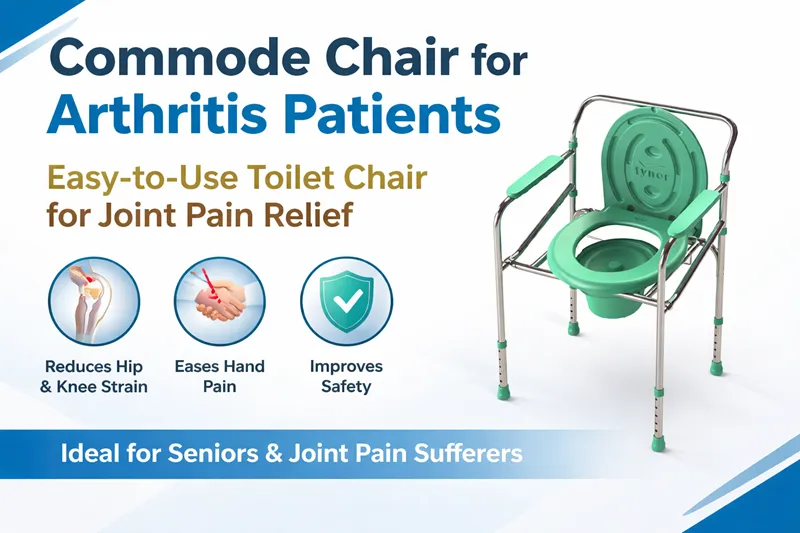
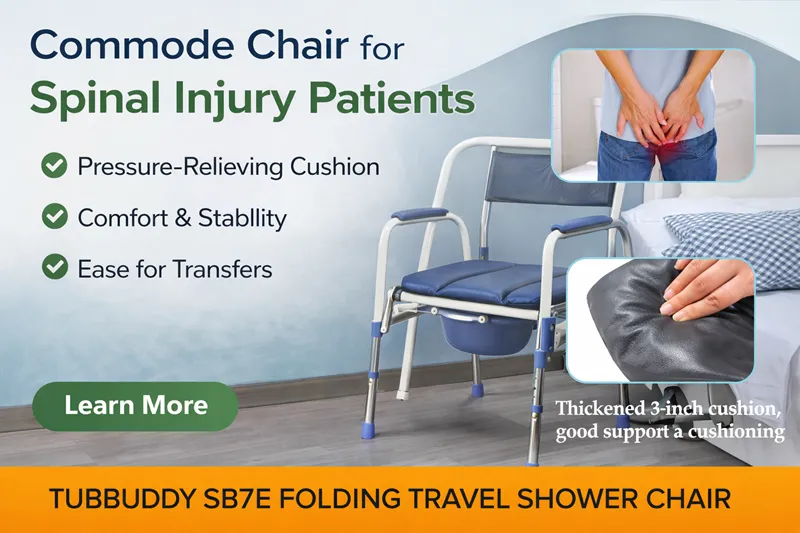
A commode chair is a portable toilet chair designed for
individuals who cannot safely use a conventional toilet. It includes a strong
frame, a toilet seat with an opening, armrests for support, a backrest for
posture stability, and a removable waste bucket. For spinal injury patients,
the chair provides predictable support during transfers and safe seating during
toileting. Some patients may use the chair independently with upper-body
strength, while others rely on caregiver assistance. Over time, the commode
chair becomes part of the patient’s daily care routine, offering safety,
hygiene, and dignity.
Role of a Commode Chair in Early and Long-Term Spinal
Injury Care
In the early phase after spinal injury, patients usually
have minimal mobility and require maximum support. A commode chair allows
caregivers to manage toileting safely without lifting patients onto unstable
toilet seats. As rehabilitation progresses, the same chair can support partial
transfers, sitting balance training, and gradual independence. For patients
with permanent spinal damage, the commode chair serves as a long-term solution
that adapts to daily needs without compromising safety. Choosing a durable
chair early prevents frequent replacements and ensures continuity of care.
Preventing Falls and Secondary Injuries
Falls can be devastating for spinal injury patients, often
worsening neurological damage or causing fractures and pressure injuries.
Bathrooms are high-risk areas due to wet floors and limited space. A commode
chair significantly reduces fall risk by minimizing movement and providing
stable armrests and back support. Preventing secondary injuries is critical in
spinal care, and consistent use of a commode chair plays a major preventive
role.
Maintaining Dignity and Emotional Well-Being
Loss of independence in personal care can deeply affect a
spinal injury patient’s emotional health. Dependence on caregivers for
toileting may cause embarrassment, frustration, and withdrawal. A commode chair
restores dignity by allowing toileting in privacy, either independently or with
minimal assistance. This sense of control improves emotional resilience,
confidence, and overall quality of life, which is vital for long-term
adjustment and mental well-being.
Supporting Caregivers in Spinal Injury Home Care
Family caregivers often manage spinal injury care without
professional training. Repeated lifting, transfers, and toileting assistance
place significant strain on caregivers, leading to fatigue, back injuries, and
burnout. A commode chair simplifies toileting routines by reducing physical
effort and improving safety. This allows caregivers to focus on rehabilitation,
nutrition, and emotional support instead of constant physical exertion.
Types of Commode Chairs Suitable for Spinal Injury
Patients
|
Type of
Commode Chair |
Suitable
For |
Key
Benefit |
|
Fixed Commode
Chair |
Patients with
very limited mobility |
Maximum
stability |
|
Height
Adjustable Commode Chair |
Partial
mobility or rehab phase |
Easier
transfers |
|
Wheeled
Commode Chair |
Fully
dependent patients |
Assisted
movement |
|
Foldable
Commode Chair |
Small homes
or temporary care |
Space saving |
|
Bariatric
Commode Chair |
Heavy-weight
patients |
Reinforced
safety |
Choosing the Right Commode Chair for Spinal Injury Care
Selecting the right commode chair requires careful
evaluation of the patient’s weight, mobility level, trunk control, caregiver
availability, and hygiene needs. The seat must be comfortable and supportive to
prevent pressure sores. Armrests should be strong enough to assist transfers,
and the chair must remain stable during use. Easy-to-remove buckets and smooth
surfaces are essential for hygiene. Aarogyaa Bharat recommends
rehabilitation-grade commode chairs designed for continuous daily use rather
than short-term household models.
Steel vs Plastic Commode Chairs for Spinal Injury
Patients
|
Feature |
Steel
Commode Chair |
Plastic
Commode Chair |
|
Structural
strength |
Very high |
Moderate |
|
Weight
capacity |
High |
Limited |
|
Stability |
Excellent |
Good |
|
Durability |
Long-term use |
Short-term
use |
|
Best suited
for |
Permanent
spinal injuries |
Temporary
recovery |
Hygiene and Infection Prevention in Spinal Injury Care
Spinal injury patients are at higher risk of urinary
infections, skin breakdown, and pressure sores due to limited mobility. The
commode bucket should be cleaned after every use, and all surfaces disinfected
daily. Poor hygiene can lead to serious complications that delay recovery and
increase medical costs. Choosing commode chairs with removable buckets and
smooth, non-porous surfaces makes hygiene maintenance easier for caregivers and
improves patient safety.
Proper Placement of a Commode Chair at Home
Correct placement improves both safety and comfort. The
chair should be placed on a flat, non-slip surface close to the bed or
wheelchair. Pathways should be clear, lighting adequate, and privacy
maintained. As the patient’s condition changes, placement can be adjusted to
support rehabilitation or caregiver assistance. Thoughtful placement reduces
anxiety and encourages consistent use.
Why Aarogyaa Bharat Supports Spinal Injury Home Care
Aarogyaa Bharat understands the realities of spinal injury
care in Indian homes. Our commode chairs are selected with long-term
durability, safety, hygiene, and caregiver ease in mind. We focus on practical
solutions that help families manage spinal injury care with confidence while
preserving patient dignity and comfort.
Conclusion
A commode chair is not just an assistive device but a
cornerstone of spinal injury home care. By enabling safe, hygienic, and
dignified toileting, it protects patients from injuries, reduces caregiver
strain, and improves emotional well-being. Whether used during rehabilitation
or as a permanent care solution, the right commode chair significantly enhances
quality of life for spinal injury patients. Aarogyaa Bharat remains committed
to supporting spinal injury care with reliable, compassionate, and home-friendly
healthcare solutions.