Correct Method for Accurate BP Readings
In this detailed guide by Aarogyaa Bharat, you’ll learn:
- Why
correct cuff placement matters
- Step-by-step
method to place a BP cuff correctly
- How
cuff size affects accuracy
- Common
mistakes to avoid
- Correct
positioning for home BP monitoring
- Special
situations (obesity, children, elderly)
Why Correct Cuff Placement Is So Important
Blood pressure measurement depends on accurate compression
of the brachial artery. If the cuff is misplaced, blood flow is not measured
correctly, leading to:
- Falsely
high readings (overestimation)
- Falsely
low readings (underestimation)
- Misdiagnosis
of hypertension
- Unnecessary
medication changes
Accurate BP measurement is essential for:
- Diagnosing
high blood pressure
- Monitoring
heart health
- Managing
diabetes, kidney disease, and pregnancy
- Preventing
stroke and heart attack
Where Exactly Should the BP Cuff Be Placed?


Correct Location
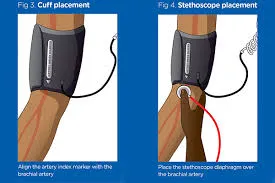
- Place
the cuff on the bare upper arm
- The
lower edge of the cuff should be 2 - 3 cm (1 inch) above the elbow crease
- The
cuff’s artery marker should align with the brachial artery (inner side of
the arm)
Which Arm Should Be Used?
- Use
the left arm unless your doctor advises otherwise
- At
first diagnosis, BP should be checked in both arms - the arm with the
higher reading should be used for future measurements
Step-by-Step: Correct Blood Pressure Cuff Placement


Follow these steps carefully for accurate readings:
Step 1: Prepare the Patient
- Rest
for 5 minutes before measurement
- Avoid
caffeine, smoking, or exercise for 30 minutes
- Sit
comfortably with back supported
Step 2: Position the Arm Correctly
- Arm
should be supported at heart level
- Palm
facing upward
- Do
not let the arm hang or rest on the lap
Step 3: Apply the Cuff
- Wrap
cuff snugly (not tight) on bare skin
- Ensure
cuff is level and flat
- Leave
space for one finger under the cuff
Step 4: Check Body Position
- Feet
flat on the floor
- Legs
uncrossed
- Back
supported
- Do
not talk during measurement
Step 5: Take the Reading
- Stay
still and silent
- Take
2 readings, 1 minute apart
- Record
the average
Choosing the Right Cuff Size Matters


Using the wrong cuff size can cause major errors.
Cuff Size Guide
|
Arm
Circumference |
Recommended
Cuff |
|
18-22 cm |
Small adult |
|
22-32 cm |
Adult |
|
32-42 cm |
Large adult |
|
42-50 cm |
Extra-large |
Too small cuff → falsely high BP
Too large cuff → falsely low BP
Common Cuff Placement Mistakes to Avoid

- Placing cuff over clothing
- Cuff too loose or too tight
- Wrong cuff size
- Arm below or above heart level
- Measuring while talking
- Crossing legs
- Unsupported arm
These mistakes can alter readings by 10 - 40 mmHg.
Wrist BP Monitors vs Upper Arm Monitors


Upper Arm Monitors (Recommended)
- More accurate
- Clinically validated
- Preferred by doctors
Wrist Monitors
- Less accurate
- Must be held exactly at heart level
- Sensitive to position errors
Upper arm BP monitors are always preferred for home
monitoring.
Special Situations
For Elderly Patients
- Ensure
arm support
- Avoid
tight cuffs
- Take
multiple readings
For Obese Patients
- Use
large or extra-large cuff
- Never
use a small cuff on a large arm
For Children
- Use
paediatric-specific cuffs
- Follow
paediatric BP charts
How Often Should BP Be Measured at Home?
- Newly
diagnosed: Twice daily
- Stable
BP: 2-3 times per week
- Doctor-advised
monitoring schedules should always be followed
How Aarogyaa Bharat Supports Accurate BP Monitoring
At Aarogyaa Bharat, we offer:
- Clinically
validated BP monitors
- Multiple
cuff sizes for accurate readings
- Home
healthcare equipment
- Educational
guides for safe monitoring
Our goal is to help families monitor blood pressure
correctly and confidently at home.
Frequently Asked Questions (FAQs)
Q1. Can BP be measured over clothes?
No. Always measure on bare skin.
Q2. Does cuff position really matter?
Yes. Incorrect placement can change BP by up to 40 mmHg.
Q3. Is left arm always better?
Usually yes, but follow your doctor’s advice.
Q4. Should I take multiple readings?
Yes. Average of two readings is more accurate.
Conclusion
Correct cuff placement is the foundation of accurate blood
pressure measurement. Even the best BP monitor cannot give correct results if
the cuff is positioned incorrectly or the wrong size is used.
By following proper cuff placement, body positioning, and
measurement techniques, you can ensure reliable BP readings, leading to better
health decisions and improved heart care.
Accuracy today prevents complications tomorrow.