At Aarogyaa Bharat, our mission is to empower patients and
caregivers with not just world-class medical equipment, but also the knowledge
to use them effectively. Whether you are renting a concentrator for short-term
recovery or purchasing one for long-term care, understanding how this machine
works takes the mystery out of the technology and restores peace of mind.
In this comprehensive guide, we will take a deep dive into
the mechanics, science, and practical usage of oxygen concentrators. By the
end, you will know exactly how these remarkable machines turn the air around us
into a lifeline.
What is an Oxygen Concentrator?
Before we understand how it works, we must understand
what it is.
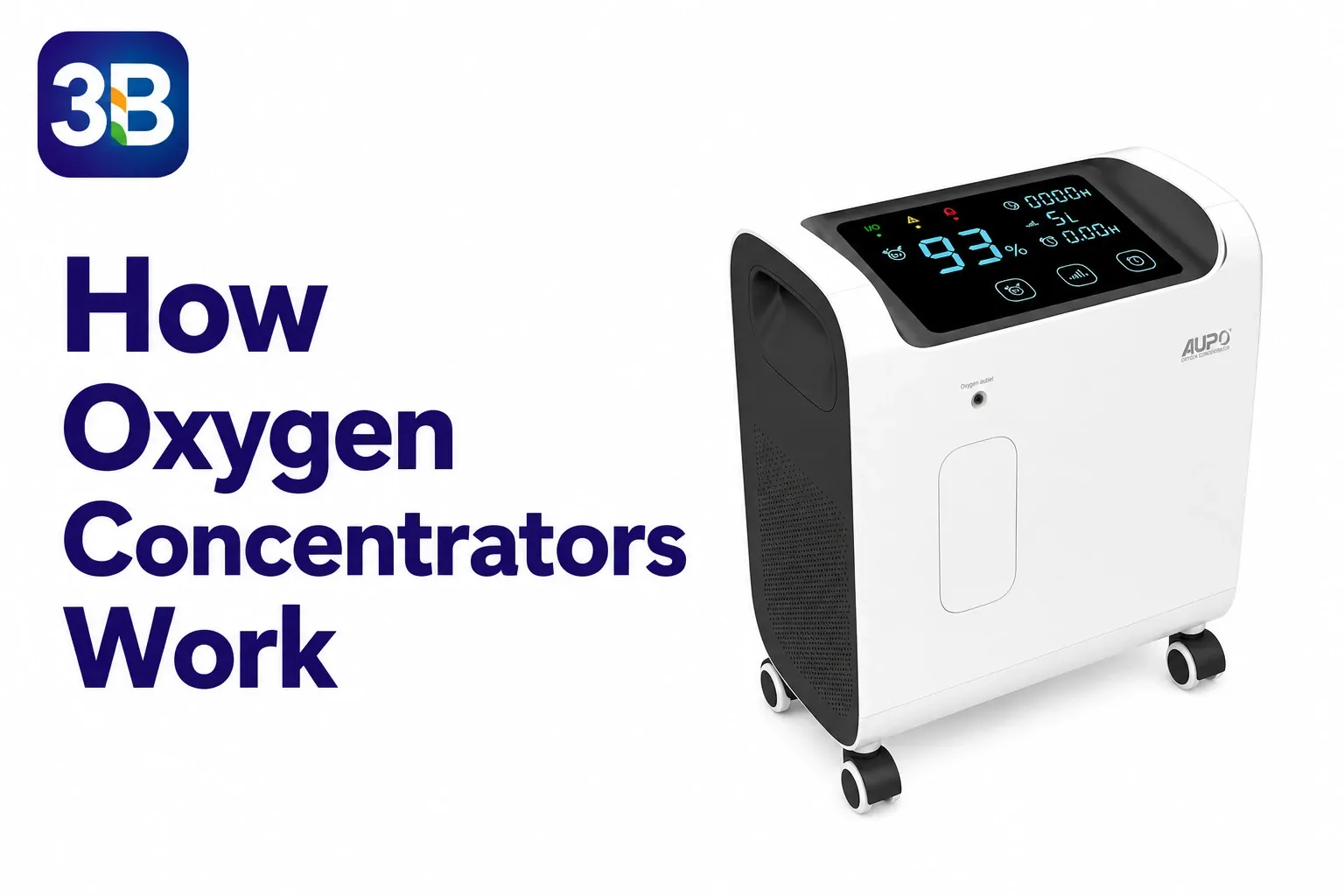
An oxygen concentrator is a medical device that delivers
concentrated oxygen to individuals requiring oxygen therapy. It is important to
note right away that an oxygen concentrator does not create oxygen from
scratch. Instead, it takes in regular room air, filters out the nitrogen and
other trace gases, and delivers highly purified oxygen to the patient.
To appreciate this, we have to look at the air we breathe.
The atmospheric air around us is made up of roughly:
- 78%
Nitrogen
- 21%
Oxygen
- 1%
Argon, Carbon Dioxide, and other trace gases
An oxygen concentrator’s job is to strip away that 78% of
nitrogen, leaving behind air that is 90% to 95% pure oxygen. This concentrated
oxygen is then delivered to the patient via a nasal cannula or a face mask.
Oxygen Cylinders vs. Oxygen Concentrators
Historically, oxygen therapy relied on heavy, high-pressure
metal cylinders. These cylinders contain pre-filled, compressed oxygen. Once
the oxygen in a cylinder runs out, it must be refilled or replaced a major
logistical challenge, especially in rural areas or during medical emergencies.
Oxygen concentrators, on the other hand, only require a
source of electricity to function. As long as the machine has power, it can
provide an endless supply of medical-grade oxygen directly from the room air.
This makes them safer (no risk of high-pressure explosions), more convenient,
and highly cost-effective for home care.
The Science Behind the Machine: How Does It Work?
The core technology that powers almost all modern oxygen
concentrators is called Pressure Swing Adsorption (PSA). It sounds like complex
scientific jargon, but when broken down, it is a brilliant and relatively
simple physical process.
Let’s break down the PSA process step-by-step to understand
exactly what happens inside the machine from the moment you turn it on.
1. Air Intake
The process begins with the ambient air in your room. The
concentrator has a small motor (compressor) that acts like a vacuum, drawing in
room air through a series of intake vents. Before the air enters the main
system, it passes through a gross particle filter. This filter catches dust,
pet dander, hair, and other large impurities, ensuring the internal mechanics
of the machine stay clean.
2. Compression
Once the air is drawn in, it enters the compressor. The
compressor squeezes the air, significantly increasing its pressure. This
pressurized air is necessary for the next step adsorption to work effectively.
Because compressing air generates heat, the machine routes the hot, compressed
air through a heat exchanger and a cooling fan to cool it back down before it
enters the filtration chambers.
3. The Magic Ingredient: Zeolite and Sieve Beds
This is where the true magic of the oxygen concentrator
happens. The cooled, pressurized air is pushed into cylindrical chambers called
sieve beds. These beds are filled with a porous, sand-like material called
Zeolite (specifically, synthetic Zeolite crystals).
Zeolite is a molecular sieve. Under high pressure, Zeolite
has a unique chemical property: it acts like a magnet for nitrogen. When the
pressurized air hits the Zeolite, the nitrogen molecules get trapped in the
microscopic pores of the crystals. Because nitrogen makes up 78% of the air,
the Zeolite has a lot of catching up to do!
Meanwhile, the oxygen molecules which are not attracted to
the Zeolite pass right through the sieve beds.
4. Oxygen Collection and Delivery
The oxygen that passes through the sieve bed is now highly
concentrated (usually between 90% and 95% pure). This purified oxygen flows
into a small storage tank inside the machine. From the storage tank, the oxygen
travels through a flow meter a dial that you or your doctor set to determine
how many Liters Per Minute (LPM) you receive. Finally, the oxygen travels out
of the machine through a tube connected to a nasal cannula or mask, delivering
the breath of life to the patient.
5. The "Swing": Venting the Nitrogen
If the Zeolite just kept trapping nitrogen, it would
eventually get full, and the machine would stop producing oxygen. This is where
the "Swing" in Pressure Swing Adsorption comes in.
Most oxygen concentrators have two sieve beds that work in
tandem.
- While
Sieve Bed A is pressurized and actively trapping nitrogen to produce
oxygen, Sieve Bed B is depressurized.
- When
Bed B depressurizes, the sudden drop in pressure releases the nitrogen
molecules trapped in the Zeolite. A small valve opens, and a burst of air
flushes the nitrogen out of the machine and back into the room.
- The
two beds continuously alternate roles every few seconds. Bed A takes over
while Bed B recharges. This constant "swinging" of pressure
allows the machine to provide a continuous, uninterrupted flow of oxygen.
Types of Oxygen Concentrators
Not all oxygen concentrators are built the same. Depending
on the patient's lifestyle, mobility, and medical requirements, doctors will
prescribe one of two main types. At Aarogyaa Bharat, we supply both types,
tailored to your specific needs.
1. Home/Stationary Oxygen Concentrators
As the name suggests, these are designed to stay in one
place. They are larger, heavier (often weighing between 15 to 25 kg), and are
designed to run 24/7.
- Power:
They plug directly into a standard electrical wall outlet.
- Flow
Rate: They typically offer higher flow rates, usually ranging from 1 to 10
Liters Per Minute (LPM).
- Best For: Patients who require continuous oxygen therapy at home, such as those with severe COPD, pulmonary fibrosis, or those who need oxygen while sleeping. They are also a staple in hospitals and clinics.
2. Portable Oxygen Concentrators (POCs)
Portable concentrators are lightweight, compact, and
designed for active individuals. They usually weigh between 2 to 7 kg and can
be carried over the shoulder or wheeled like a small suitcase.
- Power:
They run on rechargeable batteries, making them perfect for travel. They
can also be plugged into a car’s DC adapter or a wall outlet.
- Flow Type: Most POCs deliver oxygen via Pulse Dose technology. Instead of a continuous stream of oxygen, the machine detects when the patient begins to inhale and releases a precise "bolus" or puff of oxygen. This saves battery life and conserves oxygen. Some newer models offer both pulse dose and continuous flow, but these are generally heavier and more expensive.
- Best
For: Patients who are active, travel frequently, or only need oxygen
during physical exertion. They offer independence and freedom that
stationary units cannot provide.
Who Needs an Oxygen Concentrator?
Oxygen therapy is a highly regulated medical treatment. A
doctor must prescribe it after conducting an Arterial Blood Gas (ABG) test or
using a pulse oximeter to check blood oxygen levels. Normal blood oxygen
saturation (SpO2) is between 95% and 100%. If levels consistently drop below
90%, supplemental oxygen is usually required.
Common conditions that necessitate an oxygen concentrator
include:
- Chronic
Obstructive Pulmonary Disease (COPD): A progressive lung disease that
includes emphysema and chronic bronchitis, making it hard to empty air out
of the lungs.
- Asthma:
Severe attacks may require temporary oxygen support.
- Pneumonia:
Infections fill the lungs with fluid or pus, severely reducing oxygen
absorption.
- Sleep
Apnea: In some cases, Continuous Positive Airway Pressure (CPAP) machines
are combined with oxygen concentrators to ensure adequate oxygenation
during sleep.
- Cystic
Fibrosis: A genetic condition that causes thick, sticky mucus to build up
in the lungs.
- Post-COVID
Recovery: Many patients experience lingering lung damage (fibrosis) after
severe respiratory infections, requiring short or long-term oxygen
support.
Benefits of Using an Oxygen Concentrator
The shift from oxygen cylinders to oxygen concentrators has
revolutionized home healthcare. Here is why they are so beneficial:
- Unlimited
Oxygen Supply: The concentrator extracts oxygen from the air. As long as
there is electricity and air in the room, the oxygen will never run out.
- Cost-Effective:
While the upfront cost or monthly rental fee might seem significant, it is
far cheaper in the long run than constantly refilling oxygen cylinders.
- Safety:
Compressed oxygen cylinders carry a risk of explosion if dropped or
exposed to heat. Concentrators operate at low pressure and pose no
explosion hazard.
- Convenience: No heavy lifting, no waiting for delivery trucks to swap out empty cylinders. The machine just sits quietly in the corner, doing its job.
- Improved
Quality of Life: For patients with severe respiratory issues, an oxygen
concentrator reduces breathlessness, improves sleep, increases stamina,
and protects the heart and other organs from the strain of hypoxia (low
oxygen levels).
How to Choose the Right Oxygen Concentrator: The Aarogyaa Bharat Guide
If you or a loved one requires an oxygen concentrator,
choosing the right one can feel overwhelming. Here are the key factors to
consider:
- Prescribed
Flow Rate: Check your doctor's prescription. Do they recommend 2 LPM, 5
LPM, or more? Ensure the machine you choose can comfortably deliver the
maximum prescribed flow rate continuously.
- Lifestyle
Needs: Will the patient only use it at night? A stationary unit is
perfect. Do they want to go for walks or visit family? A portable unit
(POC) is necessary.
- Power
Consumption: In India, where power outages can still occur, look at the
wattage of the machine. Lower wattage means it can easily run on a
standard home inverter or generator during a blackout.
- Noise
Level: Older models can be quite loud. Look for modern concentrators that
operate under 45-50 decibels (about the volume of a quiet conversation) so
the patient can sleep comfortably.
- Oxygen
Purity Indicator: Good machines have an LCD screen or an LED light that
shows the exact percentage of oxygen purity being delivered, alerting you
if it drops below safe levels.
At Aarogyaa Bharat, our experts help you evaluate these
factors, offering both rental and purchase options so you can find the perfect
fit without financial strain.
Maintenance and Safety Tips for Your Oxygen Concentrator
Like any medical equipment, an oxygen concentrator requires
regular maintenance to function correctly and safely. A poorly maintained
machine will not deliver the required oxygen purity, putting the patient at
risk.
Maintenance Checklist:
- Clean
the External Filter: Most machines have a removable foam filter on the
side or back. Wash this filter in warm, soapy water at least once a week,
let it air dry completely, and put it back. This prevents dust from
clogging the compressor.
- Wipe
Down the Cabinet: Use a damp cloth to wipe the exterior of the machine to
keep it dust-free. Never use liquid cleaners directly on the machine, and
do not let water get inside.
- Change
Nasal Cannulas: The prongs that go into the nose should be replaced every
2 to 4 weeks, or immediately if they become blocked or discolored.
- Annual
Servicing: The internal sieve beds and compressors should be checked
annually by a certified technician. If you rent from Aarogyaa Bharat, we
handle all routine maintenance and servicing for you.
Safety Rules to Live By:
- No
Smoking: Oxygen aggressively accelerates combustion. Absolutely no
smoking, lighters, or matches should be used within 10 feet of the machine
or the patient.
- Keep
Away from Open Flames: Do not use the concentrator near gas stoves,
candles, or fireplaces.
- Ventilation:
The machine needs to pull in room air to function. Place it at least 1 to
2 feet away from walls, curtains, or furniture to ensure proper airflow
and prevent overheating.
- Avoid
Extensions: Plug the concentrator directly into a wall outlet. Using long
extension cords can cause voltage drops, damaging the compressor.
- Avoid
Humidifiers Nearby: While some concentrators use a small, sealed water
bubble bottle to humidify the oxygen, the main machine itself must be kept
dry.
Common Myths About Oxygen Concentrators Debunked
Myth 1: "Oxygen concentrators will make the room run
out of oxygen." Truth: The machine pulls in room air and vents the
nitrogen back into the room. The total oxygen in a standard room is so vast
compared to what the machine extracts that the oxygen levels in the room will
not noticeably drop. However, good ventilation is always recommended for
general air quality.
Myth 2: "You can get addicted to oxygen." Truth:
Oxygen is not a drug; it is a natural element your body needs. You cannot
become addicted to it. However, if a patient has severe COPD, their brain may
become accustomed to lower oxygen levels, and suddenly stopping therapy can be
dangerous. Always follow a doctor’s weaning instructions.
Myth 3: "More oxygen is always better." Truth:
Too much oxygen can be toxic. For some patients (especially those with severe
COPD), high levels of oxygen can suppress their natural drive to breathe,
leading to a dangerous buildup of carbon dioxide. Never turn the flow meter
higher than what the doctor prescribed.
Why Aarogyaa Bharat is Your Trusted Partner in Respiratory Care
Navigating respiratory illnesses is stressful enough without
having to worry about the reliability of your medical equipment. At Aarogyaa
Bharat, we pride ourselves on being more than just a supplier; we are your
partners in health.
We understand the Indian healthcare landscape intimately. We
know that affordability, durability, and after-sales service are paramount.
That is why we offer:
- Latest Technology: We stock only certified, high-quality machines from top global brands.
- Flexible
Options: Whether you need a machine for 2 weeks or 2 years, our rental and
purchase plans are designed to fit your budget.
- Pan-India
Service Network: Our certified technicians are just a call away for
installation, maintenance, and emergency troubleshooting.
- Patient
Education: We don't just drop off a machine. We take the time to teach you
and your family how to use it safely and confidently.
Conclusion
An oxygen concentrator is a marvel of modern medical
engineering. By utilizing the simple principles of pressure and the fascinating
properties of Zeolite crystals, it takes the ordinary air around us and
transforms it into a life-saving medical therapy.
Understanding how these machines work demystifies the
process. It helps caregivers feel more confident and allows patients to focus
on what truly matters: healing, resting, and living a fuller life.
If you or a loved one requires respiratory support, don't
navigate it alone. Trust Aarogyaa Bharat to provide reliable, high-quality
oxygen concentrators backed by expert care. Because at the end of the day,
every breath counts.
Call to Action: Need an oxygen concentrator for your home
or facility? Contact Aarogyaa Bharat today! Browse our wide selection of
stationary and portable oxygen concentrators, or speak to our medical equipment
experts to find the perfect solution for your needs. Breathe easy with Aarogyaa
Bharat.