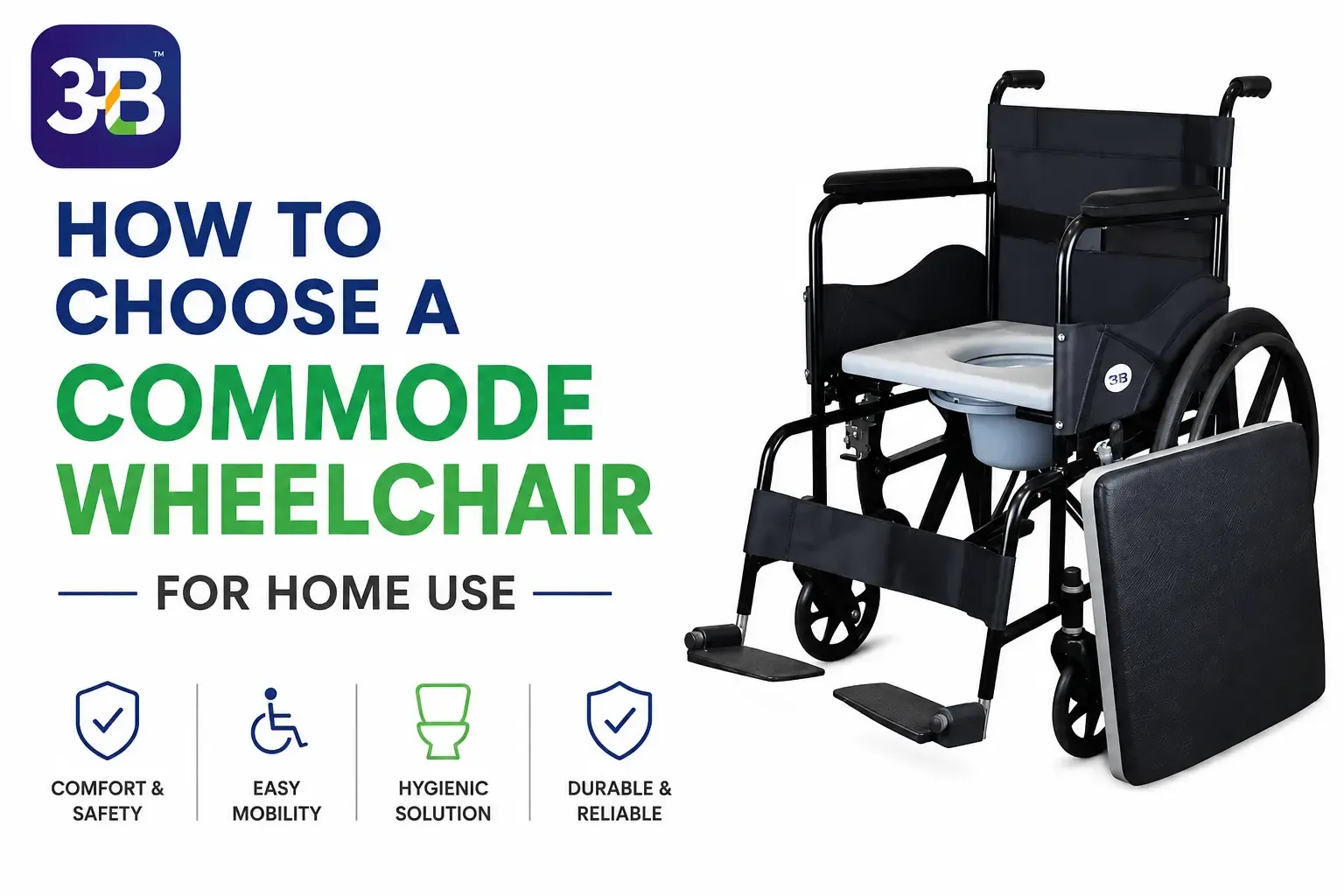
What Is a Commode Wheelchair?
A commode wheelchair is a
specially designed chair on wheels that features a removable toilet seat and a
bucket beneath the seat. It allows users who cannot access a standard toilet to
manage their personal hygiene needs independently or with minimal assistance.
Most commode wheelchairs also function as a regular wheelchair, allowing
patients to be transported between rooms.
Who Needs a Commode Wheelchair?
●
Elderly individuals with
limited mobility who cannot walk to the bathroom safely
●
Patients recovering from
knee replacement, hip replacement, or spinal surgery
●
People with neurological
conditions like stroke, Parkinson's disease, or multiple sclerosis
●
Patients with
incontinence who need quick and easy toilet access
●
Individuals with severe
arthritis or joint pain that makes using a standard toilet difficult
Key Factors to Consider When Choosing a Commode Wheelchair
1. Frame Material
Commode wheelchairs are
available in two primary frame materials:
●
Steel: Heavier but more
durable and affordable. Suitable for home use where the chair will not be moved
frequently.
●
Aluminium: Lightweight,
rust-resistant, and easier to maneuver. Ideal for caregivers who need to
transport the patient regularly.
For most home use scenarios, an
aluminium frame offers the best balance of durability and ease of use.
2. Weight Capacity
|
Category |
Weight Capacity |
Best For |
|
Standard |
Up to 100 kg |
Average-weight adults |
|
Heavy Duty |
100 – 150 kg |
Overweight patients |
|
Bariatric |
150 – 250 kg |
Severely obese patients |
Always choose a commode
wheelchair with a weight capacity comfortably exceeding the patient's actual
weight for safety.
3. Seat Width and Dimensions
The seat width should allow the
patient to sit comfortably without feeling cramped or unstable. Standard seat
widths range from 16-18 inches (40-46 cm). Check the doorway widths in your
home to ensure the wheelchair can pass through.
4. Commode Opening Size
The commode opening must be
large enough for the patient's comfort and hygiene. A larger opening is
generally better. Some models feature an adjustable or detachable commode seat
for versatility.
5. Bucket System
Check the bucket design:
●
Is it easy to remove,
empty, and clean?
●
Does it have a secure
locking mechanism to prevent spills?
●
Is it splash-proof?
●
Is a lid included?
6. Armrests
Armrests are critical for
patient safety when transferring on and off the commode. Look for:
●
Fixed armrests: Stable
but may make transfers harder
●
Flip-up or removable
armrests: Allow easier lateral transfers from bed to chair
7. Footrests
Footrests should be adjustable
in height and ideally detachable or swing-away for easy transfers. They provide
crucial support during transport.
8. Wheels
Most commode wheelchairs have
four wheels:
●
Two large rear wheels
for propulsion (if the patient is self-propelling)
●
Two small front castors
for steering and turning
Check that all wheels have
reliable brakes and that the tyres are puncture-proof solid rubber for indoor
use.
9. Backrest Height and Padding
A higher, padded backrest
provides better lumbar support and comfort for patients who will be seated for
extended periods. Consider whether the backrest is upholstered and if the
padding is washable.
10. Foldability
A foldable commode wheelchair
is much easier to store when not in use and to transport in a vehicle. Most
good models fold flat for compact storage.
Commode Wheelchair Comparison Table
|
Feature |
Basic Model |
Mid-Range Model |
Premium Model |
|
Frame |
Steel |
Aluminium |
Aluminium alloy |
|
Weight Capacity |
Up to 100 kg |
Up to 120 kg |
Up to 150 kg |
|
Armrests |
Fixed |
Flip-up |
Padded flip-up |
|
Footrests |
Fixed |
Swing-away |
Adjustable swing-away |
|
Commode Bucket |
Basic |
Splash-proof |
With lid & lock |
|
Price Range (₹) |
₹2,500–₹4,000 |
₹4,000–₹7,000 |
₹7,000–₹15,000 |
Safety Tips for Using a Commode Wheelchair at Home
1. Always lock the wheel
brakes before helping the patient transfer on or off.
2. Ensure the bucket is
properly secured before moving the patient.
3. Check the chair's
stability before each use tighten any loose bolts.
4. Empty and clean the
commode bucket promptly after each use.
5. Use a damp, non-slip mat
under the wheels on smooth floors.
6. Ensure adequate lighting in areas where the chair is used at night.
Conclusion
Choosing the right commode
wheelchair for home use requires careful consideration of the patient's weight,
mobility level, home layout, and specific needs. By evaluating frame material,
seat dimensions, commode design, and safety features, you can select a model
that provides comfort, dignity, and independence. A well-chosen commode
wheelchair not only makes daily life easier for the patient but also reduces
the physical strain on caregivers.
Why Choose Aarogyaa Bharat?
When it comes to reliable,
affordable, and high-quality medical equipment, Aarogyaa Bharat is your trusted
partner. Whether you are searching for hospital-grade devices for home use or
looking to rent medical equipment for recovery, Aarogyaa Bharat offers an
extensive range of products with expert guidance.
Visit us today at
https://aarogyaabharat.com/ and explore hundreds of certified medical devices,
compare prices, read expert reviews, and place your order with complete
confidence. Our team of healthcare professionals is always ready to help you
make the right choice for your health and well-being.
Contact Aarogyaa
Bharat now - because your health deserves the best.