How to Choose the Right Oxygen Concentrator in 6 Steps
When a doctor prescribes home oxygen, families face an overwhelming set of specifications, abbreviations, and product choices. The device is a medical necessity, not a consumer gadget, so getting it wrong carries real risk. Here is the decision sequence that keeps things safe and simple:
Get the prescribed LPM for rest, activity, and sleep from the doctor.
Decide stationary vs portable based on where and how long oxygen is needed.
Choose continuous flow or pulse dose based on the prescription and SpO₂ testing on the actual device.
Check oxygen purity at the required flow, not just the maximum flow number on the box.
Compare 5L vs 10L only after knowing required LPM so you pick capacity, not marketing.
Evaluate OPI, alarms, warranty, service, power backup, and rent vs buy economics.
The American Thoracic Society says oxygen is a medication requiring a prescription, and that flow rates may differ for rest, activity, and sleep. Every step below follows from that principle.
If you already have a prescription and need help matching it to equipment, reach out to the team.
Contact Aarogyaa Bharat for assisted selection
Oxygen Concentrator Glossary: Terms That Shape Your Decision
Most confusion when learning how to choose an oxygen concentrator comes from unfamiliar terminology. This glossary covers the terms that actually affect which machine you need. Each definition includes a note on why it matters so you can connect the term to a buying decision.
Oxygen Concentrator
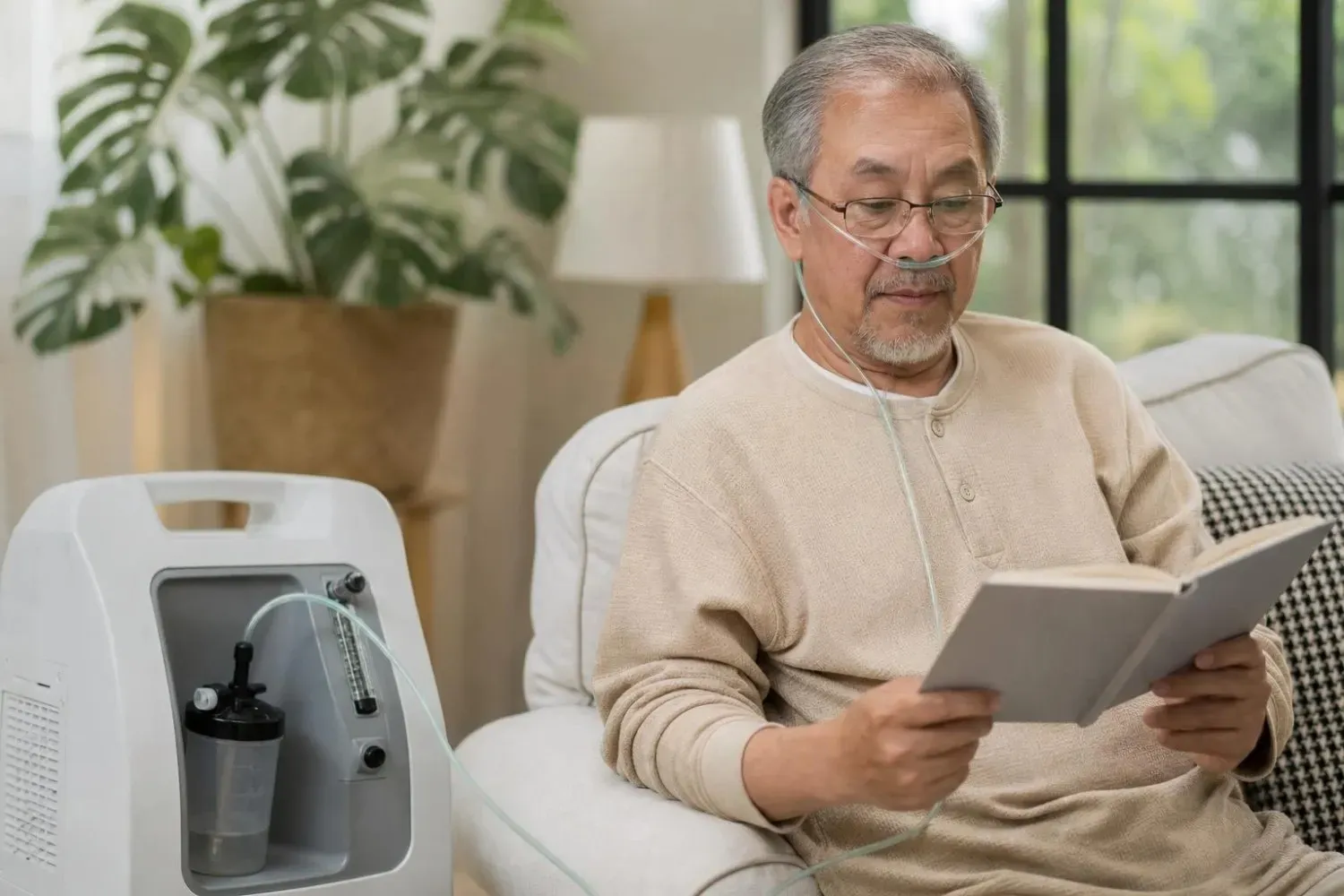
A medical device that takes room air, filters out nitrogen, and delivers oxygen-rich air (typically 90-95% purity) through a nasal cannula or mask. Think of it as a filter-and-compressor system, not a gas tank. Unlike cylinders, it produces concentrated oxygen while plugged in rather than storing a fixed supply.
Why it matters when choosing: The device needs electricity to run. No power means no oxygen unless you have a backup plan.
LPM (Litres Per Minute)
The oxygen flow rate, measured in litres per minute. A prescription of “2 LPM at rest” means the device must deliver at least that flow steadily.
Why it matters: Your doctor may prescribe different LPM values for rest, walking, and sleep. The machine must cover the highest prescribed rate with some headroom.
Common mistake: Assuming a “5L” machine is automatically better than what you need. If the prescription is 2 LPM, a 5L concentrator gives good headroom. A 10L machine would work too, but would cost more and use more power with no clinical benefit.
SpO₂ (Oxygen Saturation)
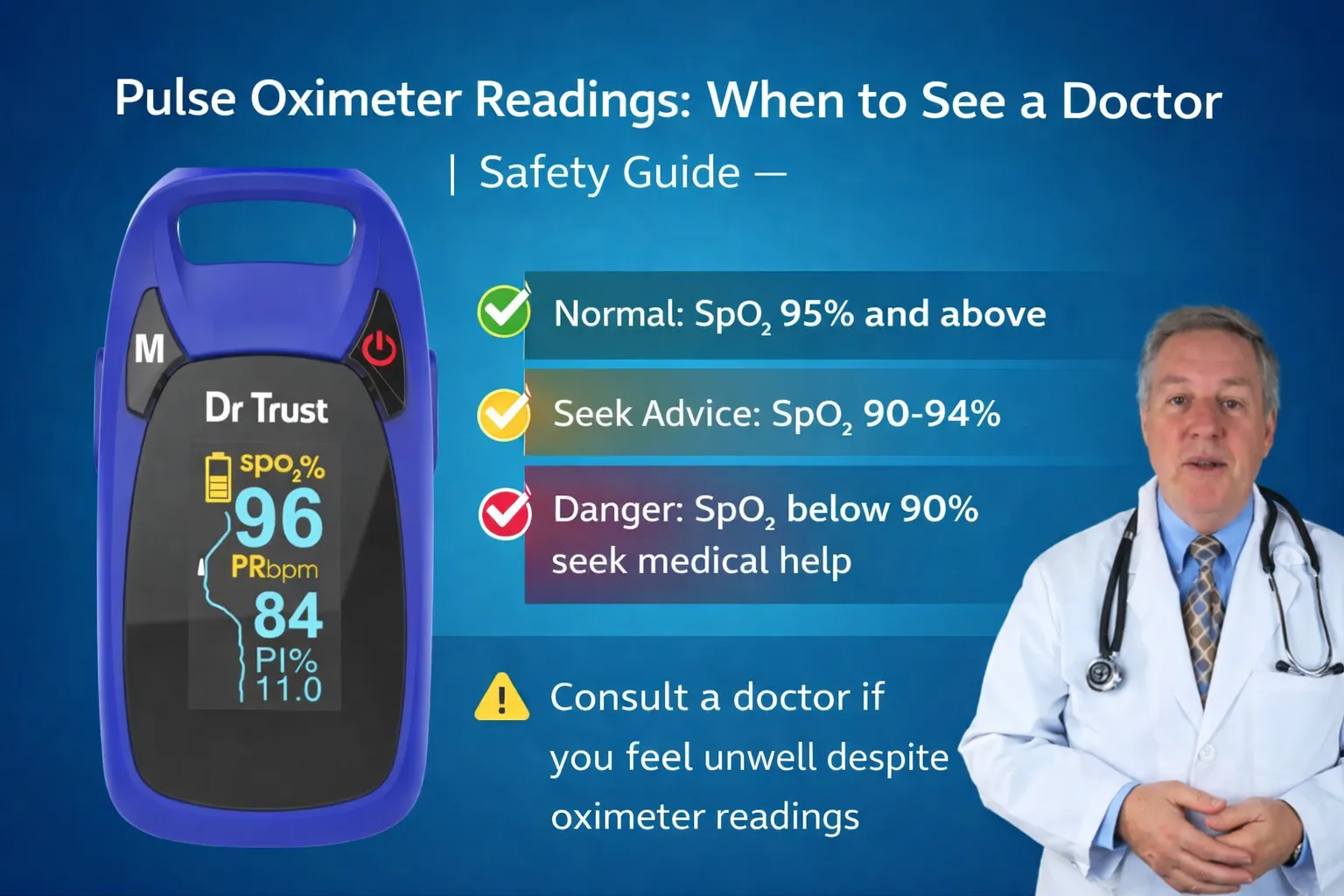
The percentage of oxygen-carrying hemoglobin in the blood, measured by a pulse oximeter. Doctors use SpO₂ readings at rest, during exercise, and sometimes during sleep to determine oxygen need. The NHS explains that assessment may include pulse oximetry, blood testing, and walking tests.
Why it matters: Low SpO₂ should trigger medical assessment, not a trip to an online shopping cart. The device choice follows from what the doctor finds.
Continuous Flow
Oxygen flows constantly whether the patient inhales or exhales. This is the standard delivery mode for stationary home concentrators.
Why it matters: Generally preferred for sleep use, higher flow needs, patients with irregular breathing, and use with CPAP/BiPAP when prescribed. If the patient needs oxygen at night, continuous flow is usually the safer choice.
Pulse Dose / Pulse Flow
The device detects inhalation and delivers a burst of oxygen only when the patient breathes in. Common in portable concentrators because it conserves battery.
Why it matters: Pulse dose saves power and extends battery life, but it does not suit everyone. Patients with shallow breathing may not trigger the sensor consistently. The American Thoracic Society recommends testing oxygen levels while using a portable device at rest and during activity before purchasing or renting.
Warning: Pulse setting ≠ LPM. A “setting 5” on a portable pulse-dose concentrator is not the same as 5 LPM continuous flow. Practitioners on Reddit repeatedly flag this confusion, with caregivers discovering that a portable unit set to “5” delivered far less oxygen than expected. The COPD Foundation’s educational materials confirm that concentrator settings do not match continuous litre flow.
Oxygen Purity / Oxygen Concentration
The percentage of oxygen in the gas the machine delivers. Medical-grade concentrators typically deliver around 90-95% oxygen at their rated flow.
Why it matters: Some devices advertise high flow numbers but oxygen purity drops sharply at those flows. A LinkedIn guide by a respiratory equipment practitioner warns that certain machines claiming “up to 7L” or “up to 9L” only achieve high purity at lower settings. Always check purity at the flow you will actually use.
OPI (Oxygen Purity Indicator)
A built-in alarm or display that warns when oxygen concentration falls below a safe threshold.
Why it matters: Without OPI, you may not know the machine is delivering low-purity output. This is especially important for caregivers who cannot tell from the sound of the machine whether oxygen quality has dropped. Prioritize devices with this feature for long-term use.
Sieve Bed
The internal molecular sieve material that separates nitrogen from room air. Sieve beds degrade over time, particularly in dusty or humid environments. Replacement timing varies by model, with some needing service around 18-24 months. Follow the manufacturer’s schedule, not generic rules.
Nasal Cannula
A lightweight tube with two small prongs that sit in the nostrils. The most common delivery method for lower-flow home oxygen therapy.
Oxygen Mask
A mask covering nose and mouth, used for higher flow needs or when a cannula is not appropriate. Used under medical direction.
Humidifier Bottle
A water bottle attachment that adds moisture to the oxygen flow. Can reduce nasal dryness at higher flow rates. Must be cleaned regularly to avoid contamination. Ask the doctor or supplier whether a humidifier is needed for your specific flow rate.
Stationary Oxygen Concentrator
A larger home unit that plugs into a wall outlet and delivers continuous flow. The NHS recommends a concentrator for patients needing oxygen most of the day, including during sleep. Best fit for most home oxygen prescriptions.
Portable Oxygen Concentrator (POC)
A smaller, battery-powered device designed for mobility. Usually offers pulse dose and sometimes continuous flow at lower settings. Output is typically lower than stationary units. Useful as a mobility tool alongside a home concentrator, not necessarily as a full replacement.
Power Consumption
How many watts the machine draws. A 5L concentrator like the Philips EverFlo draws about 350 watts. A 10L unit can draw 600 watts or more. This affects your electricity bill, inverter sizing, and backup planning.
Backup Oxygen
A backup source (cylinder, UPS, generator) for use during power cuts. Stationary concentrators stop producing oxygen when electricity goes out. If the patient is oxygen-dependent, backup is not optional.
Oxygen Concentrator vs Oxygen Cylinder
A concentrator produces oxygen from room air continuously while running. A cylinder stores a finite amount of compressed oxygen. Cylinders work without electricity and suit short-term emergency backup. Concentrators suit longer daily use when electricity is available.
Start with the Prescription, Not the Product Page
The single most important rule when choosing an oxygen concentrator: the doctor decides the oxygen requirement, and the device must match it.
The American Lung Association states that the doctor determines oxygen type and amount through testing and that patients should follow the exact prescribed rate for each activity. Do not increase, decrease, or stop oxygen flow without medical guidance.
Before comparing any product, get clear answers to these questions from the prescribing doctor:
What LPM is needed at rest?
What LPM during walking or activity?
Is oxygen needed during sleep? At what rate?
How many hours per day?
Should delivery be by nasal cannula or mask?
Is continuous flow required, or can pulse dose work?
Is backup oxygen needed for power outages?
A supplier can explain device features, but only the doctor can determine the oxygen need. Keep the prescription handy when you shop.
5L vs 10L Oxygen Concentrator: Which Capacity Do You Need?
This is one of the most common questions when people learn how to choose an oxygen concentrator, and the answer is straightforward: pick the capacity that covers your prescription with headroom, not the biggest number you can afford.
Factor | 5L Concentrator | 10L Concentrator |
|---|---|---|
Maximum flow | Up to 5 LPM | Up to 10 LPM |
Best for | Prescriptions up to about 4 LPM continuous | Prescriptions above 5 LPM or specific clinical setups |
Size and weight | Smaller, lighter (around 14 kg for some models) | Larger, heavier (24 kg or more) |
Power draw | Lower (around 350 W) | Higher (around 610 W) |
Price in India | Around ₹36,000 to ₹55,000 | Around ₹70,000 to ₹1.20 lakh |
Decision rule | Use when prescription fits comfortably | Use only when prescription requires higher flow |
A practical heuristic used by Indian suppliers: choose 5 LPM capacity for requirements below 4 LPM, 8 LPM for 4-6.5 LPM needs, and 10 LPM for needs between 6.5-10 LPM. This is a buyer guideline, not medical advice. Confirm with your doctor.
A 10L concentrator is not an “upgrade.” It is a capacity match. It costs more, uses more electricity, weighs more, and makes more noise. If the patient needs 2 LPM, a 5L machine is the better choice.
For questions about delivery and payment options, check the support page before ordering.
Stationary vs Portable Oxygen Concentrators
This comparison matters a lot when choosing an oxygen concentrator, and the answer depends on where and how long the patient needs oxygen.
Stationary concentrators plug into a wall outlet, deliver continuous flow, and suit most home oxygen prescriptions. They are the workhorse for patients who need oxygen for many hours per day, including overnight.
Portable concentrators run on batteries, weigh less, and allow the patient to move around or travel. They usually deliver pulse dose and sometimes low-flow continuous. Their oxygen output is generally lower than stationary units.
Real-world experience confirms that many oxygen-dependent patients need two devices. Practitioners on Reddit describe setups where a stationary unit handles sleep and extended home use, while a separate portable unit handles daytime walks, errands, and travel. Framing the choice as “portable vs home” misses this reality. The better framework: home base device, plus mobility device, plus backup plan.
Portable concentrators are significantly more expensive. In India, portable units start around ₹1.5 lakh and can reach ₹2.5 lakh or more. They are worth considering for patients who need mobility, but only after confirming that the device maintains adequate SpO₂ at the prescribed setting during activity.
Continuous Flow vs Pulse Dose: The Distinction That Matters Most
This is where the biggest real-world mistakes happen.
Continuous flow delivers oxygen at a steady rate regardless of breathing pattern. It works during sleep, shallow breathing, mouth breathing, and exertion.
Pulse dose detects inhalation and delivers a measured burst. It conserves battery and extends portable device runtime, but it relies on the sensor detecting each breath.
The critical problem: pulse dose may not work for every patient. In a COPD community thread on Reddit, a user explained they could not use pulse mode because they did not draw breath hard enough to trigger the device. Others report that pulse dose failed to maintain saturation during walking, sleep, or periods of irregular breathing.
The American Thoracic Society specifically advises checking oxygen levels on the actual portable device at rest and while active before committing to a purchase or rental.
If the patient needs oxygen during sleep, has shallow breathing, severe COPD, or requires higher flow rates, be cautious with pulse-dose-only devices. Test first, always with a pulse oximeter and ideally while walking.
Oxygen Purity and Fake Device Red Flags
Maximum flow rate is meaningless without oxygen purity at that flow. A concentrator that claims “up to 7L” but delivers only 70% oxygen at 7L is not providing therapeutic-grade output. Medical-grade concentrators should deliver around 90-95% oxygen at their rated flow.
The COPD Foundation’s Oxygen360 team tested low-cost over-the-counter “portable concentrators” sold online and found that two of three were not appropriate for oxygen therapy. One device’s manual stated it produced only 28% oxygen, far below the 90%+ purity of true medical concentrators.
Red Flags to Watch For
Very low price for a “portable concentrator” (well below ₹1 lakh)
No mention of oxygen purity at maximum flow in the specifications
Device uses “levels” instead of clear LPM markings
No prescription required or no medical device positioning
No invoice, serial number, warranty, or manufacturer/importer details
No OPI or purity alarm
No local service center or support contact
No compliance with Indian medical device standards
In India, medical devices are regulated under the Drugs and Cosmetics Act, 1940 and Medical Devices Rules, 2017. Ask for a valid invoice, warranty card, serial number, manufacturer or importer label, and service contact information.
How to Read a Spec Sheet
Focus on four things: flow rate range, oxygen concentration at that flow, alarms (especially OPI), and power consumption. For example, the Philips EverFlo, a widely used 5L stationary concentrator, lists 0.5-5 LPM flow, 93% ±3% oxygen concentration at 5 LPM, OPI alarm, and 350 W average power draw. That is a transparent, verifiable specification. Demand the same clarity from any device you consider.
Rent vs Buy: Oxygen Concentrator Economics in India
The rent vs buy decision depends on how long the patient needs oxygen therapy.
Rent when:
The need is short-term (post-surgery recovery, temporary illness, post-discharge observation)
The duration is uncertain and you are still confirming a long-term oxygen requirement
You want to try a specific model before committing to purchase
Buy when:
The need is long-term or permanent
Monthly rental costs will exceed the purchase price within several months
You want control over maintenance, filters, and accessories
A practical example: if a 5L concentrator costs ₹40,000 and rent is ₹4,000 per month, buying becomes cheaper after about 6 months when you factor in resale value. For a one-month need, renting is clearly more economical.
India Price Benchmarks
These are general market ranges, not Aarogyaa Bharat-specific pricing:
Category | Approximate Price Range |
|---|---|
5L stationary concentrator | ₹36,000 to ₹55,000 |
10L stationary concentrator | ₹70,000 to ₹1.20 lakh |
Portable concentrator (pulse dose) | ₹1.50 lakh to ₹2.50 lakh |
Portable (pulse + continuous) | ₹1.80 lakh to ₹3.50 lakh |
Aarogyaa Bharat offers both buy and rent options for medical equipment. Purchases ship pan-India, while rentals are currently available only in Pune, Maharashtra. Review the rental and service terms before booking.
If you are in Pune and need a short-term setup, check city-wise availability for rental options. For long-term use or outside Pune, compare purchase options and delivery support.
Power Backup, Electricity, and Home Setup
Stationary concentrators need electricity to run. In a country where power cuts are common, this is not a minor consideration.
Estimating Electricity Cost
Use this formula:
Daily units (kWh) = watts x hours used per day / 1,000
For a 5L concentrator at 350 watts running 16 hours per day:
350 x 16 / 1,000 = 5.6 kWh per day
For a 10L concentrator at 610 watts running 16 hours per day:
610 x 16 / 1,000 = 9.76 kWh per day
Multiply by your local electricity rate and days per month to estimate the monthly cost.
Backup Planning
Reddit threads from Indian communities show users planning inverters, UPS units, and backup cylinders for home concentrators during power cuts. If the patient is oxygen-dependent and your area has frequent outages, consider:
A backup oxygen cylinder for immediate use during power cuts
An inverter or UPS sized to handle the concentrator’s wattage
A generator for extended outages
Confirming backup requirements with the equipment supplier
Placement Tips
Keep the concentrator in a well-ventilated area with at least a few inches of clearance on all sides
Avoid closets or confined spaces
Place on a stable, flat surface
Consider noise levels when choosing placement (most 5L units run around 40-50 dBA)
If the patient is also recovering from surgery or has limited mobility, you may need additional equipment like a wheelchair for home recovery or hospital bed alongside the concentrator.
Home Oxygen Safety Checklist
Oxygen itself does not burn, but it makes other materials burn faster and more intensely. The American Lung Association warns that materials burn more readily in oxygen-enriched environments and advises keeping flames and heat sources well away from oxygen equipment.
For Indian households, pay particular attention to:
No smoking anywhere near oxygen equipment. There is no safe distance for smoking around home oxygen.
Keep away from gas stoves, candles, diyas, agarbatti, mosquito coils, and room heaters. Maintain at least 5-10 feet distance from any heat source or open flame.
Do not use petroleum-based or oil-based products (petroleum jelly, oil-based lotions) near oxygen tubing or the patient’s face.
Keep tubing routed away from power strips, heaters, and cooking areas.
Install a smoke detector in the room where the concentrator runs, if possible.
Never change the flow rate without the doctor’s instruction.
Do not cover the machine or block its air intake or exhaust vents.
Keep a fire extinguisher accessible in the home.
Who Decides What: Doctor, Supplier, and Caregiver Roles
Decision | Who Decides |
|---|---|
Oxygen need, flow rate, hours per day | Doctor / Pulmonologist |
Rest, activity, and sleep LPM settings | Doctor |
Device options, brands, installation | Supplier |
Training on use, cleaning, filter changes | Supplier |
Safety setup, daily cleaning routine, monitoring | Caregiver |
Power backup planning | Caregiver + Supplier |
Escalation to hospital | Caregiver + Doctor |
The American Lung Association makes clear that suppliers are not doctors and cannot make oxygen decisions. Changes to oxygen therapy require discussion with the prescribing physician.
To learn about Aarogyaa Bharat and its approach to assisted equipment selection, visit the company page.
Questions to Ask Before Buying or Renting
Ask Your Doctor
What LPM do I need at rest?
What LPM during walking or activity?
Is oxygen needed during sleep? At what rate?
Is continuous flow required, or is pulse dose acceptable?
What SpO₂ range should the caregiver monitor?
When should we call for emergency help?
Ask Your Supplier
What is the oxygen purity at my required LPM?
Does the device have an OPI or purity alarm?
What other alarms are included (power failure, low oxygen, no flow)?
What is the wattage?
Is demo and installation included?
What is the warranty period and what does it cover?
Where is the nearest service center?
Are filters, cannula, humidifier bottles, and sieve bed replacements available?
For rentals: when was the machine last serviced and sanitized?
For portables: what is the real battery life at my setting?
Community discussions reinforce these questions. Reddit users repeatedly note that manufacturer battery life claims are based on the lowest pulse setting. At higher settings, battery life drops significantly, and extra batteries can be expensive. Always ask for battery life at the prescribed setting, not the best-case marketing number.
Choosing an Oxygen Concentrator: The Bottom Line
Choosing an oxygen concentrator is not about buying the biggest machine or finding the cheapest deal. It is about matching the doctor’s prescription to the right flow mode, oxygen purity, capacity, backup plan, and service support.
Start with the prescription. Understand whether continuous flow or pulse dose is needed. Pick 5L or 10L based on the prescribed LPM with headroom, not hype. Verify oxygen purity at the actual flow rate. Confirm OPI, alarms, and local service. Plan for power outages. Compare rent vs buy based on expected duration.
If you are unsure, speak to the prescribing doctor first, then ask a trusted medical equipment supplier to help match the prescription to a suitable device.
Get in touch with Aarogyaa Bharat for help comparing buy and rent options. Purchases ship pan-India, and rentals are currently available in Pune, Maharashtra.
For more guides on home healthcare equipment, visit the Aarogyaa Bharat blog.