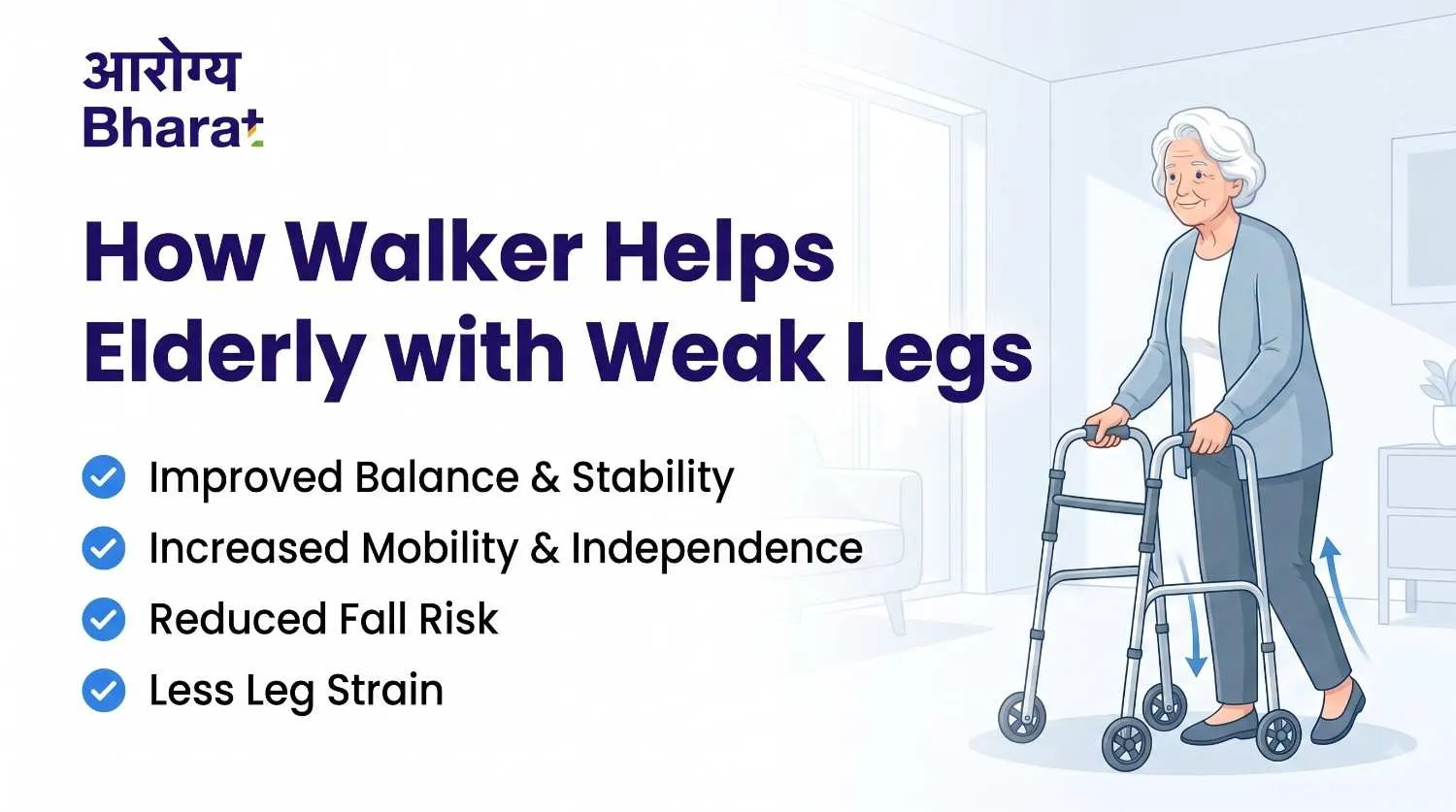
A walker can provide physical support for elderly
individuals whose legs are not strong enough to feel stable during independent
walking. The frame gives the user additional points of contact with the floor
and allows some body weight to be supported through the hands and arms. This
can make walking more controlled and may reduce the fear of losing balance. NHS
guidance states that walking frames provide more support than walking sticks
and can be used both indoors and outdoors. Seniors using Walking Aids
may find that a properly fitted walker makes routine movement easier while they
work on maintaining or improving their strength. A walker can also help during
recovery from lower-body injuries or periods of reduced mobility. However,
users need enough upper-body strength and coordination to operate the equipment
safely. A physical or occupational therapist can help determine whether a
walker is appropriate and teach the correct technique.
Why Elderly People Develop Weak Legs
Weak legs can occur for many different reasons, and the
cause can influence what type of mobility support is appropriate. Aging can be
accompanied by loss of muscle mass, reduced physical activity, changes in gait,
and balance problems. Certain medical conditions, injuries, extended periods of
bed rest, and recovery after surgery can also affect lower-body strength. NIA
identifies age-related loss of muscle mass, balance problems, and gait changes
among factors associated with falls in older adults. Seniors undergoing
recovery may also use Rehabilitation Equipment as part of a structured
treatment program designed by healthcare professionals. A walker can help
provide support while moving, but it should not be viewed as a treatment for
the underlying cause of weakness. Regular assessment is important when leg weakness
is new, rapidly worsening, or affecting normal activities. A doctor or
physiotherapist can evaluate strength and mobility and recommend appropriate
exercises, treatment, or assistive equipment.
How a Walker Supports Weak Legs While Walking
A properly used walker can help support a weaker leg by
allowing the user to place some weight through the frame while taking
controlled steps. NHS physiotherapy guidance for walking frames describes
moving the frame forward, bringing the affected or weaker leg into the frame
area, and then moving the stronger leg forward while maintaining safe
positioning. This can be particularly helpful for elderly individuals who
struggle to support themselves fully on one leg. A suitable Patient Care
Equipment setup may provide additional support during periods of
rehabilitation or reduced mobility. The walker should never be pushed so far
ahead that the user has to lean forward excessively. Correct height adjustment
is also important because poor fitting can make movement uncomfortable or
unsafe. The user should follow instructions from a physiotherapist or
healthcare professional, particularly after surgery or a lower-body injury.
Good technique can help the walker provide support without creating additional
instability.
Daily Activities Made Easier with a Walker
Weak legs can make simple household activities more tiring
because the user may need to stand or walk for longer periods than their
strength comfortably allows. A walker can provide additional support during
everyday movement and may help seniors remain involved in activities they would
otherwise avoid. Depending on their mobility level, users may find it easier to
walk between rooms, get to the bathroom, move toward a dining area, prepare
simple meals, or attend appointments. Maintaining appropriate activity is
important because NIA notes that staying active can support healthy aging and
help reduce fall risk. Seniors may also use Daily Living Aids to make
routine household tasks easier while mobility improves. Common activities where
a walker may provide support include:
- Walking
between rooms
- Going
to the bathroom
- Moving
from bedroom to living room
- Attending
medical appointments
- Taking
short walks at home
- Standing
for daily activities
- Moving
around the kitchen
- Visiting
family members
- Walking
through shopping areas
- Participating
in light rehabilitation routines
The amount of activity should remain appropriate for the
person's physical condition and medical advice.
How a Walker Helps Improve Confidence
Leg weakness can affect more than physical movement because
seniors may become afraid of falling or losing balance. This fear can cause
them to reduce activity, which may contribute to further loss of strength and
independence. NIA notes that fear of falling can lead older adults to become
less physically and socially active. A walker can provide a stable support
point and may make users feel more confident while moving around familiar
environments. Seniors using Fall Prevention Products can also improve
safety by combining mobility support with changes to the home environment.
Feeling more secure may encourage appropriate movement and participation in
daily activities. However, confidence should not lead to walking beyond the
user's capabilities. The device must be used correctly, and the user should
continue to respect symptoms such as pain, dizziness, or severe fatigue. A
physiotherapist can help build confidence through safe walking practice and
appropriate strengthening exercises.
Choosing the Right Walker for Elderly with Weak Legs
Choosing the correct walker is important because weak legs
do not affect every person in the same way. Some seniors may need maximum
stability from a standard walker, while others may benefit from a wheeled frame
that requires less lifting. NHS guidance notes that walkers provide different
levels of support and that the correct height and design should be considered
based on where and how the device will be used. Seniors exploring Orthopedic
Products should also consider their existing medical conditions, strength,
balance, and rehabilitation goals. Important factors include height adjustment,
frame weight, wheel design, handle comfort, braking system, weight capacity,
and indoor or outdoor use. MedlinePlus explains that mobility aids should be
fitted appropriately because an improperly fitted walker can be uncomfortable
and unsafe. A healthcare professional or physical therapist can help determine
which model provides the appropriate level of assistance.
Standard Walker vs Wheeled Walker for Weak Legs
Different walker designs can provide different types of
support, so the best option depends on the user's strength and ability to
control the equipment. A standard walker without wheels generally requires the
user to lift and reposition the frame with each movement, which may provide
strong stability but can require more upper-body effort. A two-wheel or wheeled
walker may be easier to advance, but the user must be able to control its
movement safely. NHS guidance notes that wheeled frames can be suitable for
some users, while frames without wheels may be preferred indoors depending on
the person's ability and environment. Seniors considering Medical Equipment
should therefore avoid choosing a walker based only on convenience. Strength,
balance, coordination, and the ability to use brakes or lift the frame should
all be assessed. A professional can recommend the appropriate design and
provide training.
|
Feature |
Standard Walker |
Wheeled Walker |
|
Stability |
Very High |
High |
|
Movement |
Requires lifting |
Easier forward movement |
|
Upper-Body Effort |
Higher |
Generally lower |
|
Balance Support |
Excellent |
Excellent |
|
Indoor Use |
Excellent |
Very Good |
|
Outdoor Use |
Limited to suitable surfaces |
Good with suitable design |
|
Best For |
Greater stability needs |
Users needing easier movement |
Safety Tips for Elderly Using a Walker
Safety is especially important when an elderly person has
weak legs because a poorly used walker may not provide the expected support.
The equipment should be adjusted to the correct height, inspected regularly,
and used according to professional instructions. NIA recommends ensuring that
walkers are the right size, that wheels roll smoothly, and that a physical or
occupational therapist can help users learn safe operation. Seniors should wear
supportive nonskid footwear and keep floors free from loose rugs, wires,
clutter, and other obstacles. A suitable Home Safety Products setup can
complement mobility equipment by reducing environmental hazards. Users should
avoid moving too quickly, pushing the walker too far forward, or turning
suddenly. If the person experiences new or worsening weakness, severe pain,
dizziness, fainting, or repeated falls, medical evaluation is important. The
walker should support safe movement rather than encourage the user to continue
walking beyond their physical limits.
Common Mistakes to Avoid While Using a Walker
Incorrect walker use can reduce stability and make movement
more difficult, particularly for seniors whose legs are already weak. One
common mistake is selecting a walker that is the wrong height, which can cause
the user to lean forward or place unnecessary strain on the arms and shoulders.
Another is positioning the frame too far ahead before stepping, which may
reduce control. NHS physiotherapy instructions advise keeping the frame at an
appropriate distance and avoiding stepping too far into it. Seniors using Physiotherapy
Equipment during recovery should also learn how their walking aid fits into
their prescribed rehabilitation routine. Other mistakes include ignoring worn
rubber tips, damaged wheels, loose components, or faulty brakes. Users should
not carry heavy objects in ways that interfere with balance or walker control.
Regular equipment checks and professional instruction can help prevent common
problems and improve safe mobility.
Maintaining a Walker for Long-Term Use
Regular maintenance helps ensure that a walker remains
dependable for an elderly user with weak legs. The frame should be inspected
for cracks, bends, loose bolts, or other visible damage. If the walker has
wheels, they should move smoothly without excessive wobbling or resistance, and
brakes should work correctly on models equipped with them. Rubber tips should
be checked for wear and replaced when necessary. Seniors using Senior Care
Products should also make routine equipment checks part of their daily or
weekly care routine. Handles and height-adjustment mechanisms should remain
securely attached and properly locked. The walker should be kept clean and
stored in a dry location when not in use. Damaged components should be repaired
or replaced according to the manufacturer's recommendations rather than
modified at home. Proper maintenance can help preserve stability and reduce the
possibility of unexpected equipment problems during walking.
How Walker Use Can Support Independence
A walker can help elderly individuals with weak legs
maintain greater independence by providing support for everyday movement. Being
able to walk safely between rooms, attend appointments, visit relatives, or
take short walks can help seniors remain involved in normal routines. NIA
describes mobility as important for functioning and living independently and
notes that changes in physical strength, gait, and balance can make everyday
activities harder as people age. A suitable Healthcare Products solution
can form part of a broader care plan that includes appropriate exercise,
rehabilitation, home safety, and medical follow-up. However, using a walker
does not mean that strength training or rehabilitation should be ignored. A
healthcare professional may recommend exercises designed to improve lower-body
strength and balance while the walker provides temporary or ongoing support.
The goal is to encourage safe mobility and independence according to the
individual's capabilities.
Why Buy Walker from Aarogyaa Bharat?
Aarogyaa Bharat provides healthcare and mobility solutions designed to support elderly individuals, patients, caregivers, and people managing mobility difficulties. Customers can explore walkers and related healthcare products based on individual mobility requirements, comfort preferences, and professional recommendations. When selecting a walker for weak legs, important factors include the user's height, weight, balance, upper-body strength, intended environment, and ability to control the device safely. Aarogyaa Bharat also offers solutions across mobility, home healthcare, orthopedic care, rehabilitation, and patient support categories. Customers looking for Walker Collection options can explore suitable products based on their walking requirements and level of support. Families can also explore related healthcare equipment to create a more supportive environment for elderly care and recovery. Healthcare products are available through Pune Healthcare Store, Mumbai Healthcare Store, Delhi Healthcare Store, Bengaluru Healthcare Store, Chennai Healthcare Store, Hyderabad Healthcare Store, Kolkata Healthcare Store, and Ahmedabad Healthcare Store. Professional guidance should always be considered when an elderly person has significant weakness, balance problems, or a recent history of falls.
Conclusion
A walker can provide valuable support for elderly
individuals whose weak legs make walking, standing, or changing direction more
difficult. By creating a wider base of support and allowing some weight to be
transferred through the arms, a properly fitted walker can make movement more
controlled and may increase confidence. NHS and NIA guidance emphasizes
selecting the correct mobility aid, ensuring proper fit, learning safe
technique, and maintaining the equipment in good condition. However, a walker
should not be considered a treatment for the cause of leg weakness. Seniors may
benefit from medical assessment, physiotherapy, strengthening activities, and
appropriate home-safety improvements depending on their individual situation.
With the right equipment and professional guidance, a walker can support safer
daily mobility while helping elderly individuals maintain independence and
participate in appropriate activities.
Medical Disclaimer
This article is intended for educational purposes only and
should not replace professional medical advice. Always consult a doctor,
physiotherapist, orthopedic specialist, or occupational therapist before
choosing or using a walker, especially if the elderly person has significant
weakness, balance problems, pain, or a history of falls.