As people age, maintaining balance and stability becomes
increasingly challenging due to reduced muscle strength, slower reflexes, joint
pain, vision changes, and age-related health conditions. These changes
significantly increase the risk of falls, which can lead to fractures,
hospitalizations, and a loss of independence. Fortunately, walkers are among
the most effective mobility aids for reducing fall risks and helping seniors
stay active with confidence. By providing a stable support system, walkers allow
elderly individuals to move more safely while performing everyday tasks such as
walking around the house, visiting parks, shopping, or attending medical
appointments. Modern walkers are designed with lightweight materials, ergonomic
grips, and user-friendly features that encourage independence without
compromising safety. For individuals looking to improve mobility while reducing
the risk of falls, Mobility Aids offer dependable solutions for daily
living.
Why Falls Are Common Among Older Adults
As the body naturally ages, several physical changes
increase the likelihood of falling. Muscles gradually lose strength, bones
become less dense, and joints become stiffer, making movement slower and less
stable. Vision impairment, reduced coordination, dizziness, medication side
effects, arthritis, osteoporosis, Parkinson’s disease, stroke recovery, and
diabetes can further affect balance and walking ability. Even simple household
activities such as climbing stairs, walking across slippery floors, or getting
out of bed may become difficult. Fear of falling often causes seniors to reduce
physical activity, which weakens muscles even more and creates a cycle of
declining mobility. Using a walker helps interrupt this cycle by providing
consistent support during movement and restoring confidence in daily
activities. Along with mobility support, Home Healthcare Products can
help create a safer environment for elderly care at home.
How Walkers Improve Balance and Stability
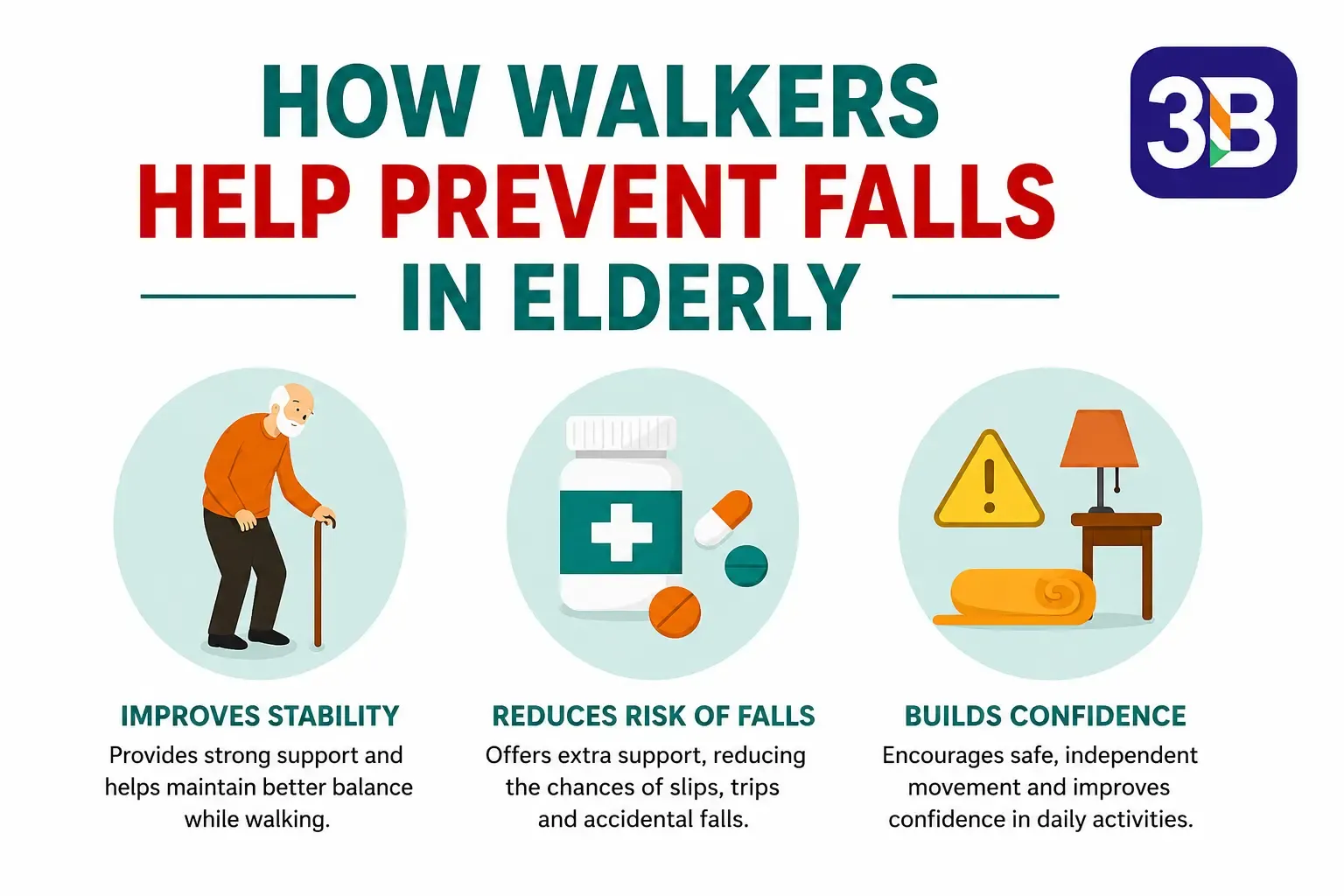
A walker provides four-point ground contact, creating a wide
and stable base that significantly improves balance while walking. Unlike
relying solely on the legs for support, users distribute part of their body
weight through the walker, reducing pressure on weak muscles and painful
joints. This additional stability helps prevent sudden loss of balance caused
by uneven surfaces, fatigue, or unexpected movements. Walkers also encourage
better posture by helping users stand upright instead of leaning forward, which
improves walking mechanics and reduces strain on the back and hips. Regular use
of a properly fitted walker enables seniors to move with greater confidence
both indoors and outdoors. Individuals recovering from surgery or injury often
combine walker use with Rehabilitation Equipment to regain mobility
safely.
Everyday Situations Where Walkers Prevent Falls
Walkers provide valuable support during many daily
activities where balance is essential.
- Walking
around the home
- Using
hospital corridors
- Visiting
parks and gardens
- Shopping
at supermarkets
- Walking
on sidewalks
- Attending
medical appointments
- Recovering
after surgery
- Standing
for extended periods
- Moving
between rooms safely
- Participating
in daily exercise
These everyday situations demonstrate how a walker reduces
the likelihood of falls while helping seniors remain active and independent.
Many individuals also use Daily Living Aids alongside walkers to make
routine activities safer and more convenient.
Health Benefits of Using a Walker Regularly
Regular use of a walker offers benefits that extend beyond
fall prevention. It encourages seniors to remain physically active, which
supports stronger muscles, healthier joints, better circulation, and improved
cardiovascular health. Walking with adequate support also reduces joint stress,
making it easier for individuals with arthritis or chronic pain to continue
exercising. Increased mobility contributes to better mental well-being by
reducing feelings of isolation, improving confidence, and promoting greater
participation in social activities. Continued movement also helps maintain
flexibility, coordination, and endurance, all of which contribute to healthier
aging. Individuals tracking rehabilitation progress or health measurements may
also find Healthcare Calculators useful for monitoring their overall
wellness.
Choosing the Right Walker for Maximum Safety
Selecting the right walker is one of the most important
steps in preventing falls and ensuring comfortable daily mobility. The ideal
walker should match the user's height, weight, strength, and level of balance
support required. A properly adjusted walker allows the user to stand upright
with elbows slightly bent, reducing unnecessary strain on the shoulders,
wrists, and back. Lightweight aluminum walkers are a popular choice because
they are durable, easy to lift, and resistant to rust. Foldable designs are
convenient for transportation and storage, while walkers with comfortable hand
grips provide better control during prolonged use. Some models include front
wheels that make movement smoother without sacrificing stability. Consulting a
healthcare professional or physiotherapist before purchasing a walker can help
ensure the right choice based on individual mobility needs. If you're exploring
mobility solutions for everyday use, Walking Aids offer reliable options
for seniors and rehabilitation patients.
Different Types of Walkers Available for Elderly Users
Modern walkers are available in several designs to meet
different levels of mobility support. Standard walkers provide maximum
stability and are suitable for individuals who require firm support while
walking. Two-wheel walkers combine stability with smoother movement by reducing
the need to lift the frame completely during each step. Folding walkers are
lightweight and easy to transport, making them ideal for travel and storage.
Hemi walkers are designed for users who need support on one side of the body, often
after a stroke or injury. Rollator walkers feature four wheels, hand brakes, a
built-in seat, and a storage basket, making them ideal for users who walk
longer distances outdoors. Each type serves a different purpose, and selecting
the right model helps improve safety, independence, and overall mobility. Some
individuals may also benefit from Orthopedic Supports to enhance joint
stability while walking.
Walker vs Walking Stick vs Rollator Walker
|
Feature |
Walker |
Walking
Stick |
Rollator
Walker |
|
Stability |
Excellent |
Moderate |
Excellent |
|
Wheels |
Optional |
No |
Four Wheels |
|
Best For |
Moderate to
severe balance issues |
Mild balance
issues |
Long-distance
walking |
|
Seat |
No |
No |
Yes |
|
Brakes |
No |
No |
Yes |
|
Indoor Use |
Excellent |
Good |
Good |
|
Outdoor Use |
Good |
Good |
Excellent |
|
User Support |
Maximum |
Basic |
Advanced |
Safety Tips for Using a Walker Correctly
Using a walker correctly greatly improves its effectiveness
in preventing falls. The walker should always be adjusted to the correct height
so the user maintains an upright posture while walking. Before each use,
inspect the frame, rubber tips, or wheels to ensure they are secure and
functioning properly. Move the walker forward only a short distance before
stepping into it, rather than pushing it too far ahead. Walk at a steady pace
and avoid sudden turns or quick movements that may affect balance. Keep
pathways free from loose rugs, electrical cords, and unnecessary clutter to
reduce tripping hazards at home. Wear supportive footwear with non-slip soles,
especially when walking on smooth or wet surfaces. When using a folding walker,
always ensure the locking mechanism is fully engaged before walking.
Individuals with breathing difficulties during rehabilitation may also require Oxygen
Concentrators as advised by their healthcare provider.
Disclaimer: Always use a walker according to your
doctor's or physiotherapist's recommendations. Incorrect height adjustment or
improper walking technique may reduce stability and increase the risk of falls.
Common Mistakes That Can Increase Fall Risk
Although walkers are designed to improve safety, certain
mistakes can reduce their effectiveness. One common error is using a walker
that is either too high or too low, leading to poor posture and unnecessary
strain on the upper body. Some users push the walker too far ahead instead of
keeping it close to the body, which decreases stability. Ignoring worn rubber
tips or damaged wheels can also increase the risk of slipping. Carrying heavy
bags on the walker frame may affect balance and make steering more difficult.
Another mistake is rushing while walking or attempting to navigate stairs with
a standard walker, which is unsafe without proper assistance. Failing to
maintain the walker through regular inspections may also compromise its
reliability over time. Seniors recovering after surgery often combine walkers
with Patient Care Equipment to support a safer rehabilitation process
both at home and in healthcare facilities.
Why Buy a Walker from Aarogyaa Bharat?
Aarogyaa Bharat offers a wide selection of high-quality
walkers designed to improve mobility, independence, and overall safety for
elderly individuals and rehabilitation patients. Every walker is selected for
its durability, lightweight construction, ergonomic design, and reliable
performance. Customers can choose from standard walkers, folding walkers,
two-wheel walkers, and advanced mobility solutions based on their specific
healthcare needs. In addition to mobility aids, Aarogyaa Bharat provides a comprehensive
range of medical equipment, rehabilitation products, orthopedic solutions, and
home healthcare essentials from trusted brands. With a focus on quality and
customer satisfaction, the platform helps families find dependable healthcare
products that support independent living. Customers can also explore healthcare
solutions available in Pune Healthcare, Mumbai Healthcare, Delhi
Healthcare, Bengaluru Healthcare, and Chennai Healthcare for
convenient access to quality medical products.
Conclusion
A walker is one of the most effective mobility aids for preventing falls and helping elderly individuals maintain an active, independent lifestyle. By improving balance, reducing pressure on the joints, and providing stable support during movement, walkers significantly lower the risk of accidents both indoors and outdoors. Choosing the right type of walker, using it correctly, and maintaining it regularly can make everyday activities safer and more comfortable. Whether recovering from surgery, managing age-related mobility challenges, or seeking extra confidence while walking, a quality walker offers dependable support for long-term well-being. Aarogyaa Bharat is committed to providing trusted mobility solutions that empower seniors to move safely, confidently, and independently.
Medical Disclaimer: This blog is intended for
informational purposes only and should not be considered medical advice. Always
consult a qualified healthcare professional or physiotherapist before selecting
or using a walker based on your individual health condition.