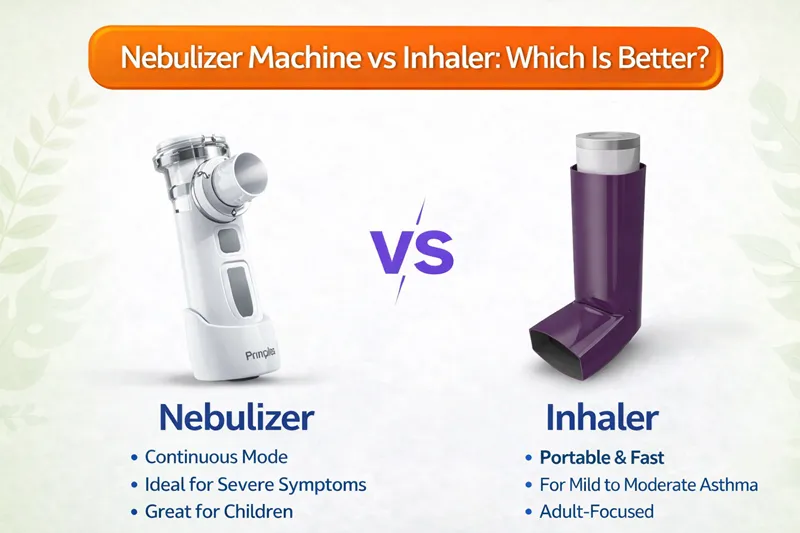
When a doctor prescribes respiratory medication, most
patients and caregivers immediately face a confusing but critical question:
Should we use a nebulizer machine or an inhaler? Both devices are designed to
deliver medicine directly into the lungs, yet they work in completely different
ways and suit very different patient needs. Choosing the wrong option can
result in poor medication delivery, reduced symptom control, increased side
effects, and repeated hospital visits.
In Indian households, inhalers are commonly seen as the
default choice because they are small, affordable, and easy to carry. However,
nebulizers are often prescribed in hospitals for emergency treatment, which
makes families wonder whether nebulizers are “stronger” or “better” than
inhalers. The truth is that neither device is universally better; each one has
specific advantages and limitations depending on age, disease severity,
lifestyle, and treatment goals.
At Aarogyaa Bharat - Live Healthy, Live Better, we regularly
guide families who are unsure whether a nebulizer machine or an inhaler is
better for their condition. Many people switch devices frequently without
medical advice, which leads to inconsistent therapy and delayed recovery. In
this extremely detailed guide, you will learn how nebulizers and inhalers work,
how they differ, which one is better for children, elderly patients, and severe
cases, and how to choose the most effective and cost-efficient respiratory
device for long-term home care in India.
Understanding Respiratory Medication Delivery
Respiratory diseases are unique because medicines must reach
deep into the lungs to be effective. Unlike tablets or syrups, which travel
through the bloodstream and take time to act, inhaled medicines work locally
and provide faster relief with fewer systemic side effects. This is why both
nebulizers and inhalers are widely used for asthma, COPD, allergies, and
post-COVID lung therapy.
The main goal of both devices is to deliver medication
directly into the airways so that it can reduce inflammation, relax airway
muscles, loosen mucus, and improve airflow. However, the way they deliver
medicine differs significantly in speed, consistency, user effort, and
treatment reliability. Understanding this difference is essential for choosing
the right device.
Some patients need quick symptom relief for mild wheezing or
breathlessness, while others require continuous medication delivery during
severe respiratory distress. Children and elderly patients often struggle with
device handling, which further complicates the choice. This is why doctors
evaluate multiple factors before recommending a nebulizer or an inhaler.
The right respiratory device is not just about convenience;
it is about ensuring consistent treatment effectiveness, preventing emergency
flare-ups, and improving long-term lung health.
What Is a Nebulizer Machine?
A nebulizer machine is a medical device that converts liquid
medication into a fine aerosol mist that can be inhaled directly into the
lungs. The mist is generated using compressed air, ultrasonic vibrations, or
vibrating mesh technology, depending on the type of nebulizer. This mist is
inhaled slowly and continuously over several minutes through a mask or
mouthpiece.
Nebulizers are widely used in hospitals for emergency
respiratory treatment because they allow high and controlled doses of
medication to reach deep into the lungs. They are commonly prescribed for
asthma attacks, COPD flare-ups, pneumonia, bronchiolitis, severe allergic
reactions, and post-COVID lung recovery. Many doctors also recommend nebulizers
for long-term home respiratory therapy in chronic patients.
One of the biggest advantages of nebulizers is that they
require no special breathing technique. The patient only needs to breathe
normally while the machine delivers medicine passively. This makes nebulizers
ideal for infants, toddlers, elderly patients, bedridden individuals, and
anyone experiencing severe breathlessness.
In Indian homes, nebulizers have become increasingly popular
due to rising pollution levels, frequent viral infections, and post-COVID
respiratory complications. Keeping a nebulizer at home ensures immediate access
to therapy, reduces emergency hospital visits, and provides emotional security
for patients and caregivers alike.
What Is an Inhaler?
An inhaler is a small handheld medical device that delivers
medication directly into the lungs in the form of a spray or dry powder. It is
widely used for asthma and COPD management because of its compact size,
portability, and fast medication delivery. Inhalers are often prescribed for
daily maintenance therapy as well as emergency rescue use.
There are different types of inhalers, including
metered-dose inhalers (MDIs), dry powder inhalers (DPIs), and soft mist
inhalers. Each type requires a specific inhalation technique to ensure proper
medication delivery. If the technique is incorrect, most of the medicine gets
wasted in the mouth or throat instead of reaching the lungs.
Inhalers are best suited for patients who have good
hand-breath coordination and sufficient lung capacity. Adults and older
children often find inhalers convenient because they are easy to carry, require
no electricity, and deliver medication within seconds.
However, inhalers are less effective for patients with
severe breathlessness, weak lung capacity, or coordination difficulties. In
such cases, nebulizers provide a more reliable and medically consistent
alternative.
How Nebulizers and Inhalers Deliver Medication
Both nebulizers and inhalers aim to deliver medication into
the lungs, but their delivery mechanisms differ significantly. Nebulizers
convert liquid medicine into a continuous mist that the patient inhales over
several minutes. This slow and steady delivery ensures deep lung penetration
and consistent medication absorption.
Inhalers deliver a single burst of medication that must be
inhaled at the exact moment the device is activated. This requires precise
coordination between pressing the inhaler and breathing in deeply. If the
timing is off, the medicine may not reach the lungs effectively.
For patients who struggle with inhaler technique, nebulizers
offer a more forgiving and reliable delivery method. However, inhalers are
faster and more convenient for mild symptoms and daily maintenance therapy.
The choice between these devices should be based on how
reliably the patient can use them and how severe their respiratory condition
is.
Nebulizer vs Inhaler: Detailed Comparison Table
|
Feature |
Nebulizer
Machine |
Inhaler |
|
Medication
Form |
Liquid
converted to mist |
Spray or dry
powder |
|
Ease of Use |
Very easy,
passive breathing |
Requires
correct technique |
|
Portability |
Low to medium |
Very high |
|
Treatment
Time |
5-15 minutes |
Few seconds |
|
Noise Level |
Low to
moderate |
Silent |
|
Power Needed |
Yes (most
models) |
No |
|
Medication
Dose |
High and
continuous |
Low and
burst-based |
|
Best For |
Children,
elderly, severe cases |
Adults, mild
to moderate cases |
|
Emergency Use |
Excellent |
Good |
|
Cost |
Higher
upfront |
Lower upfront |
Advantages of Nebulizer Machines
Nebulizer machines offer several critical advantages,
especially for patients with moderate to severe respiratory conditions. One of
the biggest benefits is ease of use. Patients simply need to breathe normally
through a mask or mouthpiece, making nebulizers ideal for children, elderly
individuals, and patients in distress.
Another major advantage is better medication delivery during
severe episodes. Nebulizers provide a continuous flow of medication over
several minutes, ensuring deep lung penetration and higher drug absorption.
This makes them highly effective during asthma attacks, pneumonia, and acute
bronchitis.
Nebulizers are also versatile in medication compatibility.
They can be used with bronchodilators, steroids, saline solutions, and
antibiotics (as prescribed), making them suitable for a wide range of
respiratory conditions. This flexibility makes nebulizers a preferred choice
for long-term respiratory care.
However, nebulizers are bulkier, require electricity, and
take longer to complete a therapy session. Despite these drawbacks, their
reliability and medical effectiveness make them invaluable for many patients.
Advantages of Inhalers
- Inhalers are popular because of their compact size, portability, and quick medication delivery. Patients can carry inhalers in their pocket or bag and use them anytime, anywhere, making them ideal for working professionals and school-going children.
- Another advantage is speed. Inhalers deliver medication within seconds, making them suitable for quick symptom relief and emergency rescue use. They do not require electricity or assembly, which adds to their convenience.
- Inhalers are also more affordable upfront compared to nebulizers. They require minimal maintenance and are widely available at pharmacies across India. For patients with mild asthma or well-controlled COPD, inhalers often provide sufficient symptom control.
- However, inhalers require correct technique to be effective. Improper usage can result in reduced medication delivery and poor symptom control, which is a common issue among children and elderly patients.
Which Is Better for Children: Nebulizer or Inhaler?
- For children, nebulizers are generally considered better than inhalers, especially for infants and toddlers. Young children often struggle with inhaler technique and may panic during breathlessness episodes. Nebulizers deliver medication passively, making therapy less stressful and more effective.
- Nebulizers also allow higher and more controlled medication doses, which is important during severe asthma attacks or bronchiolitis. Paediatricians frequently prescribe nebulizers for childhood respiratory emergencies and chronic asthma management.
- Inhalers may be suitable for older children who can follow correct inhalation instructions and use spacers. However, for most paediatric patients, a nebulizer remains the safer and more reliable option for home use.
- Parents are often advised to keep both devices: an inhaler for daily use and a nebulizer for emergencies.
Which Is Better for Adults and Elderly Patients?
- For adults with mild asthma or well-controlled COPD, inhalers are often sufficient and more convenient. They are portable, fast, and easy to carry to work or while traveling. Many adults prefer inhalers for daily maintenance therapy and emergency rescue use.
- However, elderly patients, smokers, and individuals with severe breathlessness often struggle with inhaler technique. In such cases, nebulizers provide better medication delivery and more reliable symptom control. Nebulizers are also preferred during acute respiratory distress and post-COVID lung recovery.
- For long-term home care, many doctors recommend using both: an inhaler for daily maintenance and a nebulizer for emergencies and severe episodes.
Cost Comparison: Nebulizer vs Inhaler in India
|
Device |
Price
Range |
|
Nebulizer
Machine |
₹1,500 -
₹10,000+ |
|
Inhaler |
₹300 - ₹800
per unit |
While inhalers are cheaper upfront, nebulizers offer better
long-term value for patients requiring frequent respiratory therapy. The choice
should be based on medical need rather than just cost.
Conclusion
There is no single “better” option for everyone. A nebulizer machine is
better for children, elderly patients, and individuals with severe respiratory
conditions who need reliable and effortless medication delivery. An inhaler is
better for adults with mild symptoms who value portability and quick usage.
For most households, the best solution is to keep both:
An inhaler for daily maintenance and travel
A nebulizer for emergencies and severe episodes
At Aarogyaa Bharat, we recommend personalized respiratory
care solutions based on patient age, condition severity, lifestyle, and budget.
Need Help Choosing the Right Respiratory Device?
At Aarogyaa Bharat, we help families choose the safest and
most cost-effective respiratory care solution based on patient age, condition
severity, therapy frequency, and lifestyle needs. We provide certified
nebulizers, oxygen concentrators, hospital beds, and complete home-care
equipment across India.