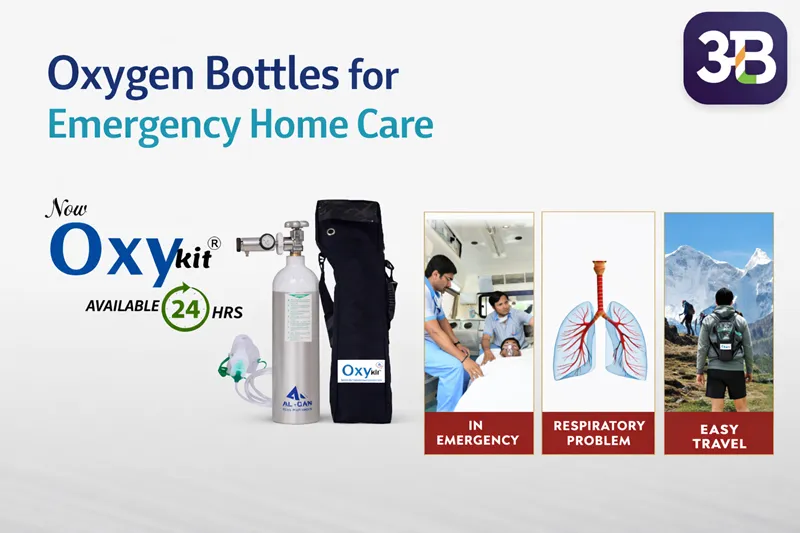
Understanding the Role of Oxygen Bottles in Emergency
Home Care
Emergency oxygen therapy is often required when a patient
suddenly experiences breathlessness, low oxygen saturation, or respiratory
distress due to conditions such as pneumonia, asthma exacerbations, chronic
lung disease, or post-surgery complications. In these situations, oxygen
bottles act as immediate life-support tools that stabilize oxygen levels until
medical assistance becomes available. Unlike oxygen concentrators that depend
on electricity and continuous operation, oxygen cylinders deliver pre-compressed
oxygen instantly, making them ideal for urgent situations. Aarogyaa Bharat
emphasizes that emergency oxygen bottles are not meant to replace medical
supervision but rather to bridge the gap between symptom onset and professional
treatment. Families caring for elderly patients or individuals with chronic
respiratory illnesses often keep a medical oxygen cylinder at home as part of a
comprehensive emergency preparedness plan.
Why Every High-Risk Home Should Consider an Emergency
Oxygen Bottle
Certain patient groups benefit significantly from having
emergency oxygen access at home. Individuals with COPD, pulmonary fibrosis,
severe asthma, heart disease, or recovering from COVID-related lung
complications may experience sudden oxygen drops. Emergency oxygen bottles
provide reassurance for families, enabling rapid response before hospital
transfer. Aarogyaa Bharat highlights that in India, where travel time to
hospitals may vary depending on location and traffic conditions, having
emergency oxygen support at home can make a critical difference in stabilizing
patients during unexpected episodes.
Types of Oxygen Bottles Suitable for Emergency Use
Emergency oxygen bottles come in various sizes designed for
quick deployment rather than prolonged therapy. Portable cylinders are
lightweight and easy to carry, allowing caregivers to bring oxygen support
directly to the patient. Medium-sized cylinders offer longer backup duration
while remaining manageable within home environments. Larger stationary
cylinders are typically used as secondary emergency reserves for patients who
require frequent oxygen support. Aarogyaa Bharat recommends choosing medical-grade
cylinders with certified regulators and flow meters to ensure accurate oxygen
delivery during critical situations.
Table: Oxygen Bottle Types for Emergency Home Care
|
Cylinder
Size |
Typical
Emergency Use |
Mobility
Level |
Key
Advantage |
|
Small
Portable Cylinder |
Sudden
breathlessness |
High mobility |
Fast
deployment |
|
Medium
Cylinder |
Night-time
emergencies |
Moderate |
Longer supply |
|
Large Backup
Cylinder |
Severe
respiratory risk |
Low mobility |
Extended
oxygen availability |
|
Travel Oxygen
Bottle |
Outdoor
emergencies |
Very high |
Lightweight
design |
What Emergency Oxygen Bottles Work
Medical oxygen cylinders store oxygen under high pressure
and release it through a regulator connected to a mask or nasal cannula. During
an emergency, caregivers open the cylinder valve slowly and adjust the flow
meter according to prescribed levels. The patient inhales oxygen through
tubing, helping restore oxygen saturation and reduce strain on the lungs and
heart. Aarogyaa Bharat stresses that oxygen flow should always follow medical
guidance because excessive oxygen delivery may be harmful in certain respiratory
conditions.
Safety Guidelines for Using Oxygen Bottles During
Emergencies
Safety is the most critical aspect of emergency oxygen use
because oxygen supports combustion even though it is not flammable itself.
Cylinders should always remain upright and secured to prevent tipping. Smoking,
open flames, and cooking activities must be strictly avoided near oxygen
equipment. Electrical appliances should be well-maintained to prevent sparks,
and caregivers should avoid using oil-based products near oxygen masks.
Aarogyaa Bharat recommends placing oxygen bottles in ventilated areas away from
curtains, chemicals, or heat sources to minimize fire risk.
Table: Emergency Oxygen Bottle Safety Checklist
|
Safety
Area |
Recommended
Action |
Risk
Prevented |
Caregiver
Tip |
|
Fire
Prevention |
Keep 6–10 ft
from flames |
Ignition risk |
No smoking
indoors |
|
Storage |
Upright
secured position |
Cylinder fall |
Use stand or
holder |
|
Valve
Handling |
Open slowly |
Pressure
damage |
Learn correct
technique |
|
Patient
Monitoring |
Check oxygen
levels |
Over-oxygenation |
Use pulse
oximeter |
Recognizing When to Use an Emergency Oxygen Bottle
Emergency oxygen should be used when a patient shows signs
of respiratory distress such as rapid breathing, bluish lips, severe fatigue,
or oxygen saturation dropping below medically recommended levels. Caregivers
should remain calm and follow prescribed oxygen flow rates while contacting
medical professionals. Aarogyaa Bharat emphasizes that oxygen bottles are
supportive tools, not substitutes for emergency medical care, and should be
used alongside professional guidance whenever possible.
Setting Up an Emergency Oxygen Station at Home
Creating a dedicated emergency oxygen area helps ensure
rapid access during critical moments. The cylinder should be positioned near
the patient’s resting area but away from obstacles. Essential accessories such
as masks, nasal cannulas, spare tubing, and a pulse oximeter should be stored
together for easy access. Aarogyaa Bharat suggests conducting periodic practice
drills so that caregivers feel confident operating the oxygen bottle during
real emergencies.
Patient Monitoring During Emergency Oxygen Therapy
Monitoring oxygen saturation and breathing patterns is
essential to ensure safe therapy. Pulse oximeters allow caregivers to track
oxygen levels and identify whether oxygen delivery is effective. Recognizing
warning signs such as dizziness, confusion, or persistent breathlessness helps
determine when hospital transfer may be necessary. Aarogyaa Bharat advises
documenting oxygen usage and symptoms to provide accurate information to
healthcare professionals during follow-up consultations.
Transporting Oxygen Bottles Safely During Medical
Transfers
When transporting patients to hospitals or moving oxygen
cylinders within the home, caregivers must ensure that the valve cap remains
secure and that the cylinder is carried using approved holders. Cylinders
should never be dragged, rolled, or left unsecured in vehicles. Aarogyaa Bharat
recommends maintaining ventilation in vehicles and securing the cylinder
upright to prevent accidental movement during travel.
Emotional Support for Patients During Respiratory
Emergencies
Experiencing breathlessness can be frightening for patients,
especially elderly individuals or those living with chronic illness. Having an
emergency oxygen bottle nearby provides reassurance and reduces anxiety during
sudden episodes. Caregivers should speak calmly, encourage slow breathing, and
maintain a supportive environment. Aarogyaa Bharat believes that emotional
stability during emergencies is as important as medical intervention, as panic
can worsen respiratory distress.
Common Mistakes Families Make with Emergency Oxygen
Bottles
Many households purchase oxygen cylinders without proper
training, leading to incorrect usage during emergencies. Opening valves too
quickly, placing cylinders near cooking areas, or adjusting oxygen flow without
medical guidance are common mistakes. Aarogyaa Bharat advises families to
undergo basic oxygen safety training and keep written instructions near the
oxygen station for quick reference.
Conclusion
Oxygen bottles for emergency home care play a vital role in
stabilizing patients during sudden respiratory distress, offering immediate
oxygen support when time is critical. By understanding proper setup, safety
practices, and patient monitoring techniques, families can create a secure home
environment that supports effective emergency response. Aarogyaa Bharat
encourages caregivers to combine medical guidance, safety awareness, and
thoughtful preparation to ensure that emergency oxygen therapy remains reliable,
safe, and life-saving during critical situations.