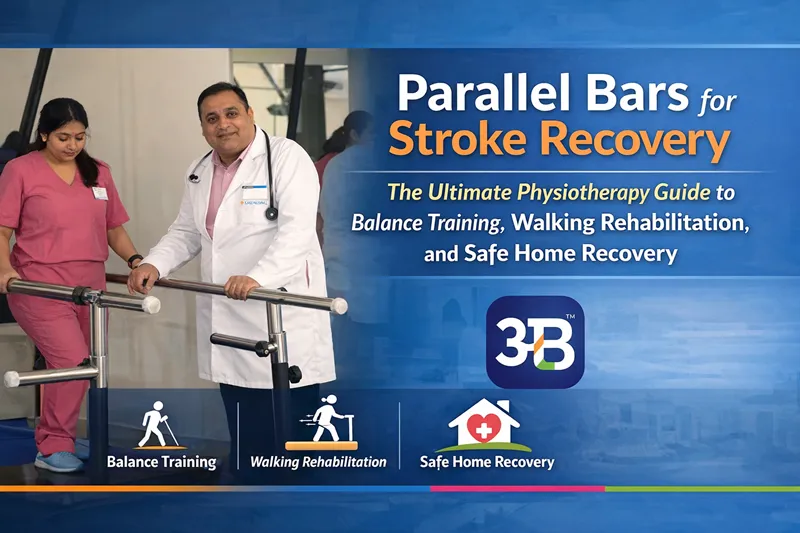
Understanding Stroke Recovery and the Role of
Physiotherapy Equipment
Stroke recovery is a gradual process that focuses on
restoring movement, coordination, and balance after damage to the brain affects
the body’s ability to perform everyday tasks, and physiotherapy becomes a
crucial part of recovery because consistent exercises help retrain muscles and
neural pathways responsible for posture and mobility, while parallel bars
provide a secure rehabilitation environment where stroke patients can practice
controlled movements under supervision, allowing therapists to correct gait
patterns, encourage proper weight distribution, and reduce compensatory
movements that may slow long-term progress.
Why Parallel Bars Are Essential in Stroke Rehabilitation
Parallel bars offer dual-sided support that allows stroke
patients to regain confidence during early rehabilitation stages when balance
is weak and muscles are unstable, making them safer than walkers or crutches
for initial training because therapists can guide patients closely while
maintaining physical stability, and this structured support helps individuals
relearn standing posture, initiate steps, and develop coordination gradually
without overwhelming the body, which is especially important for patients
experiencing hemiparesis or one-sided weakness after a stroke.
How Parallel Bars Improve Balance and Stability After
Stroke
Balance improvement is one of the most important goals in
stroke rehabilitation because instability increases fall risk and reduces
independence, and parallel bars allow patients to perform repetitive exercises
such as weight shifting, assisted stepping, and controlled standing while
receiving constant physical support, enabling the nervous system to relearn how
to respond to movement changes and improving proprioception through tactile
feedback from the bars, which strengthens stabilizing muscles around the hips,
knees, and ankles and helps patients transition from supported movement to more
independent walking over time.
Gait Training with Parallel Bars for Walking
Rehabilitation
Walking rehabilitation becomes safer and more structured
with parallel bars because they allow stroke survivors to practice step-by-step
gait training while maintaining upright posture and controlled stride length,
and therapists can introduce progressive exercises such as forward walking,
backward stepping, and lateral movements that improve coordination and
endurance, helping patients rebuild natural walking patterns and reduce
reliance on mobility aids as strength and balance improve, making parallel bars
a cornerstone of effective stroke physiotherapy programs.
Table: Parallel Bar Exercises for Stroke Recovery
|
Exercise |
Purpose |
Benefits |
Recovery
Stage |
|
Assisted
Standing |
Build
stability |
Improves
posture control |
Early Stage |
|
Weight
Shifting |
Balance
training |
Enhances
coordination |
Early Stage |
|
Assisted
Walking |
Gait
retraining |
Improves
walking ability |
Mid Stage |
|
Side Stepping |
Lateral
balance |
Strengthens
hip muscles |
Mid Stage |
|
Heel-to-Toe
Walking |
Dynamic
balance |
Improves
coordination |
Advanced
Stage |
Neuromuscular Rehabilitation and Brain Relearning
Stroke recovery relies heavily on neuroplasticity, which is
the brain’s ability to create new pathways to restore lost movement, and
parallel bars help stimulate this process by encouraging repetitive and guided
exercises that activate muscle memory and improve communication between the
brain and body, while therapists provide verbal cues and physical adjustments
to correct posture and movement patterns, allowing stroke patients to gradually
regain control over their muscles and improve reaction time during daily
activities.
Strength Building and Endurance Training with Parallel
Bars
Muscle weakness is common after stroke, especially in the
lower body, and parallel bars allow patients to perform progressive strength
exercises such as mini squats, supported lunges, and step training without
losing balance, enabling gradual improvement in endurance and muscle activation
while minimizing strain on joints, and as strength develops patients can
increase exercise intensity safely, leading to improved walking efficiency and
greater independence in everyday movements such as climbing stairs or standing
for longer periods.
Table: Benefits of Parallel Bars Across Stroke Recovery
Goals
|
Recovery
Goal |
Challenge |
Role of
Parallel Bars |
Outcome |
|
Balance
Improvement |
Instability |
Supported
exercises |
Better
posture control |
|
Walking
Recovery |
Weak gait |
Guided
walking drills |
Improved
mobility |
|
Confidence
Building |
Fear of
falling |
Safe training
space |
Increased
motivation |
|
Strength
Development |
Muscle
weakness |
Progressive
exercises |
Enhanced
endurance |
|
Functional
Independence |
Limited
mobility |
Structured
therapy |
Faster
recovery |
Parallel Bars for Home Stroke Rehabilitation with
Aarogyaa Bharat
With the rise of home healthcare in India, parallel bars
have become an essential part of home rehabilitation setups because they allow
stroke survivors to continue physiotherapy exercises consistently outside
hospital environments, and Aarogyaa Bharat provides trusted rehabilitation
equipment designed to support safe recovery at home, enabling patients and
caregivers to maintain structured therapy routines while ensuring durability,
stability, and comfort during daily balance and walking exercises.
Psychological Benefits of Parallel Bar Therapy for Stroke
Patients
Stroke recovery is not only physical but also emotional, as
many patients experience anxiety and fear about walking or standing again, and
parallel bars provide a sense of security that encourages individuals to
attempt movements gradually, helping them build confidence through small
achievements that improve motivation and reduce stress, which plays a
significant role in maintaining consistent therapy participation and achieving
better long-term rehabilitation outcomes.
Safety Tips for Using Parallel Bars During Stroke
Recovery
To maximize safety, stroke patients should use parallel bars
under professional guidance initially, maintain upright posture while gripping
the bars lightly, wear non-slip footwear, and perform exercises slowly with
controlled breathing to prevent strain, while caregivers should ensure that the
bars are adjusted to the correct height and placed on a stable surface,
allowing patients to progress steadily toward independent walking without
risking injury.
Aarogyaa Bharat - Supporting Stroke Recovery with
Reliable Home Healthcare Solutions
Aarogyaa Bharat is dedicated to making rehabilitation
accessible by offering high-quality physiotherapy equipment that supports
balance training, walking recovery, and long-term mobility improvement, helping
stroke survivors regain independence with safe and reliable home healthcare
solutions designed for comfort, durability, and effective physiotherapy.
Conclusion
Parallel bars are one of the most effective tools for stroke
rehabilitation because they provide a safe and structured environment for
balance training, gait recovery, and strength development while promoting
neurological retraining and psychological confidence, and whether used in
hospitals, clinics, or home-care setups parallel bars help stroke survivors
rebuild mobility step by step, allowing them to regain independence and improve
their quality of life through consistent and guided physiotherapy.