A Complete Buyer’s Guide for Modern Home & Travel
Respiratory Care
As these devices become more popular, a common question
arises among patients and caregivers: “Is a portable nebulizer machine
really worth buying, or should I stick to a regular compressor nebulizer?”
While portable nebulizers offer unmatched convenience and silent operation,
they also come with higher prices and certain technical limitations. Choosing
the wrong type can result in poor medication delivery, frequent breakdowns, or
wasted money.
In India, where people travel frequently for work, medical
emergencies can happen anytime, and home space is often limited, portable
nebulizers appear to be a perfect modern solution. However, not all portable
nebulizers are suitable for every patient or medical condition. Understanding
their advantages, limitations, and ideal use cases is essential before making a
purchase.
At Aarogyaa Bharat - Live Healthy, Live Better, we regularly
guide families who are confused about whether a portable nebulizer machine is
worth investing in. In this detailed guide, you will learn what a portable
nebulizer is, how it works, how it compares with regular nebulizers, who should
buy one, what features to look for, how much it costs in India, and whether it
truly offers long-term value for respiratory care.
What Is a Portable Nebulizer Machine?
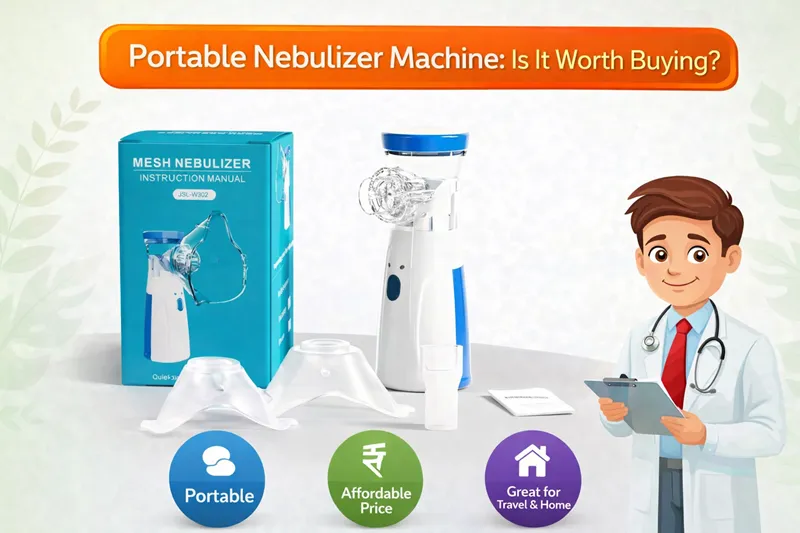
A portable nebulizer machine is a compact, lightweight,
battery-powered medical device that converts liquid medication into a fine
aerosol mist for inhalation. Unlike traditional compressor nebulizers, which
rely on bulky motors and electricity, portable nebulizers usually use advanced
mesh or ultrasonic technology to generate mist silently and efficiently. These
devices are designed to be used anytime and anywhere at home, at work, during
travel, or even outdoors.
Most portable nebulizers operate using rechargeable lithium
batteries or AA batteries, making them independent of electrical sockets. This
cordless functionality makes them highly convenient for working professionals,
school-going children, elderly patients, and frequent travellers. Many models
are small enough to fit into a handbag or backpack, which adds to their appeal
for modern lifestyles.
Portable nebulizers are commonly prescribed for asthma,
COPD, bronchitis, allergic respiratory conditions, post-COVID lung recovery,
and paediatric respiratory care. Doctors often recommend them for patients who
need quick and discreet therapy sessions outside the home. Their silent
operation also makes them suitable for night-time use without disturbing
others.
In Indian households, portable nebulizers are becoming
increasingly popular due to space constraints, power outages, and the need for
on-the-go respiratory support. Understanding what a portable nebulizer is helps
buyers evaluate whether it matches their medical and lifestyle needs.
How Does a Portable Nebulizer Work?
Portable nebulizers typically use mesh technology or
ultrasonic technology to generate aerosol mist. Mesh nebulizers use a vibrating
membrane with microscopic holes that allow liquid medication to pass through
and form ultra-fine mist particles. Ultrasonic nebulizers use high-frequency
sound waves to break liquid medication into inhalable droplets. Both
technologies are quieter and more energy-efficient than traditional
compressor-based systems.
When the device is switched on, the liquid medication stored
in the medicine cup is converted into mist and released through a mask or
mouthpiece. The patient simply breathes normally while inhaling the mist,
making therapy passive and stress-free. This ease of use makes portable
nebulizers ideal for children, elderly patients, and individuals who struggle
with inhaler technique.
Most portable nebulizers are designed to deliver consistent
mist output despite their compact size. However, their performance can vary
depending on battery level, medication viscosity, and device quality. High-end
models deliver mist as effectively as traditional nebulizers, while cheaper
models may struggle with thick medications.
Understanding how portable nebulizers work helps patients
appreciate their strengths and limitations and make more informed purchasing
decisions.
Why Are Portable Nebulizers Gaining Popularity?
One of the biggest reasons portable nebulizers are gaining
popularity is convenience. Traditional nebulizers are bulky, noisy, and require
electricity, which makes them inconvenient for people who travel frequently or
live in small apartments. Portable nebulizers solve these problems by offering
compact size, silent operation, and battery-powered functionality.
Another major factor is lifestyle flexibility. Working
professionals, students, and frequent travelers cannot always stay at home for
therapy sessions. Portable nebulizers allow them to continue their treatment
routine at the office, school, or during travel without disrupting their daily
schedule. This improves treatment compliance and long-term health outcomes.
Parents of children with asthma or bronchiolitis also prefer
portable nebulizers because they can administer therapy during school hours or
outdoor activities. The silent operation and child-friendly design reduce fear
and resistance in young patients. Elderly patients appreciate the lightweight
design and ease of use, especially if they live alone.
In India, additional factors such as power cuts, traffic
congestion, and limited hospital access in rural areas make portable nebulizers
even more valuable. These real-world challenges contribute significantly to the
growing demand for portable respiratory devices.
Portable Nebulizer vs Regular Nebulizer: Key Differences
|
Feature |
Portable
Nebulizer |
Regular
Compressor Nebulizer |
|
Size &
Weight |
Very compact,
lightweight |
Bulky and
heavy |
|
Power Source |
Battery /
Rechargeable |
Electricity |
|
Noise Level |
Very low or
silent |
Moderate |
|
Portability |
High |
Low |
|
Medication
Support |
Limited in
some models |
All types |
|
Durability |
Medium |
High |
|
Cost |
High |
Low |
|
Best For |
Travel, kids,
seniors |
Long-term
home use |
This comparison highlights that portable nebulizers excel in
convenience and mobility, while regular nebulizers offer superior durability
and universal medication compatibility. The choice depends on individual
medical needs and lifestyle priorities.
Advantages of Portable Nebulizer Machines
- Portable nebulizers offer several important advantages that make them attractive to modern users. One of the biggest benefits is mobility. Patients can carry these devices anywhere and use them anytime, which eliminates dependence on fixed locations or electrical sockets. This mobility ensures uninterrupted respiratory therapy even during travel or emergencies.
- Another major advantage is silent operation. Unlike compressor nebulizers that produce noticeable noise, portable nebulizers operate almost silently. This makes them ideal for night-time therapy, paediatric care, and shared living spaces. Quiet operation also reduces stress and improves comfort during therapy sessions.
- Portable nebulizers are also easy to use. Most models require minimal assembly and feature one-touch operation. This simplicity makes them suitable for elderly patients, children, and individuals with limited technical skills. Their modern design and intuitive controls further enhance user experience.
- Additionally, portable nebulizers are energy-efficient and consume very little power. Rechargeable models offer multiple therapy sessions on a single charge, making them cost-effective in the long run despite their higher upfront price.
Limitations of Portable Nebulizer Machines
- Despite their advantages, portable nebulizers also have certain limitations that buyers should consider. One major drawback is higher cost. Portable nebulizers are significantly more expensive than regular compressor nebulizers, which can be a barrier for budget-conscious families.
- Another limitation is medication compatibility. Some portable nebulizers struggle with thick or viscous medications such as steroid suspensions and certain antibiotic solutions. This makes them less versatile for patients with complex respiratory conditions who require multiple medications.
- Durability is also a concern. Portable nebulizers contain delicate electronic components and mesh membranes that require careful handling and regular cleaning. Rough usage or improper maintenance can lead to early device failure.
- Battery dependency is another drawback. If the battery runs out during an emergency and no charging option is available, therapy may be delayed. This makes portable nebulizers less reliable as a sole respiratory support device for severe cases.
Who Should Buy a Portable Nebulizer Machine?
Portable nebulizers are ideal for specific user groups
rather than everyone. Frequent travelers benefit most because they can carry
the device easily and continue therapy during trips. Working professionals who
cannot stay home for therapy sessions also find portable nebulizers extremely
convenient.
Children with asthma and elderly patients who are sensitive
to noise or struggle with bulky devices often prefer portable nebulizers due to
their silent operation and lightweight design. Parents and caregivers
appreciate the stress-free therapy experience these devices offer.
Patients with mild to moderate respiratory conditions who
require occasional nebulization are also good candidates for portable
nebulizers. These devices provide quick relief without the hassle of setting up
a large machine.
However, patients with severe asthma, advanced COPD, or
frequent flare-ups should not rely solely on portable nebulizers. In such
cases, a regular compressor nebulizer remains essential for long-term
reliability and universal medication compatibility.
Key Features to Look for in the Best Portable Nebulizer
When choosing the best portable nebulizer machine, buyers
should focus on performance and safety rather than just brand name or design.
Mist output quality is one of the most important features, as it determines how
effectively medication reaches the lungs. A good portable nebulizer should
produce fine, consistent mist particles.
Battery life is another critical factor. Look for devices
that offer multiple therapy sessions on a single charge and support fast
recharging. A low-battery indicator and automatic shut-off feature further
enhance usability and safety.
Noise level, ease of cleaning, and durability also matter
greatly. Choose models made from medical-grade plastic with reliable mesh
membranes and sturdy construction. Accessories such as adult and paediatric
masks, carrying cases, and warranty coverage add to long-term value.
Always choose a trusted medical brand with proper
certification and after-sales service. Cheap unbranded portable nebulizers
often deliver inconsistent mist and fail prematurely.
Portable Nebulizer Price in India
|
Type |
Price
Range (₹) |
|
Basic
Portable Nebulizer |
3,000 - 5,000 |
|
Mid-Range
Portable Nebulizer |
5,000 - 8,000 |
|
Premium
Portable Nebulizer |
8,000 -
12,000+ |
Prices vary based on brand, technology, battery capacity,
and warranty coverage. While portable nebulizers are more expensive upfront,
their convenience and mobility often justify the cost for the right users.
Is a Portable Nebulizer Machine Worth Buying?
The answer depends entirely on your medical needs and
lifestyle. A portable nebulizer is worth buying if you travel frequently, need
silent therapy, have space constraints, or want on-the-go respiratory support.
For working professionals, children, and elderly patients, the convenience and
comfort of portable nebulizers significantly improve treatment compliance and
quality of life.
However, portable nebulizers should not replace regular
nebulizers for patients with severe respiratory conditions. They are best used
as a secondary device for travel and emergencies rather than a primary
long-term therapy machine.
At Aarogyaa Bharat, we usually recommend keeping both:
A regular compressor nebulizer for daily home use
A portable nebulizer for travel and outdoor therapy
This combination ensures uninterrupted, reliable respiratory
care under all circumstances.
Conclusion
Portable nebulizer machines offer unmatched convenience, silent operation,
and modern usability for respiratory care. They are especially valuable for
travellers, working professionals, children, and elderly patients who need
flexible therapy options.
However, they are not a universal replacement for
traditional nebulizers. Patients with severe asthma, COPD, or frequent
bronchitis flare-ups should always keep a regular compressor nebulizer as their
primary device.
At Aarogyaa Bharat - Live Healthy, Live Better, we believe
that the right nebulizer is not just about price it is about patient safety,
treatment effectiveness, and long-term reliability. Our goal is to help
families make confident and medically sound purchasing decisions for home
respiratory care.