A Complete Buyer’s Guide to Cost, Features, and Choosing
the Right Model for Home Use
During the COVID-19 pandemic, pulse oximeters became
household essentials almost overnight. Families rushed to buy them to detect
falling oxygen levels early and monitor silent hypoxia before symptoms became
severe. Even after the pandemic, doctors continue to recommend pulse oximeters
for elderly individuals, respiratory patients, heart patients, and people
recovering from infections or surgery. The ability to monitor oxygen saturation
and pulse rate at home provides peace of mind and helps prevent medical
emergencies.
However, one of the most common questions buyers ask is:
“What is the pulse oximeter price in India, and how much should I really
spend?” With hundreds of brands and models available in the market, prices vary
widely from cheap ₹600 models to premium smart oximeters costing over ₹6,000.
Many users end up buying unreliable products that show inconsistent readings,
while others overspend on unnecessary features they never use.
At Aarogyaa Bharat - Live Healthy, Live Better, we regularly
guide families on choosing accurate, reliable, and medically certified pulse
oximeters based on both budget and medical needs. In this detailed guide, you
will learn what a pulse oximeter is, why it matters, the current pulse oximeter
price range in India, what factors affect pricing, how to choose the best
value-for-money model, common mistakes to avoid, and whether premium oximeters
are really worth the cost.
Why Pulse Oximeters Are in High Demand in India
The demand for pulse oximeters in India has grown rapidly
over the past few years due to multiple health and environmental factors.
Rising air pollution levels in major cities such as Delhi, Mumbai, Pune, and
Bangalore have increased the number of people suffering from respiratory
problems. Asthma, COPD, bronchitis, and allergic respiratory conditions are now
more common than ever before.
The COVID-19 pandemic further highlighted the importance of
oxygen monitoring at home. Many patients experienced silent hypoxia, where
oxygen levels dropped dangerously low without obvious symptoms. Families
realized that a simple pulse oximeter could provide early warning signs and
help them seek timely medical care.
In addition, India’s aging population and increasing cases
of heart disease have made home health monitoring devices more relevant.
Doctors now routinely recommend pulse oximeters for elderly individuals, heart
patients, post-surgical recovery, and people undergoing long-term respiratory
therapy.
These real-world health challenges have made pulse oximeters
an essential household medical device rather than just a hospital tool.
What Is a Pulse Oximeter and Why Is It Important?
A pulse oximeter is a small, non-invasive medical device
that measures two vital health parameters: oxygen saturation (SpO₂) and pulse
rate (heart rate). It is usually clipped onto a fingertip and provides instant
digital readings within a few seconds. This painless test does not require
blood samples or needles, making it ideal for frequent home use.
Oxygen saturation indicates how efficiently oxygen is being
transported from your lungs into your bloodstream and delivered to vital
organs. A normal SpO₂ level for healthy adults typically ranges between 95% and
100%. Values below this range may indicate breathing problems, lung disease,
heart issues, or poor oxygen delivery to tissues.
Pulse rate reflects heart health and circulation efficiency.
Monitoring pulse rate helps detect irregular heart rhythms, assess physical
fitness, and identify early signs of cardiovascular stress.
Because pulse oximeters provide early detection of oxygen
drops and heart irregularities, they play a critical role in preventing medical
emergencies and supporting long-term health management.
Pulse Oximeter Price in India: Current Market Overview
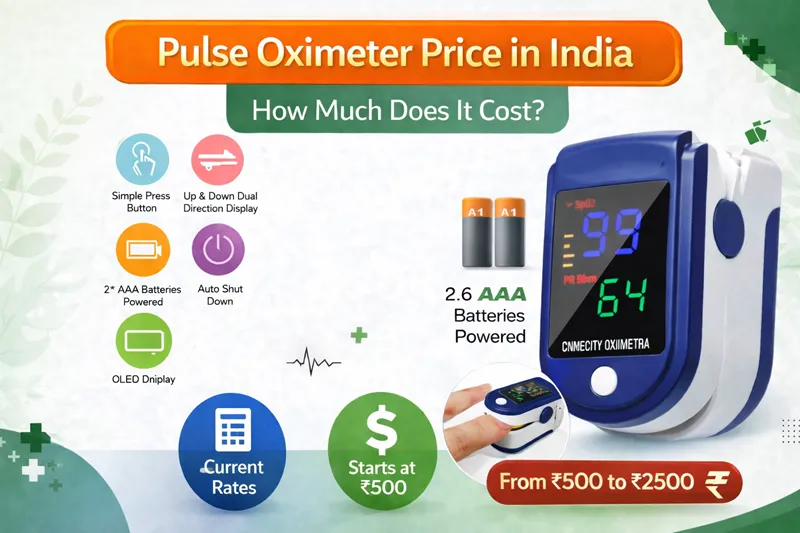
The price of a pulse oximeter in India varies widely
depending on brand, features, accuracy level, certification, and build quality.
Broadly, pulse oximeters can be categorized into three main price segments:
basic, mid-range, and premium.
|
Type of
Pulse Oximeter |
Price
Range (₹) |
Best For |
|
Basic
Home-Use Model |
600 - 1,500 |
Occasional
use, budget buyers |
|
Mid-Range
Model |
1,500 - 3,000 |
Daily home
monitoring |
|
Premium Smart
Model |
3,000 -
6,000+ |
High-risk
patients, advanced tracking |
Basic models are affordable and suitable for most
households, but they may lack advanced features and long-term durability.
Mid-range models offer better accuracy, display quality, and build strength,
making them ideal for regular home use. Premium models include advanced
features such as Bluetooth connectivity, alarm alerts, and rechargeable
batteries, which are useful for high-risk patients who require continuous
monitoring.
Factors That Affect Pulse Oximeter Price in India
Several factors influence the cost of a pulse oximeter in
the Indian market. Understanding these factors helps buyers make informed
decisions and avoid overpaying for unnecessary features.
One of the biggest factors is accuracy and sensor quality.
Clinically tested and medically certified oximeters use higher-quality sensors
that provide more consistent and reliable readings. These devices naturally
cost more than cheap, unbranded models with poor sensors.
Display type also affects pricing. Basic models use simple
LED displays, while premium models feature bright OLED or HD screens with
multi-directional display rotation. A clearer display improves usability,
especially for elderly users, but increases the price.
Battery type and power efficiency play a role as well.
Rechargeable pulse oximeters cost more than battery-operated ones but offer
long-term cost savings and convenience. Devices with automatic shut-off and
low-battery indicators also fall into higher price categories.
Additional features such as alarm alerts, plethysmograph
waveform, perfusion index (PI), Bluetooth connectivity, and mobile app
integration further increase the price. While these features are useful for
high-risk patients, they are not essential for everyone.
Cheap vs Expensive Pulse Oximeters: What’s the Real
Difference?
Many buyers assume that all pulse oximeters work the same
way and choose the cheapest option available online. However, there are
significant differences between cheap and premium pulse oximeters that affect
accuracy, reliability, and long-term value.
Cheap pulse oximeters often use low-quality sensors and
basic algorithms that show inconsistent readings. They may display random
fluctuations, lag in updating results, or fail to detect low oxygen levels
accurately. This can cause unnecessary panic or false reassurance, both of
which are dangerous for health.
Premium pulse oximeters use advanced sensors, better
calibration, and stronger build quality. They provide more stable readings,
faster response times, and longer device lifespan. These devices are also more
comfortable to use, with softer finger pads and ergonomic designs.
While expensive models cost more upfront, they offer better
long-term value for high-risk patients who require daily monitoring and
dependable performance.
Is It Worth Buying a Premium Pulse Oximeter?
A premium pulse oximeter is worth buying if you or a family
member has a chronic respiratory or heart condition, requires daily monitoring,
or needs advanced features such as alarm alerts and Bluetooth tracking. These
devices provide more reliable data and long-term durability.
For elderly individuals and post-COVID patients, premium
models offer peace of mind through automatic alerts when oxygen levels fall
below safe thresholds. Bluetooth-enabled models also allow data sharing with
doctors, which is useful for remote consultations and long-term disease
management.
However, for occasional use or basic monitoring, a mid-range
model is usually sufficient and more cost-effective. There is no need to
overspend on features you may never use.
At Aarogyaa Bharat, we help families choose the most
suitable pulse oximeter based on medical needs and budget rather than pushing
the most expensive option.
How to Choose the Best Pulse Oximeter for Your Budget
Choosing the right pulse oximeter involves balancing price
with essential features. Budget-conscious buyers should focus on certified
basic models that offer reliable accuracy and clear display quality. Avoid
extremely cheap unbranded devices, as they often produce unreliable readings.
For daily home monitoring, invest in a mid-range model with
an OLED display, good battery life, and sturdy build quality. These models
offer the best balance of affordability and long-term value.
High-risk patients and tech-savvy users may benefit from
premium models with alarm alerts, Bluetooth connectivity, and rechargeable
batteries. However, always ensure that the device is medically certified and
backed by warranty coverage.
Buying from a trusted seller like Aarogyaa Bharat ensures
genuine products, expert guidance, and reliable after-sales support.
Pulse Oximeter Price vs Accuracy: What Should You
Prioritize?
When choosing a pulse oximeter, accuracy should always take
priority over price. A cheap device that shows incorrect readings can be more
dangerous than not having a pulse oximeter at all.
Investing in a slightly more expensive but medically
certified model ensures consistent and reliable oxygen monitoring. For
high-risk patients, accuracy can mean the difference between timely medical
intervention and delayed treatment.
Always verify certification, warranty, and customer reviews
before making a purchase. Avoid impulse buying based solely on discounts or
flashy advertisements.
Where to Buy Pulse Oximeters in India
Pulse oximeters are widely available online and offline in
India, but not all sellers offer genuine products. Buying from unreliable
sources increases the risk of counterfeit or low-quality devices.
At Aarogyaa Bharat - Live Healthy, Live Better, we provide
certified pulse oximeters with expert guidance to help families choose the
safest and most cost-effective option. Our devices come with warranty coverage,
after-sales support, and medical reliability.
Purchasing from a trusted medical supplier ensures peace of
mind and long-term value.
Conclusion
The pulse oximeter price in India typically ranges from ₹600 to ₹6,000+,
depending on brand, features, and accuracy level. While basic models are
affordable and suitable for most households, investing in a mid-range or
premium model offers better reliability and long-term value for high-risk
patients.
At Aarogyaa Bharat - Live Healthy, Live Better, we believe
that every household should own a reliable pulse oximeter as part of a complete
home-care setup. Our goal is to help families make confident and medically
sound purchasing decisions for long-term health monitoring.