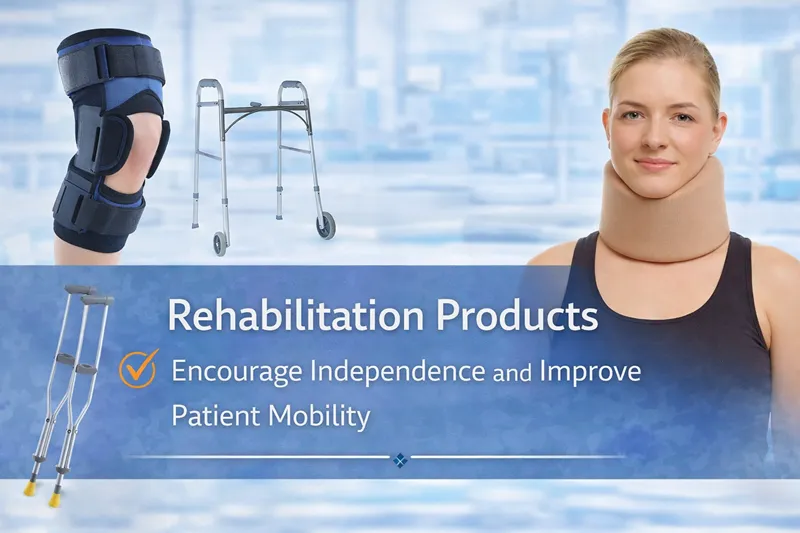
In many cases, patients may show progress during supervised therapy sessions but struggle to maintain gains without proper support tools. Rehabilitation products ensure continuity of care by allowing patients to practice movements safely at home or in assisted environments. This continuity significantly reduces relapse, stiffness, and functional decline, particularly in long-term or chronic conditions.
Role of Rehabilitation Products in Preventing Secondary Complications
Limited mobility often leads to secondary health complications such as muscle wasting, joint contractures, pressure ulcers, poor circulation, and respiratory issues. Rehabilitation products play a preventive role by encouraging regular movement, posture correction, and weight redistribution. Even simple aids like positioning supports and transfer devices can prevent long-term damage.
For bedridden or partially mobile patients, rehabilitation equipment helps reduce dependency-related risks. Proper seating systems, mobility aids, and exercise tools support circulation and muscle engagement, lowering the likelihood of complications that may otherwise prolong recovery or worsen disability.
Importance of Early Rehabilitation Product Integration
Early integration of rehabilitation products into treatment plans significantly improves outcomes. Introducing mobility aids, supports, or therapy equipment at the right stage helps patients adapt gradually instead of waiting until mobility declines further. Early rehabilitation encourages confidence and reduces fear associated with movement after injury or surgery.
For post-surgical patients, early use of appropriate rehabilitation products supports safer ambulation, faster muscle activation, and reduced hospital stays. In neurological and orthopaedic cases, early rehabilitation is strongly associated with better functional recovery and independence.
Rehabilitation Products and Caregiver Support
Rehabilitation products are equally important for caregivers, as they reduce physical strain and improve safety during patient assistance. Transfer aids, walking supports, and positioning devices help caregivers assist patients without risking injury to themselves or the patient. This creates a safer and more sustainable caregiving environment.
By enabling patients to perform tasks independently, rehabilitation products also reduce caregiver workload and emotional stress. This balance improves overall care quality and allows caregivers to focus on emotional support rather than constant physical assistance.
Custom Rehabilitation Solutions for Different Recovery Stages
Rehabilitation is not a one-size-fits-all process, and rehabilitation products must evolve with the patient’s progress. Early-stage recovery may require maximum support, while later stages focus on strength, balance, and endurance. Products that allow adjustability and progression ensure that patients continue to be challenged without compromising safety.
This staged approach prevents over-dependence on aids while encouraging gradual independence. Healthcare professionals play a key role in reassessing product use and guiding transitions as recovery milestones are achieved.
Rehabilitation Products in Community and Rural Healthcare
In community and rural healthcare settings, rehabilitation products are often the primary tools available for recovery due to limited access to specialized facilities. Portable, durable, and easy-to-use rehabilitation products enable effective therapy even in resource-constrained environments.
By supporting mobility and independence at the community level, rehabilitation products help reduce healthcare disparities and improve access to recovery services. This is particularly important for elderly populations and patients with chronic conditions living outside urban centers.
Economic Value of Rehabilitation Products in Healthcare Systems
From a healthcare economics perspective, rehabilitation products deliver strong value by reducing long-term treatment costs. Patients who regain mobility and independence earlier require fewer hospital readmissions, shorter rehabilitation stays, and less long-term care support.
Health systems increasingly recognize rehabilitation as an investment rather than an expense. High-quality rehabilitation products contribute to better outcomes, lower complication rates, and more efficient use of healthcare resources.
Role of Education and Awareness in Rehabilitation Product Effectiveness
The success of rehabilitation products depends not only on availability but also on awareness and education. Patients and families must understand why specific products are recommended and how to use them correctly. Clear guidance improves compliance and maximizes therapeutic benefits.
Healthcare platforms and providers that emphasize education alongside product supply play a critical role in improving rehabilitation outcomes. This approach ensures that rehabilitation products are used as intended and integrated effectively into daily routines.
Strengthening Rehabilitation Outcomes with Aarogyaa Bharat
Aarogyaa Bharat strengthens rehabilitation outcomes by ensuring access to reliable, quality-assured rehabilitation products that meet clinical and safety standards. By working with verified manufacturers and maintaining transparent sourcing practices, the platform reduces uncertainty in product selection.
Aarogyaa Bharat supports healthcare professionals, institutions, and families by simplifying procurement and ensuring consistency in supply. This reliability is especially important for long-term rehabilitation programs that depend on uninterrupted access to appropriate equipment.
Long-Term Impact of Rehabilitation Products on Quality of Life
The true success of rehabilitation products is reflected in long-term quality of life improvements. Patients who regain mobility and independence experience better mental health, improved social participation, and greater confidence in managing daily life. Rehabilitation products therefore contribute not only to recovery but also to dignity and self-worth.
As healthcare increasingly prioritizes patient-reported outcomes and functional independence, rehabilitation products will remain central to recovery strategies. Their role extends beyond therapy into lifelong mobility support and wellness.
Conclusion
Rehabilitation products are fundamental tools that encourage independence from disability and significantly improve patient mobility across healthcare settings. By supporting safe movement, restoring strength, and enabling daily activities, they empower patients to actively participate in their recovery journey.
When chosen thoughtfully, used correctly, and supported by professional guidance, rehabilitation products become long-term enablers of physical function, emotional wellbeing, and quality of life. With trusted platforms like Aarogyaa Bharat ensuring access to quality-assured rehabilitation solutions, patients and healthcare providers can build recovery pathways that prioritize independence, dignity, and sustainable wellbeing.