Why Invest in Home Medical Equipment?
Having the right medical
devices at home offers numerous benefits:
●
Early detection of
health changes before they become emergencies
●
Reduced hospital visits
for routine monitoring
●
Cost savings over
repeated clinical measurements
●
Convenience and comfort
of monitoring in your own home
●
Peace of mind for
patients with chronic conditions and their families
●
Faster response to
deteriorating health conditions
The Top 10 Home Medical Equipment Devices
1. Blood Pressure Monitor
Hypertension affects one in
four adults in India. A digital blood pressure monitor is arguably the single
most important home health device for adults over 40 or anyone with
cardiovascular risk factors. Regular home BP monitoring helps track the effect
of lifestyle changes and medications and can detect dangerous spikes before
they cause strokes or heart attacks.
What to look for: Upper arm
monitor with validated accuracy, irregular heartbeat detection, memory for at
least 60 readings, and WHO classification indicator.
2. Pulse Oximeter
A pulse oximeter measures blood
oxygen saturation (SpO2) and pulse rate in seconds. Essential for patients with
respiratory conditions, heart disease, or anyone who has had COVID-19. Also
valuable for monitoring during home oxygen therapy.
What to look for: Accuracy of
±2% or better, perfusion index display, bright OLED screen, and battery life of
20+ hours.
3. Digital Thermometer
Fever is one of the most common
health signals, and knowing your exact temperature quickly is invaluable.
Modern digital thermometers provide readings in under a minute and are far more
accurate than older mercury thermometers.
Types available: Oral, rectal,
axillary (underarm), tympanic (ear), and non-contact infrared (forehead)
thermometers. Infrared forehead thermometers are the most convenient for family
use.
4. Blood Glucose Monitor
India has over 77 million
people living with diabetes - the highest number in the world. A home blood
glucose monitor allows diabetic patients to track their sugar levels multiple
times a day, adjust diet and medications accordingly, and detect dangerous
episodes of hypoglycemia (low blood sugar) or hyperglycemia (high blood sugar).
What to look for: Test strip
cost (the major ongoing expense), accuracy to ISO 15197 standard, memory for
300+ readings, and simple one-button operation.
5. Nebulizer
For patients with asthma, COPD,
or recurring respiratory infections, a nebulizer converts liquid medication
into a fine mist for inhalation directly into the lungs. Home nebulizers are
essential for managing acute attacks and delivering regular respiratory
therapy.
Types: Compressor nebulizers
(most common, most reliable) and ultrasonic nebulizers (quieter, portable).
6. Portable Suction Machine
For patients who have
difficulty swallowing, have a tracheostomy, or produce excess secretions
(common after strokes or in neurological conditions), a portable suction
machine clears the airway quickly and safely.
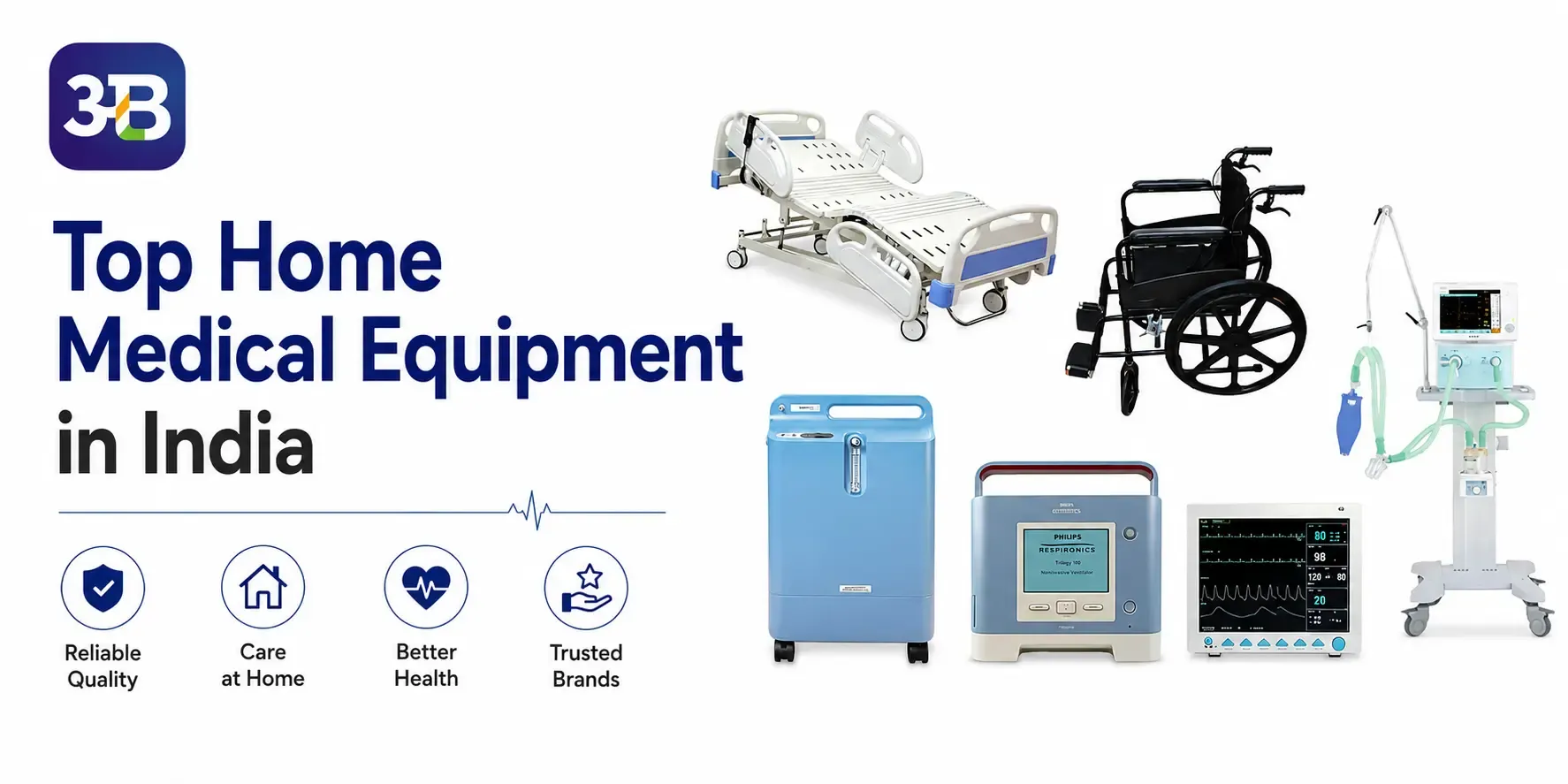
7. Hospital Bed
An adjustable electric hospital
bed dramatically improves the quality of home care for patients with limited
mobility, post-surgical recovery needs, or chronic conditions. Features like
head and foot elevation, height adjustment, and side rails transform a bedroom
into a safe, functional recovery space.
8. Wheelchair
For patients with limited
mobility, a wheelchair enables independent movement within the home and
community. Choosing the right type - manual, electric, transport, or commode depends
on the user's strength, environment, and care needs.
9. Oxygen Concentrator
For patients with chronic low
oxygen levels (SpO2 consistently below 94%), a home oxygen concentrator
delivers supplemental oxygen continuously without the need to refill oxygen
cylinders. Modern concentrators are quiet, compact, and suitable for 24/7 home
use.
10. ECG Monitor
A home ECG monitor records the
electrical activity of the heart and is invaluable for patients with known
arrhythmias, atrial fibrillation, or those recovering from heart surgery.
Modern portable ECG monitors can record, store, and share readings with cardiologists
remotely.
Comparison of Top Home Medical Equipment
|
Device |
Primary Use |
Recommended For |
Approx. Price Range (₹) |
|
BP Monitor |
Blood pressure tracking |
Hypertension patients, 40+ |
₹600 - ₹5,000 |
|
Pulse Oximeter |
Oxygen & pulse
monitoring |
Respiratory, cardiac
patients |
₹500 - ₹5,000 |
|
Digital Thermometer |
Fever detection |
All households |
₹100 - ₹2,000 |
|
Glucometer |
Blood sugar monitoring |
Diabetic patients |
₹500 - ₹3,000 |
|
Nebulizer |
Respiratory therapy |
Asthma, COPD patients |
₹1,500 - ₹8,000 |
|
Suction Machine |
Airway clearance |
Neurological, post-stroke |
₹5,000 - ₹30,000 |
|
Hospital Bed |
Mobility and recovery
support |
Post-surgery, chronic care |
₹15,000 - ₹1,50,000 |
|
Wheelchair |
Mobility assistance |
Mobility-impaired
individuals |
₹3,000 - ₹50,000 |
|
Oxygen Concentrator |
Supplemental oxygen |
Chronic hypoxemia |
₹30,000 - ₹1,00,000 |
|
ECG Monitor |
Heart rhythm monitoring |
Cardiac patients |
₹3,000 - ₹3,00,000 |
Tips for Buying Home Medical Equipment
Always Buy from Reputable Suppliers
Choose certified medical device
suppliers like Aarogyaa Bharat who stock products from established
manufacturers with CE, FDA, or BIS certifications. Counterfeit or substandard
devices can give dangerously inaccurate readings.
Check for After-Sales Service
Medical equipment requires
maintenance, calibration, and occasional repairs. Ensure your supplier offers
reliable after-sales service, warranty support, and access to spare parts.
Understand What You Are Buying
Ask your doctor or pharmacist
to recommend the specific device best suited to your condition. Not all BP
monitors, oximeters, or glucometers are equally suited to all patients.
Read User Manuals Carefully
Incorrect use of medical
devices can produce inaccurate readings and lead to wrong decisions. Take time
to read the manual and practice using the device before you need to rely on it
in a health situation.
Keep Devices Calibrated
Ensure BP monitors,
glucometers, and ECG machines are calibrated periodically per the
manufacturer's instructions. Compare readings with clinical measurements at
your doctor's office at least once a year.
Home Medical Equipment for Specific Conditions
|
Condition |
Essential Equipment |
Optional Equipment |
|
Hypertension |
BP Monitor |
ECG Monitor |
|
Diabetes |
Glucometer |
BP Monitor, Pedometer |
|
Asthma/COPD |
Pulse Oximeter, Nebulizer |
Oxygen Concentrator |
|
Post-Surgery Recovery |
Hospital Bed, Walker |
Commode Chair, Ice Pack |
|
Stroke/Paralysis |
Wheelchair, Suction Machine |
Hospital Bed, Nebulizer |
|
Cardiac Disease |
BP Monitor, ECG Monitor |
Pulse Oximeter |
|
Elderly Care |
BP Monitor, Pulse Oximeter |
Hospital Bed, Commode |
Conclusion
Investing in the right home
medical equipment is one of the most proactive steps you can take for your
family's health. From a simple digital thermometer to a sophisticated home ECG
monitor, each device plays a specific role in early detection, disease management,
and post-illness recovery. The key is to choose based on your family's specific
health conditions, buy from certified suppliers, and learn to use every device
correctly. Home healthcare is not about replacing medical professionals it is
about staying informed, prepared, and empowered between clinical visits.
Why Choose Aarogyaa Bharat?
When it comes to reliable,
affordable, and high-quality medical equipment, Aarogyaa Bharat is your trusted
partner. Whether you are searching for hospital-grade devices for home use or
looking to rent medical equipment for recovery, Aarogyaa Bharat offers an
extensive range of products with expert guidance.
Visit us today at
https://aarogyaabharat.com/ and explore hundreds of certified medical devices,
compare prices, read expert reviews, and place your order with complete
confidence. Our team of healthcare professionals is always ready to help you
make the right choice for your health and well-being.
Contact Aarogyaa Bharat now
because your health deserves the best.