Blood pressure measurement helps doctors detect conditions
such as hypertension (high BP) and hypotension (low BP) and plays a key role in
preventing heart disease, stroke, and kidney problems.
At Aarogyaa Bharat, we present diagnostic tools in a way
that is easy to understand yet clinically accurate.
Components of a Sphygmomanometer
A standard sphygmomanometer consists of:
- Inflatable
cuff - wraps around the upper arm to temporarily stop blood flow
- Pressure
measuring unit - mercury column, dial (aneroid), or digital sensor
- Inflation
bulb and release valve - used to inflate and deflate the cuff
- Stethoscope
- used in manual methods to hear Korotkoff sounds
Each component plays a crucial role in obtaining an accurate
blood pressure reading.
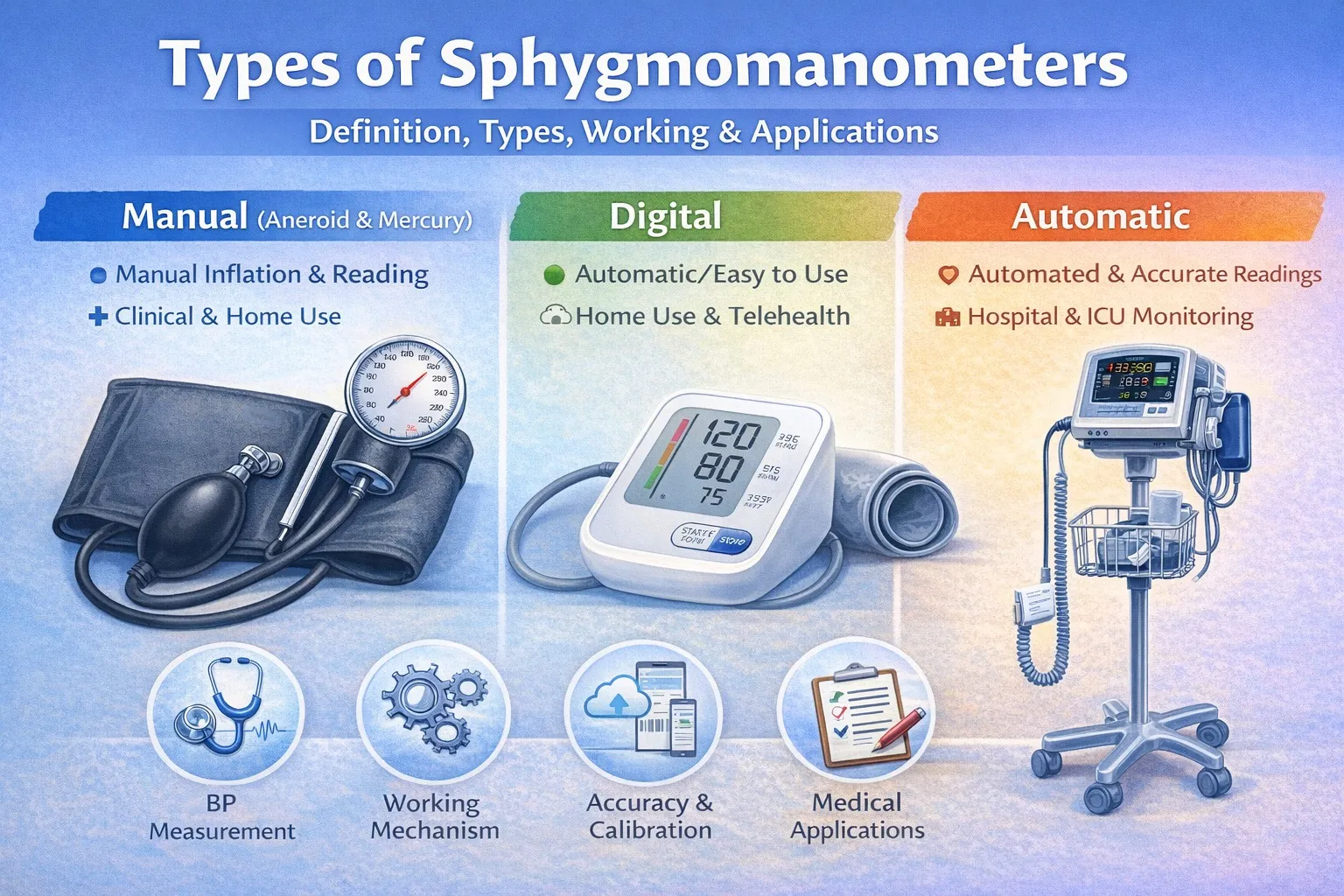
Types of Sphygmomanometers
Sphygmomanometers are broadly classified into the following
types:
Mercury Sphygmomanometer
- Considered
the gold standard for accuracy
- Uses
a vertical mercury column to measure pressure
- Very
reliable and consistent readings
Due to mercury’s toxic nature, its use is now restricted or
phased out in many countries.
Aneroid Sphygmomanometer
- Mercury-free
mechanical device
- Uses
a dial gauge to display pressure
- Lightweight
and portable
- Requires
regular calibration for accuracy
Commonly used in clinics, hospitals, and ambulances.
Digital (Automatic) Sphygmomanometer
- Uses
electronic sensors
- Automatically
inflates and deflates
- Displays
readings digitally
- Easy
to use for home monitoring
Accuracy depends on correct cuff size, placement, and
patient posture.
How a Sphygmomanometer Works
In manual measurement:
- The
cuff is inflated to stop blood flow
- Pressure
is slowly released
- Korotkoff
sounds are heard through a stethoscope
- First
sound = systolic pressure
- Disappearance
of sound = diastolic pressure
This method provides precise arterial pressure values.
Medical Applications of Sphygmomanometers
Sphygmomanometers are used for:
- Routine
health check-ups
- Diagnosis
of hypertension and hypotension
- Monitoring
patients in hospitals and ICUs
- Managing
chronic heart and kidney conditions
Advantages of Sphygmomanometers
Non-invasive measurement
Reliable and clinically proven
Suitable for all age groups
Essential for preventive healthcare
Limitations
Incorrect cuff size affects accuracy
Poor technique leads to false readings
Aneroid devices need calibration
Digital devices may be less accurate in arrhythmia
How Aarogyaa Bharat Supports Blood Pressure Care
At AarogyaaBharat, we provide:
- High-quality
blood pressure monitors
- Correct
cuff sizes for adults and children
- Medical
equipment for home and clinical use
- Educational
health content you can trust
Accurate measurement is the first step toward better heart health.
Conclusion
Sphygmomanometers remain the foundation of blood pressure measurement in
medical practice. Understanding the different types helps healthcare
professionals and patients choose the right device for accurate and reliable
readings.
For trusted medical education and quality healthcare
products, rely on Aarogyaa Bharat