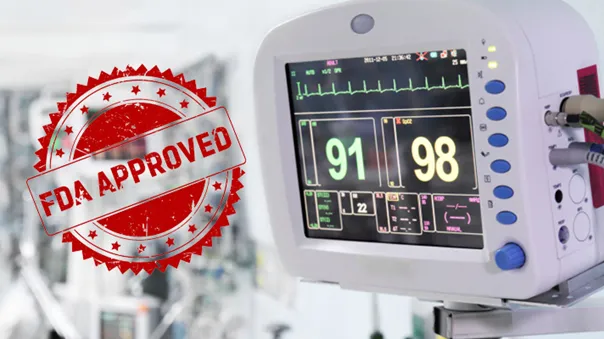
At Aarogyaa Bharat, we believe regulatory awareness is as important as clinical knowledge. This guide explains what U.S. FDA approval means, how the FDA regulates medical devices, approval pathways, documentation, timelines, costs, and common mistakes, all in simple, human language.
What Is U.S. FDA Approval for Medical Devices?
U.S. FDA approval is an authorization granted by the Food
and Drug Administration (FDA) that allows a medical device to be legally
marketed and used in the United States.
The FDA ensures that medical devices:
- Are
safe for patients and healthcare professionals
- Perform
as intended
- Are
manufactured under controlled quality systems
- Meet
scientific and clinical standards
Without FDA approval or clearance, a medical device cannot
be legally sold or distributed in the U.S.
FDA approval for medical devices
Why FDA Approval Is So Important
FDA approval is considered a global gold standard for
medical device compliance.
Key Benefits of FDA Approval
- Access
to the world’s largest healthcare market
- Strong
international credibility
- Higher
trust among hospitals and doctors
- Easier
approvals in other countries
- Reduced
legal and regulatory risk
- Increased
product valuation and investor confidence
Hospitals and diagnostic centers prefer FDA-approved medical
equipment because it ensures accuracy, safety, and accountability.
FDA approved medical equipment
FDA-Approved Devices in Hospital Use
Who Regulates Medical Devices in the United States?
Medical devices in the U.S. are regulated by:
U.S. Food and Drug Administration (FDA)
Through the Centre for Devices and Radiological Health
(CDRH).
CDRH oversees:
- Diagnostic
devices
- Therapeutic
equipment
- Life-support
systems
- Radiation-emitting
devices
FDA Medical Device Classification System
FDA classifies medical devices based on risk to patients.
Class I - Low Risk
Examples:
- Tongue
depressors
- Surgical
gloves
- Manual stethoscopes
Regulation:
- General
controls
- Most
are 510(k) exempt
Class II - Moderate Risk
Examples:
- Blood
pressure monitors
- ECG
machines
- Infusion
pumps
Regulation:
- General
+ special controls
- Usually
require FDA 510(k) clearance
Class III - High Risk
Examples:
- Pacemakers
- Heart
valves
- Implantable
devices
Regulation:
- Highest
level of control
- Require
Premarket Approval (PMA)
FDA medical device classification
FDA Medical Device Classification Chart
FDA Approval vs FDA Clearance (Very Important Difference)
This is one of the most misunderstood topics.
|
Term |
Meaning |
|
FDA
Clearance |
Device is
substantially equivalent to an existing approved device (510(k)) |
|
FDA
Approval |
Device is
proven safe and effective via clinical evidence (PMA) |
Most devices are FDA-cleared, not FDA-approved.
FDA Approval Pathways for Medical Devices
1. FDA 510(k) Premarket Notification
What Is FDA 510(k)?
A submission showing that your device is substantially
equivalent to a legally marketed predicate device.
Best For
- ECG
machines
- Patient
monitors
- Ultrasound
systems
- Diagnostic
equipment
Timeline
- 3
to 6 months (average)
FDA 510(k) clearance
2. Premarket Approval (PMA)
What Is PMA?
The most stringent FDA pathway, requiring clinical trials
and scientific evidence.
Best For
- Implantable
devices
- Life-sustaining
equipment
Timeline
- 1
to 3 years
FDA PMA approval
3. De Novo Classification
Used when:
- No
predicate device exists
- Device
is low to moderate risk
Allows innovative devices to enter the market without full
PMA burden.
FDA De Novo pathway
FDA Approval Pathways Flow
FDA Quality System Regulation (QSR)
All manufacturers must comply with 21 CFR Part 820,
covering:
- Design
controls
- Manufacturing
processes
- Complaint
handling
- Corrective
& Preventive Actions (CAPA)
This ensures consistent product quality and traceability.
FDA Quality System Regulation
Documents Required for FDA Approval
Typical documentation includes:
- Device
description
- Intended
use statement
- Risk
management file
- Electrical
safety & biocompatibility reports
- Software
validation (if applicable)
- Clinical
data (for high-risk devices)
- Labelling
and Instructions for Use (IFU)
FDA Registration & Device Listing
Every manufacturer must:
- Register
the establishment annually
- List
all devices with the FDA
Foreign manufacturers must appoint a U.S. FDA Agent.
FDA device registration
Cost of FDA Approval (Approximate)
|
Pathway |
Estimated
Cost |
|
510(k) |
USD 5,000 -
20,000 |
|
De Novo |
USD 20,000 -
50,000 |
|
PMA |
USD 100,000+ |
Costs vary based on:
- Device
complexity
- Testing
requirements
- Consultant
involvement
Why FDA Approval Matters for Indian Manufacturers
For Indian medical device companies, FDA approval:
- Enables
exports to the U.S.
- Improves
acceptance in Indian hospitals
- Simplifies
CE and CDSCO approvals
- Enhances
global brand value
FDA approval for Indian medical device manufacturers
Why Hospitals & Diagnostic Centers Should Check FDA
Approval
Using non-FDA-approved devices can lead to:
- Legal
penalties
- Insurance
claim rejection
- Patient
safety risks
Always verify:
- FDA
registration number
- Clearance
or approval pathway
- Device
listing status
Common Mistakes in FDA Approval
Assuming ISO certification is sufficient
Choosing incorrect device classification
Weak documentation
Ignoring post-market surveillance
Incomplete labelling
Conclusion
U.S. FDA approval is more than a regulatory checkbox it is a
global benchmark of safety, quality, and trust. For manufacturers, it opens
doors to international markets. For hospitals and diagnostic centers, it
ensures reliable, compliant, and patient-safe medical equipment.
At Aarogyaa Bharat, we advocate compliance-first healthcare, helping stakeholders choose medical devices that meet the highest global standards.