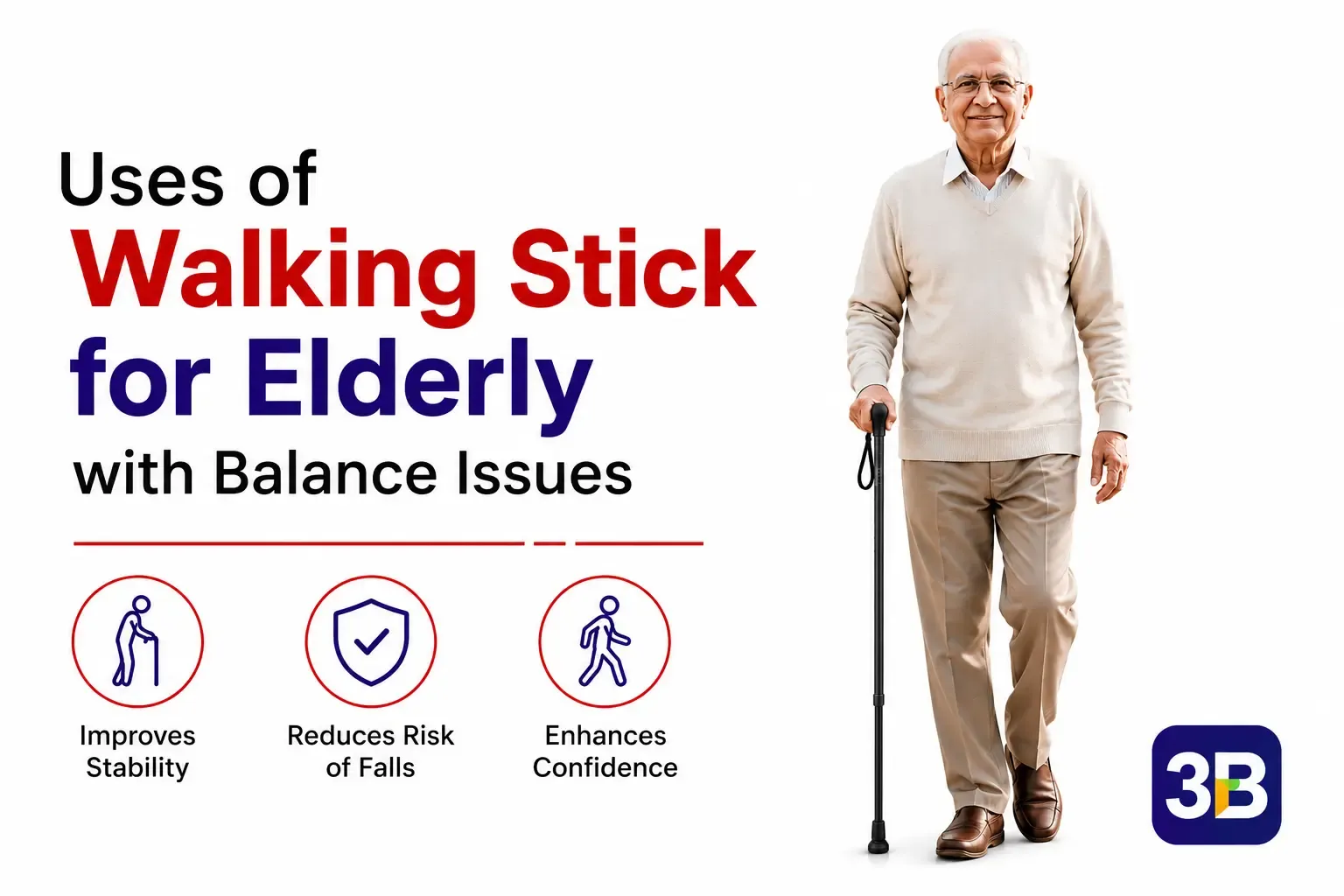
Growing older often brings changes in muscle strength, joint
flexibility, coordination, and overall balance. Many elderly individuals
experience instability while walking, making everyday activities such as
visiting the market, walking in the garden, climbing gentle slopes, or moving
around the home more challenging. A walking stick is a simple yet highly
effective mobility aid that provides additional support, improves posture, and
reduces the risk of falls. Unlike many complex mobility devices, a walking stick
is lightweight, portable, affordable, and easy to use for daily activities. It
helps seniors maintain confidence and independence while encouraging regular
movement, which is essential for healthy aging. Choosing the right walking
stick based on individual needs can significantly improve safety and comfort.
If you're looking for reliable mobility solutions, explore Mobility Aids
designed to support safe and independent living.
Why Balance Problems Become Common in Older Adults
Balance issues are a natural concern for many seniors due to
age-related changes in muscles, bones, joints, vision, and the nervous system.
Medical conditions such as arthritis, osteoporosis, Parkinson's disease, stroke
recovery, diabetes, and inner ear disorders may further affect stability while
walking. Reduced muscle strength in the legs and slower reflexes increase the
chances of stumbling over uneven surfaces or small obstacles. Fear of falling
often causes seniors to limit physical activity, which gradually weakens
muscles even further and reduces overall mobility. Using a walking stick
provides an additional point of contact with the ground, improving balance and
helping users walk with greater confidence. Regular walking with proper support
also encourages better circulation, healthier joints, and improved overall
well-being. For individuals seeking complete home support, Home Healthcare
Products offer additional solutions for safer daily living.
How a Walking Stick Improves Stability and Confidence
A walking stick provides continuous support during movement
by distributing body weight more evenly and reducing pressure on the lower
limbs. This additional support helps seniors maintain better posture while
walking and minimizes unnecessary body sway that can lead to falls. As
confidence increases, many elderly individuals become more willing to
participate in outdoor walks, family gatherings, religious visits, and social
activities that they may have previously avoided due to fear of losing balance.
Improved confidence contributes to better mental health by reducing feelings of
isolation and dependence. Modern walking sticks are ergonomically designed with
comfortable handles and anti-slip rubber tips that improve grip on different
surfaces. By offering reliable support during every step, a walking stick
becomes an essential companion for maintaining an active lifestyle. Seniors
recovering from injuries may also benefit from Rehabilitation Equipment
to support overall mobility improvement.
Everyday Uses of a Walking Stick for Seniors
A walking stick is useful in many daily situations where
additional balance and support are needed.
- Walking
inside the home safely
- Visiting
parks and gardens
- Shopping
at local markets
- Climbing
gentle ramps
- Walking
on uneven sidewalks
- Travelling
during family outings
- Attending
hospitals and clinics
- Participating
in morning walks
- Standing
for longer durations
- Maintaining
confidence during daily movement
These everyday uses help seniors remain active while
reducing physical strain and minimizing the risk of accidental falls. A
properly selected walking stick supports independent living and allows elderly
individuals to continue enjoying their normal routine. Along with walking aids,
Daily Living Aids can further simplify everyday activities at home.
Health Benefits of Using a Walking Stick Regularly
Using a walking stick consistently provides several
long-term health benefits beyond simple balance support. Regular walking
encourages improved blood circulation, stronger leg muscles, better
cardiovascular health, and healthier joints. The walking stick reduces stress
on painful knees, hips, and ankles by transferring part of the body weight
through the upper limbs. Seniors who continue walking daily often experience
better flexibility, improved coordination, enhanced endurance, and reduced
stiffness caused by inactivity. Walking outdoors also supports mental wellness
by lowering stress levels, improving mood, and encouraging social interaction
with family and friends. Maintaining regular mobility plays an important role
in healthy aging and can delay the progression of mobility-related limitations.
Individuals monitoring recovery or physical health may also use Healthcare
Calculators to better understand various wellness measurements.
Choosing the Right Walking Stick for Better Balance
Choosing the correct walking stick is essential for
achieving maximum stability and comfort. The stick should match the user's
height so that the elbow remains slightly bent while holding the handle,
allowing for a natural walking posture. A walking stick that is too short
forces the user to bend forward, while one that is too tall can strain the
shoulders and wrists. Lightweight aluminum walking sticks are popular because
they are durable, rust-resistant, and easy to carry during daily activities.
Adjustable-height models provide greater flexibility, especially for users
whose mobility needs may change over time. Ergonomic handles offer a
comfortable grip and reduce pressure on the hands during longer walks.
Anti-slip rubber ferrules improve traction on smooth floors, sidewalks, and
outdoor pathways, making walking safer in different environments. Investing in
a high-quality walking stick helps seniors stay active, confident, and
independent for longer. If you're looking for reliable mobility solutions, explore
Walking Aids that are designed for everyday comfort and safety.
Different Types of Walking Sticks Available
Walking sticks are available in several designs to suit
different mobility needs. Standard walking sticks are ideal for individuals who
require light support during daily movement, while adjustable walking sticks
allow users to customize the height for improved posture and comfort. Folding
walking sticks are highly convenient for travel because they can bed easily in
bags or luggage when not in use. Quad walking sticks feature a four-point base
that offers additional stability, making them suitable for seniors with greater
balance challenges. Offset-handle walking sticks help distribute weight more
evenly, reducing strain on the wrist and improving overall support. Wooden
walking sticks remain a classic option for those who prefer a traditional
appearance, while lightweight metal models provide greater durability and ease
of handling. Selecting the appropriate design based on mobility requirements
ensures better balance and long-term comfort. Many users also combine mobility
support with Orthopedic Supports to reduce joint discomfort and improve
daily movement.
Walking Stick vs Walker vs Rollator Walker
|
Feature |
Walking
Stick |
Walker |
Rollator
Walker |
|
Level of
Support |
Light |
High |
High |
|
Wheels |
No |
Usually No |
Yes |
|
Best For |
Mild balance
issues |
Moderate
mobility support |
Long outdoor
walks |
|
Seat
Available |
No |
No |
Yes |
|
Easy to Carry |
Excellent |
Moderate |
Good |
|
Outdoor
Comfort |
Good |
Moderate |
Excellent |
|
User
Independence |
High |
Moderate |
Very High |
|
Storage
Basket |
No |
No |
Yes |
Safety Tips for Using a Walking Stick Correctly
Using a walking stick properly is important for preventing
falls and maximizing its benefits. The walking stick should always be held on
the side opposite the weaker or injured leg to provide better body support and
balance. Users should avoid rushing while walking and instead maintain a slow,
steady pace, especially on uneven surfaces or crowded areas. The rubber tip
should be inspected regularly to ensure it provides adequate grip, and worn-out
ferrules should be replaced immediately. Proper footwear with non-slip soles
further improves stability during indoor and outdoor walking. Seniors should
avoid carrying heavy shopping bags while relying on a walking stick, as uneven
weight distribution can affect balance. During rainy weather, extra caution
should be taken on wet surfaces where slipping risks are higher. Following
these simple safety practices helps reduce accidents and encourages confident
mobility. Individuals requiring respiratory assistance while staying active may
also explore Oxygen Concentrators based on their doctor's
recommendation.
Disclaimer: A walking stick should only be used if it
matches your physical condition and mobility requirements. Always seek guidance
from a healthcare professional or physiotherapist before selecting a mobility
aid.
Common Mistakes to Avoid When Using a Walking Stick
Although a walking stick is simple to use, incorrect usage
can reduce its effectiveness and increase the risk of falls. One of the most
common mistakes is choosing the wrong height, which affects posture and places
unnecessary strain on the neck, shoulders, and lower back. Some users also hold
the walking stick on the wrong side, reducing the support it provides while
walking. Ignoring worn-out rubber tips is another frequent issue, as damaged
ferrules can slip easily on smooth flooring. Many seniors continue using
damaged or bent walking sticks instead of replacing them, compromising their
safety. Leaning excessive body weight on a standard walking stick beyond its
intended capacity can also reduce stability. Regular inspection and proper
usage ensure that the walking stick continues to provide dependable support
throughout daily activities. For individuals recovering from illness or
surgery, Patient Care Equipment can further improve comfort and safety
during rehabilitation.
Why Buy a Walking Stick from Aarogyaa Bharat?
Aarogyaa Bharat offers a carefully selected range of
high-quality walking sticks designed to support seniors, rehabilitation
patients, and individuals experiencing balance issues. Every product is chosen
with a focus on safety, durability, comfort, and ease of use. Customers can
find adjustable walking sticks, lightweight aluminum models, folding designs,
quad walking sticks, and other mobility solutions suitable for different
healthcare needs. Along with walking aids, Aarogyaa Bharat provides a wide range
of home healthcare equipment, rehabilitation products, orthopedic solutions,
and wellness essentials from trusted manufacturers. The goal is to help
individuals maintain independence while improving their quality of life through
dependable healthcare products. Customers can also explore healthcare solutions
available in Pune Healthcare, Mumbai Healthcare, Delhi
Healthcare, Bengaluru Healthcare, and Chennai Healthcare to
access quality medical products across major cities.
Conclusion
A walking stick is one of the simplest yet most effective
mobility aids for elderly individuals experiencing balance issues. It improves
stability, enhances confidence, reduces pressure on the joints, and encourages
regular physical activity that supports healthy aging. Whether walking inside
the home, visiting friends, shopping, or enjoying outdoor exercise, the right
walking stick provides dependable support throughout daily life. Choosing the
correct height, using the stick properly, and maintaining it regularly can
significantly reduce the risk of falls while promoting greater independence.
Aarogyaa Bharat is committed to providing reliable mobility aids and healthcare
solutions that help individuals move safely, comfortably, and confidently every
day.
Medical Disclaimer: This blog is for educational purposes only and should not replace professional medical advice. Always consult a qualified doctor or physiotherapist before choosing or using a walking stick or any other mobility aid based on your individual health condition.