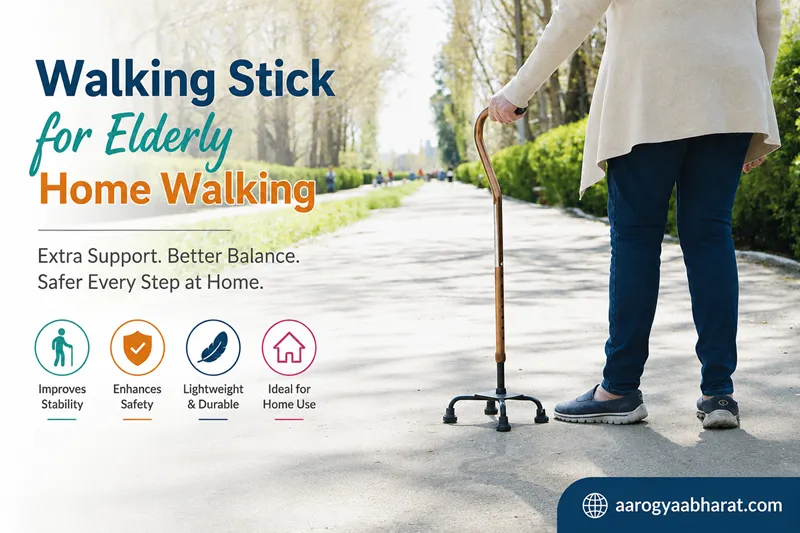
A walking stick can be useful for elderly individuals who
experience mild difficulty while walking but do not require the greater support
provided by a walker. It can provide an additional point of contact with the
ground, helping some users feel more stable while standing and walking. Walking
sticks may be helpful for people recovering from minor lower-body weakness,
experiencing mild joint discomfort, or needing additional confidence during
movement. MedlinePlus notes that a cane may be a suitable option when someone
needs only a little help with balance and stability or has a leg that is
slightly weak or painful. Seniors can use Walking Aids as part of a
broader mobility routine when recommended by a healthcare professional. The
stick may be used indoors, outdoors, during short walks, or while completing
everyday activities. Its relatively compact size also makes it convenient to
carry and store compared with larger mobility devices.
How a Walking Stick Supports Balance
A walking stick can provide an additional support point for
seniors who feel slightly unsteady while walking. This can make movement feel
more controlled, especially when walking on familiar indoor surfaces or during
short outdoor trips. The NHS states that a walking stick can provide extra
support and help with balance while also increasing confidence and making
walking less painful for some people. Seniors who experience occasional balance
difficulties can combine appropriate Fall Prevention Products with home
safety improvements to reduce everyday hazards. A walking stick does not
eliminate the risk of falling, and it is not suitable for every level of
mobility difficulty. People with significant balance problems may require a
different mobility aid. A healthcare provider or physiotherapist can help
determine whether a stick provides enough support. Correct fitting and proper
technique are also important because an incorrectly adjusted cane may become
uncomfortable or unsafe.
Walking Stick for Mild Joint Pain
Mild joint pain in the hip, knee, or leg can sometimes make
walking uncomfortable, particularly during longer periods of activity. A
walking stick may help reduce some of the load placed on an affected leg when
it is used correctly. NHS guidance for osteoarthritis notes that people whose
hip or knee mobility is affected may benefit from a walking aid such as a stick
or cane, and the stick is generally held on the opposite side to the affected
leg. Seniors who also use Orthopedic Products should ensure that the
walking stick is appropriate for their individual condition. The amount of
support required depends on pain severity, strength, balance, and walking
ability. A walking stick should not be used to ignore worsening or severe pain.
If discomfort is increasing, causing significant walking difficulty, or
accompanied by swelling or other concerning symptoms, professional medical
assessment is appropriate.
Daily Activities Made Easier with a Walking Stick
A walking stick can help elderly individuals remain involved
in everyday activities when mild mobility problems make unsupported walking
less comfortable. It may be useful while moving around the home, walking
through hallways, visiting nearby shops, attending appointments, or taking
short outdoor walks. A stick can also provide additional reassurance when
standing or moving between different surfaces. Older adults may benefit from Daily
Living Aids that support independence alongside their mobility equipment.
Common activities where a walking stick may be useful include:
- Walking
around the house
- Visiting
a nearby store
- Attending
medical appointments
- Taking
short outdoor walks
- Moving
between rooms
- Visiting
family and friends
- Walking
through shopping areas
- Completing
light daily activities
- Navigating
familiar pathways
- Moving
around community spaces
The correct level of assistance depends on the individual's
strength, balance, and overall mobility.
Who May Benefit from Using a Walking Stick?
A walking stick may benefit older adults who remain
independently mobile but need a small amount of additional support while
walking. It may be considered for people with mild weakness, minor balance
difficulties, or discomfort affecting one lower limb. MedlinePlus states that a
cane may be appropriate when someone needs a little help with balance and
stability or has a leg that is slightly weak or painful. Individuals recovering
from certain lower-body injuries may also use a cane temporarily during recovery
under professional guidance. Seniors using Rehabilitation Equipment
should have their mobility needs assessed as part of the overall recovery plan.
A stick may not provide enough stability for someone with substantial weakness,
severe balance problems, or significant difficulty walking independently. In
those situations, a walker or another mobility device may be more appropriate.
Choosing the least-supportive device that still provides safe mobility is not
the goal; the priority is selecting the device that matches the individual's
needs.
Choosing the Right Walking Stick for Elderly
Choosing the right walking stick involves considering the
user's height, strength, balance, hand comfort, and level of mobility. A stick
that is too high or too low can affect posture and make walking more difficult.
MedlinePlus recommends adjusting the cane so the handle is around wrist level
when standing and the elbow remains slightly bent while holding it. Seniors
purchasing Patient Care Equipment should also consider handle comfort,
base design, weight, adjustability, and overall stability. Single-tip canes are
commonly used when mild support is needed, while some models have wider or
multi-point bases for additional stability. The NHS also recommends considering
factors such as correct height and whether a particular design is appropriate
for the user's needs. A healthcare professional or physiotherapist can help
assess the correct type and fit, especially when the person has a medical
condition or previous history of falls.
How to Hold and Use a Walking Stick Correctly
Proper technique is important because simply carrying a
walking stick does not guarantee better stability. MedlinePlus recommends
holding the cane in the hand opposite the weaker or affected leg in many
situations, while the cane and weaker leg move forward together before stepping
through with the stronger leg. Seniors using Physiotherapy Equipment or
participating in rehabilitation should learn the correct technique from a
qualified professional when possible. The user should look ahead rather than
constantly watching the feet and should keep the cane tip fully in contact with
the floor before placing weight on it. Movements should be slow and controlled,
especially when turning or changing surfaces. New users may benefit from
practicing with supervision until they become comfortable. Correct technique
can help the walking stick provide useful support without creating unnecessary
strain or instability.
Walking Stick for Indoor and Outdoor Use
A walking stick can be used in both indoor and outdoor
environments when the user has sufficient balance and can safely control the
device. Indoors, it may provide support while moving through rooms, hallways,
or other familiar spaces. Outdoors, it may be helpful during short walks,
shopping trips, or visits where the user wants additional confidence. However,
outdoor environments may contain uneven surfaces, wet flooring, slopes, curbs,
or crowded areas that require greater caution. NIA recommends using a cane or
walker when needed for stability and taking extra precautions on slippery or
unfamiliar surfaces. Seniors may also review suitable Home Healthcare
Products when making the home environment safer for mobility. Pathways
should remain clear, lighting should be adequate, and suitable nonskid footwear
should be worn. If outdoor conditions become unsafe, it may be better to
postpone the activity or choose a safer route.
Walking Stick vs Walker for Elderly
A walking stick and a walker provide different levels of
mobility support. A walking stick is generally suited to individuals who can
already walk independently but need some additional balance or stability. A
walker provides a wider support base and is typically more appropriate when a
person needs greater assistance. The NHS describes walking frames as providing
more support than walking sticks. Seniors exploring Medical Equipment should
therefore consider their actual mobility needs rather than choosing a device
solely because it is smaller or easier to carry. Someone with significant
weakness or poor balance may need a walker even if they prefer a walking stick.
Conversely, a person with mild mobility difficulties may find a stick
sufficient and more convenient. A physiotherapist or other healthcare
professional can assess gait, strength, balance, and safety before recommending
an appropriate mobility aid.
|
Feature |
Walking Stick |
Walker |
|
Support Level |
Low to Moderate |
Moderate to High |
|
Balance Assistance |
Moderate |
High |
|
Portability |
Excellent |
Moderate |
|
Storage |
Easy |
Requires More Space |
|
Indoor Mobility |
Excellent |
Excellent |
|
Outdoor Mobility |
Good |
Good to Excellent |
|
Best For |
Mild Mobility Issues |
Greater Mobility Support |
Safety Tips for Using a Walking Stick
Using a walking stick safely requires correct fitting,
proper technique, and attention to the surrounding environment. The stick
should be checked regularly to make sure its tip is not worn and the handle and
adjustable sections remain secure. MedlinePlus recommends checking cane tips
and replacing worn ones, while NIA advises older adults to use correctly sized
mobility aids and take extra care on slippery surfaces. Seniors should wear
supportive nonskid footwear and keep floors free from clutter, loose rugs, and
electrical cables. A suitable Home Safety Products setup can complement
the use of a walking stick by reducing environmental hazards. Users should
avoid walking too quickly and should remain attentive when navigating steps or
uneven ground. Anyone experiencing new dizziness, severe pain, sudden weakness,
or repeated falls should seek medical advice rather than relying only on the
walking stick for support.
Common Mistakes to Avoid While Using a Walking Stick
Several common mistakes can reduce the effectiveness of a
walking stick and may increase the risk of instability. One frequent problem is
using a cane that is not correctly adjusted to the user's height, which can
affect posture and comfort. Another is holding the stick on the wrong side when
professional guidance indicates it should be used opposite the affected leg.
MedlinePlus recommends the opposite hand for a weaker or affected leg in
typical cane use. Seniors should also avoid looking continuously down at their
feet because this can affect awareness of the environment. Using a worn cane
tip, walking too quickly, or placing weight on the cane before the tip is
stable can also create problems. People using Senior Care Products
should regularly inspect their mobility equipment and replace damaged
components. Professional instruction is particularly useful for anyone who is
new to using a walking stick.
Maintaining a Walking Stick for Long-Term Use
Regular maintenance helps ensure that a walking stick
remains safe and comfortable during everyday use. The rubber tip or other
contact surface should be checked regularly for signs of wear because it
provides traction against the floor. The handle should remain firmly attached,
while adjustable sections should lock securely at the selected height. Seniors
using additional Healthcare Products should maintain their mobility
equipment as carefully as any other important daily-use device. The stick
should also be kept clean and dry, especially when it has been used outdoors in
wet conditions. Any cracks, bent components, loose fittings, or damaged tips
should be addressed before continued use. A healthcare professional or mobility
specialist can provide guidance if the equipment no longer feels stable or
comfortable. Routine inspection is particularly important for seniors who rely
on the walking stick every day. Proper care can help maintain reliable support
and reduce avoidable equipment-related problems.
Why Buy Walking Stick from Aarogyaa Bharat?
Aarogyaa Bharat provides healthcare and mobility solutions designed to support elderly individuals, patients, caregivers, and people managing everyday mobility challenges. Customers can explore walking aids and related products according to their individual needs, comfort preferences, and professional recommendations. When selecting a walking stick, important factors include height adjustment, handle comfort, weight, base design, and the amount of support required. Aarogyaa Bharat also offers solutions across mobility, rehabilitation, home healthcare, orthopedic care, and patient support categories. Customers looking for Walking Stick Collection options can compare suitable models based on their mobility requirements and intended use. Other healthcare products can also be explored for home care and rehabilitation needs. Healthcare solutions are available through Pune Healthcare Store, Mumbai Healthcare Store, Delhi Healthcare Store, Bengaluru Healthcare Store, Chennai Healthcare Store, Hyderabad Healthcare Store, Kolkata Healthcare Store, and Ahmedabad Healthcare Store. The goal is to make reliable healthcare products easier for families to access while supporting safe and independent daily living.
Conclusion
A walking stick can be a practical mobility aid for elderly
individuals who experience mild balance difficulties, slight weakness, or
limited joint discomfort but remain independently mobile. It can provide
additional support during everyday walking while remaining lightweight,
portable, and easier to store than larger mobility devices. NHS and NIA
guidance emphasizes selecting the right mobility aid, ensuring the correct fit,
and learning how to use the equipment safely. Seniors should also maintain clear
walking paths, wear suitable footwear, and take additional care on wet or
uneven surfaces. A walking stick should not be used as a substitute for medical
assessment when mobility problems are significant or worsening. With
appropriate selection, fitting, and technique, it can help some elderly
individuals maintain confidence and independence during routine activities.
Medical Disclaimer
This article is intended for educational purposes only and should not replace professional medical advice. Always consult a doctor, physiotherapist, orthopedic specialist, or occupational therapist before choosing or using a walking stick, especially if you have significant pain, weakness, balance problems, or a history of falls.