What Is a Vent Machine?
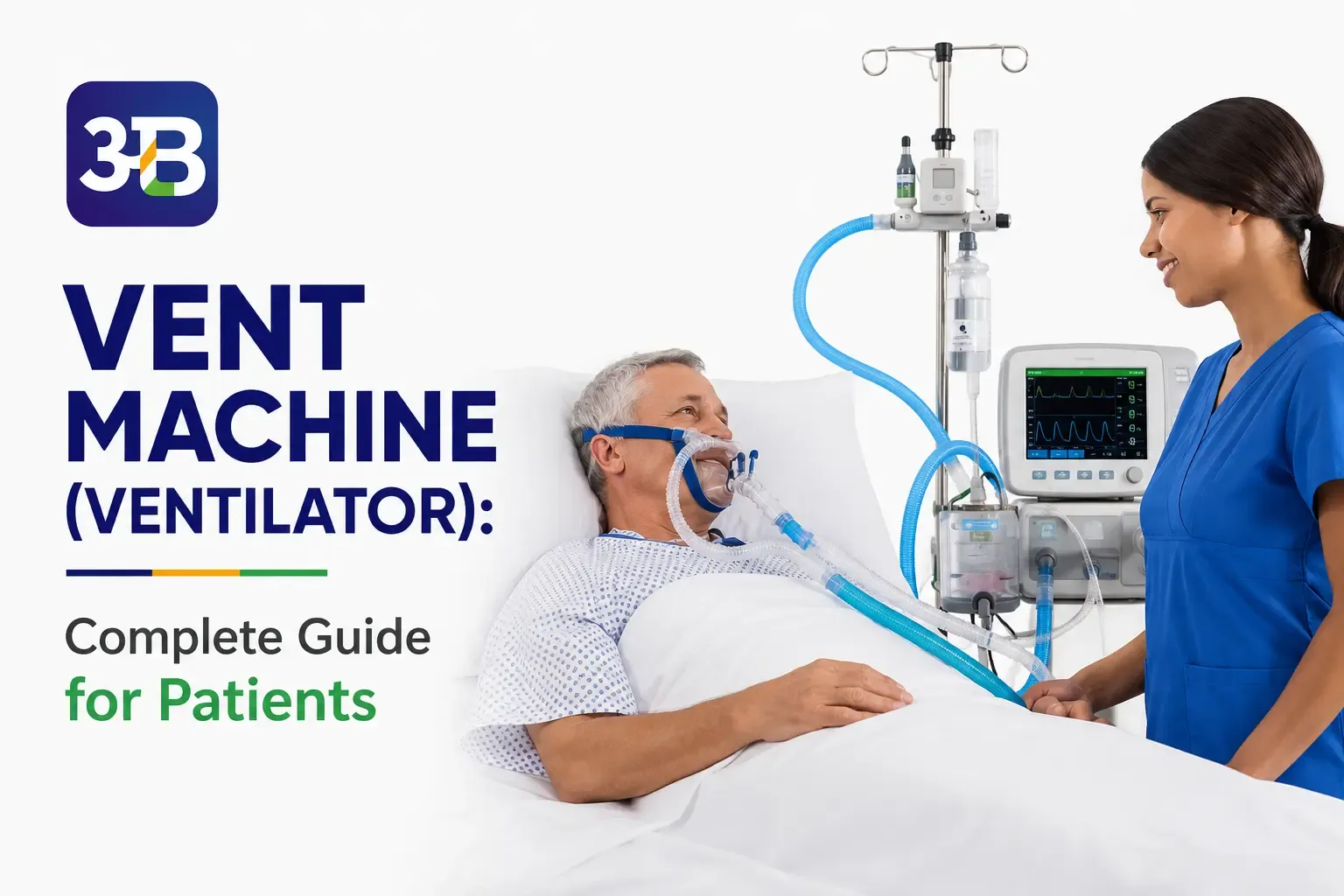
A vent machine or ventilator is
a medical device that mechanically assists or replaces spontaneous breathing.
When a patient cannot breathe adequately on their own due to illness, injury,
or surgery, the vent machine takes over by pushing air usually enriched with
oxygen into the lungs and then allowing it to be exhaled. This process is
called mechanical ventilation.
Vent machines are used in
Intensive Care Units (ICUs), operating theatres, emergency departments, and
increasingly in home care settings for patients with chronic respiratory
conditions.
How Does a Vent Machine Work?
At its core, a vent machine
works by creating positive pressure to push air into the lungs. Here is a
simplified breakdown of the process:
1. The ventilator delivers a
preset volume or pressure of air (and oxygen) through a breathing circuit.
2. The air travels through a
tube (endotracheal tube or tracheostomy tube) into the patient's lungs.
3. The lungs inflate as they
receive the delivered breath.
4. Exhalation happens
passively as the lungs recoil and the air escapes.
5. The machine monitors the
patient's breathing and adjusts delivery as needed.
Modern vent machines also offer
sophisticated monitoring of lung mechanics, allowing clinicians to fine-tune
therapy and minimize lung injury.
Types of Vent Machines
1. Invasive Ventilators
These require the placement of
a breathing tube (intubation) directly into the patient's airway. They are used
for patients who are unconscious, heavily sedated, or have severe respiratory
failure. Invasive ventilators provide full control over breathing and are
standard in ICUs.
2. Non-Invasive Ventilators (NIV)
Non-invasive ventilators
deliver air pressure through a face mask or nasal mask without requiring
intubation. Common types include:
●
CPAP (Continuous
Positive Airway Pressure) used for sleep apnea and mild respiratory failure
●
BiPAP (Bilevel Positive
Airway Pressure) used for more significant breathing difficulties including
COPD exacerbations
3. Portable/Transport Ventilators
Designed to be compact and
battery-powered, these vent machines are used during patient transport within
or between hospitals, in ambulances, and for home use.
4. High-Frequency Ventilators
These specialized ventilators
deliver very small breaths at extremely high rates and are used primarily in
neonatal ICUs for premature infants with underdeveloped lungs.
Vent Machine Types Comparison Table
|
Type |
Invasive? |
Settings Used |
Patient Category |
|
Invasive Ventilator |
Yes |
ICU, OR |
Critically ill,
post-surgery |
|
No |
Home, ICU |
Sleep apnea, mild failure |
|
|
No |
ICU, Home |
COPD, moderate failure |
|
|
Transport Ventilator |
Yes/No |
Ambulance, transport |
All patients in transit |
|
High-Frequency Ventilator |
Yes |
Neonatal ICU |
Premature infants |
Key Features to Look for in a Vent Machine
Ventilation Modes
A good vent machine should
offer multiple modes of ventilation to adapt to different patient needs. Common
modes include Volume Controlled Ventilation (VCV), Pressure Controlled
Ventilation (PCV), Pressure Support Ventilation (PSV), and Synchronized Intermittent
Mandatory Ventilation (SIMV).
Alarms and Safety Systems
Patient safety depends on
reliable alarms. Look for machines with alarms for:
●
High and low pressure
●
Apnea (patient not
breathing)
●
Disconnection
●
Low battery
●
High respiratory rate
Humidification System
Breathing dry air through a
ventilator can damage the airways. A built-in or compatible humidification
system warms and moistens the delivered air, making ventilation more
comfortable and reducing complications.
Portability and Battery Life
For home care or transport use,
battery life is critical. Look for machines that offer at least 4-8 hours of
internal battery backup.
Monitoring and Data Logging
Advanced vent machines display
real-time waveforms, pressures, volumes, and alarm logs. Data logging helps
clinicians track trends and optimize therapy.
When Is a Vent Machine Required?
A ventilator may be required in
the following situations:
●
Acute respiratory
failure from pneumonia, COVID-19, or ARDS
●
During and after major
surgeries requiring general anaesthesia
●
Neuromuscular diseases
such as ALS, muscular dystrophy, or Guillain-Barré syndrome
●
Severe COPD or asthma
exacerbations
●
Traumatic brain injury
or spinal cord injury
●
Drug overdose or
poisoning affecting breathing
●
Premature birth in
neonates
Vent Machines for Home Use
With advances in technology,
home ventilators are now compact, reliable, and easy to use. Patients with
chronic conditions like ALS, spinal muscular atrophy, or severe COPD can
receive life-sustaining ventilatory support in the comfort of their homes.
Home vent machines are
typically lighter, quieter, and designed for continuous long-term use. They
come with carrying cases, battery packs, and interfaces for easy connection to
home oxygen supplies.
Aarogyaa Bharat offers a range
of portable home ventilators for rent and purchase. Our clinical team provides
setup, training, and ongoing support to ensure safe home ventilation.
Vent Machine Rental vs. Purchase: Which Is Better?
|
Factor |
Rental |
Purchase |
|
Cost |
Lower upfront |
Higher upfront |
|
Duration |
Short to medium term |
Long term |
|
Maintenance |
Included |
Owner's responsibility |
|
Upgrades |
Easier |
Requires new purchase |
|
Best For |
Recovery, acute need |
Chronic conditions |
Conclusion
A vent machine is far more than
just a breathing device it is a lifeline for millions of critically ill
patients around the world. Whether used in an ICU for acute care or at home for
chronic conditions, understanding how ventilators work empowers patients and
families to make confident decisions about care. As technology continues to
evolve, vent machines are becoming smarter, quieter, and more accessible,
bringing life-saving support into homes across India.
Why Choose Aarogyaa Bharat?
When it comes to reliable,
affordable, and high-quality medical equipment, Aarogyaa Bharat is your trusted
partner. Whether you are searching for hospital-grade devices for home use or
looking to rent medical equipment for recovery, Aarogyaa Bharat offers an
extensive range of products with expert guidance.
Visit us today at aarogyaabharat.com and explore hundreds of certified medical devices,
compare prices, read expert reviews, and place your order with complete
confidence. Our team of healthcare professionals is always ready to help you
make the right choice for your health and well-being.
Contact Aarogyaa Bharat now because your health deserves the best.