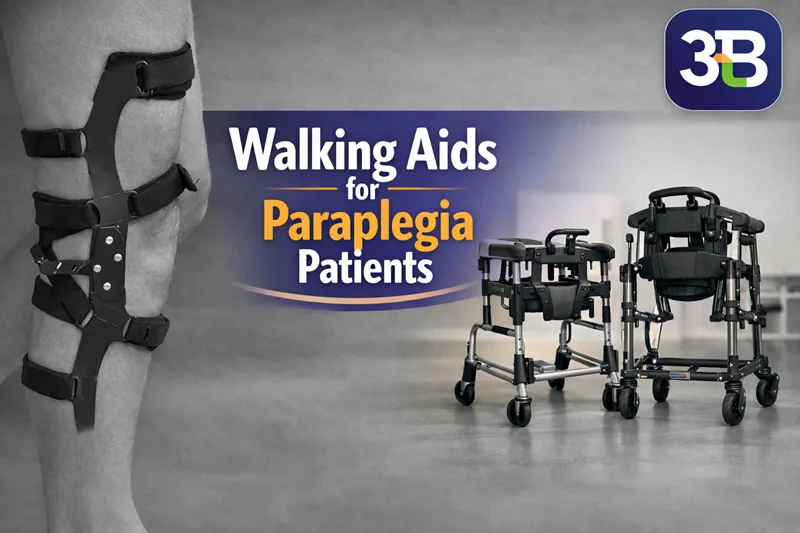
Understanding Mobility Challenges in Paraplegia
Paraplegia affects the lower half of the body and
significantly alters movement, balance, and posture control. Individuals may
experience partial or complete loss of lower-limb function, reduced trunk
stability, and limited ability to bear weight independently. Walking aids are
introduced during rehabilitation not simply as mobility tools but as
therapeutic devices that help retrain muscles, improve circulation, and support
neurological adaptation. Aarogyaa Bharat emphasizes that walking aids should be
viewed as part of a comprehensive recovery plan that includes physiotherapy,
emotional support, and gradual progression toward independence. By providing
structured support, these devices allow patients to practice upright
positioning safely, reducing complications associated with prolonged sitting
such as muscle stiffness, poor circulation, and reduced bone density.
The Role of Walking Aids in Neuro-Rehabilitation
Neuro-rehabilitation relies on repetitive movement and
sensory feedback to encourage neural adaptation. Walking aids create a stable
environment where patients can practice weight shifting, posture correction,
and controlled stepping exercises. Even when full walking independence is not
possible, the act of standing and moving with assistance stimulates blood flow
and improves cardiovascular health. Aarogyaa Bharat highlights that walking
aids also play a psychological role, as being upright again often increases
confidence and motivation, encouraging patients to participate more actively in
rehabilitation programs.
Types of Walking Aids Used for Paraplegia Patients
Different walking aids serve different rehabilitation stages
and functional goals. Standard walkers provide maximum stability during early
recovery, while gait trainers offer advanced harness support for intensive
physiotherapy. Forearm crutches allow greater freedom of movement for patients
with strong upper-body control, and orthotic-assisted devices such as KAFO
braces may be used alongside walkers to support knee and ankle stability.
Selecting the right walking aid depends on factors such as injury level, muscle
strength, and therapy objectives. Aarogyaa Bharat recommends professional
assessment to ensure that mobility aids align with rehabilitation needs.
Table: Common Walking Aids for Paraplegia Rehabilitation
|
Walking
Aid |
Support
Level |
Best
Rehabilitation Stage |
Key
Benefit |
|
Very High |
Early
recovery |
Maximum
stability |
|
|
Gait Trainer |
Maximum |
Intensive
therapy |
Full-body
support |
|
Forearm
Crutches |
Moderate |
Advanced
rehab |
Increased
mobility |
|
Posterior
Walker |
Moderate |
Balance
training |
Upright
posture |
|
KAFO + Walker |
High |
Structured
gait therapy |
Joint
stabilization |
Walkers: The Foundation of Early Mobility Training
Walkers are often the first walking aid introduced during
paraplegia rehabilitation because they provide a wide base of support that
reduces fall risk. Patients use walkers to practice standing exercises, weight
shifting, and assisted stepping, which helps rebuild balance gradually.
Adjustable height settings ensure proper posture alignment, preventing strain
on the shoulders and back. Aarogyaa Bharat emphasizes that walkers should be
introduced under physiotherapist supervision to ensure correct technique and
safe progression.
Gait Trainers and Harness Systems for Intensive Therapy
Gait trainers provide advanced support by incorporating
harness systems that stabilize the pelvis and torso during walking practice.
These devices allow patients to focus on stepping patterns without worrying
about balance, making them particularly useful during early or intensive
rehabilitation stages. Physiotherapists often use gait trainers in clinical
environments to help patients develop coordination and muscle memory. Aarogyaa
Bharat highlights that gait trainers can significantly accelerate recovery by
enabling longer therapy sessions with reduced fatigue.
Table: Physiotherapy Exercises Using Walking Aids
|
Exercise
Type |
Walking
Aid Used |
Physiotherapy
Goal |
Rehabilitation
Benefit |
|
Static
Standing |
Walker |
Posture
alignment |
Core
stability |
|
Assisted
Stepping |
Gait Trainer |
Gait training |
Coordination
improvement |
|
Weight
Shifting |
Walker or
Crutches |
Balance
development |
Fall
prevention |
|
Indoor
Navigation |
Posterior
Walker |
Functional
mobility |
Independence
building |
Forearm Crutches and Advanced Mobility Support
For patients who develop strong upper-body control, forearm
crutches offer greater freedom of movement compared to walkers. These aids
require more balance and coordination, making them suitable for advanced
rehabilitation stages. Crutches allow patients to navigate tighter spaces and
perform functional tasks more easily, supporting long-term independence.
Aarogyaa Bharat advises gradual transition from walkers to crutches only when
physiotherapists confirm that balance and strength are sufficient.
Orthotic-Assisted Walking: KAFO Braces and Hybrid
Mobility Systems
Orthotic devices such as knee-ankle-foot orthoses (KAFO) may
be used alongside walking aids to provide structural support for joints. These
braces help maintain alignment during stepping exercises, enabling some
patients to practice upright walking even with limited muscle control. Hybrid
mobility systems combining braces and walkers offer a structured approach to
rehabilitation that supports both safety and functional progress. Aarogyaa
Bharat emphasizes that orthotic-assisted walking should always be guided by
trained professionals to ensure proper fitting and usage.
Psychological Benefits of Using Walking Aids
Regaining mobility after spinal cord injury is not only a
physical journey but also an emotional one. Walking aids allow patients to
experience upright movement, which often improves mood and reduces feelings of
dependency. Achieving small milestones, such as standing longer or taking
assisted steps, builds confidence and encourages continued participation in
therapy. Aarogyaa Bharat believes that emotional resilience plays a critical
role in rehabilitation success, and walking aids help patients reconnect with
everyday activities and social interactions.
Caregiver Role in Supporting Walking Aid Usage
Caregivers provide essential assistance during
rehabilitation by ensuring safe movement and monitoring signs of fatigue.
Proper assistance techniques include supporting from the side, maintaining
clear communication, and encouraging slow, controlled movements. Aarogyaa
Bharat recommends caregiver training sessions with physiotherapists to prevent
injury and promote sustainable care practices.
Safety Considerations and Common Mistakes
Incorrect height adjustment, leaning forward excessively, or
attempting to move too quickly are common mistakes that can increase fall risk.
Patients should focus on controlled movements and maintain proper posture
throughout each session. Aarogyaa Bharat advises creating a clutter-free home
environment and using non-slip flooring to enhance safety during walking aid
training.
Long-Term Benefits of Walking Aids for Paraplegia
Patients
Consistent use of walking aids can improve circulation,
maintain bone density, and enhance overall physical health. Even when full
walking independence is not achieved, improved balance and mobility allow
patients to perform daily activities more safely. Aarogyaa Bharat highlights
that walking aids support long-term independence by enabling safer transfers,
improved posture, and increased participation in rehabilitation programs.
Conclusion
Walking aids play a crucial role in paraplegia
rehabilitation by supporting balance training, improving posture, and enabling
safe mobility practice. From walkers and gait trainers to crutches and
orthotic-assisted systems, each device contributes to a structured recovery
pathway that helps patients regain independence and confidence. Aarogyaa Bharat
encourages families and caregivers to approach walking aid selection as part of
a holistic rehabilitation strategy that integrates physiotherapy, emotional support,
and adaptive mobility solutions to enhance long-term quality of life.