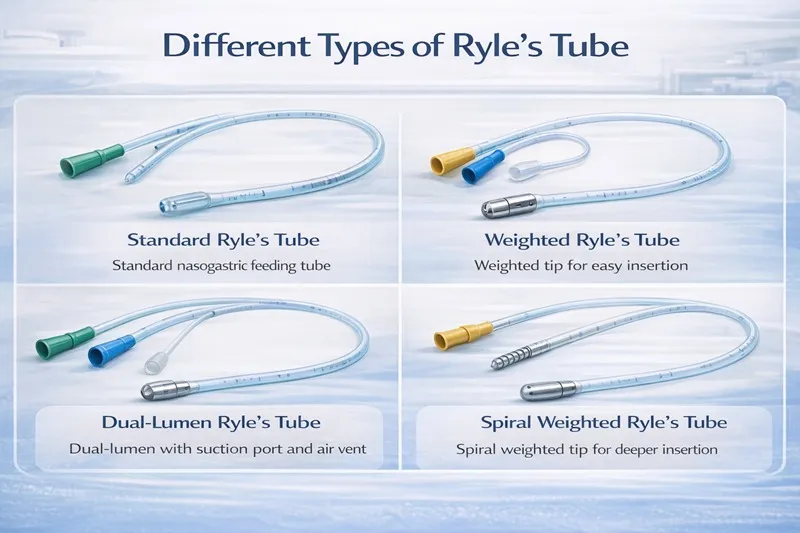
A Ryle’s tube is a flexible nasogastric tube inserted
through the nose, passed down the oesophagus, and positioned in the stomach. It
is primarily used for:
- Enteral
feeding
- Gastric
aspiration or decompression
- Administration
of medications
- Diagnostic
sampling of gastric contents
Ryle’s tubes are typically made of medical-grade PVC,
polyurethane, or silicone, designed to be soft enough to minimize patient
discomfort while maintaining adequate strength.
Why Are There Different Types of Ryle’s Tubes?
Not all patients or clinical situations are the same. Some
patients need short-term feeding; others require long-term nutritional support.
Some tubes are meant only for suction, while others allow multiple functions
simultaneously.
To address these varying needs, Ryle’s tubes are classified
based on:
- Number
of lumens (channels)
- Tip
design
- Length
and diameter (French size)
- Intended
duration of use
Understanding these differences ensures better patient
safety, comfort, and clinical outcomes.
1. Single-Lumen Ryle’s Tube
A single-lumen Ryle’s tube has one internal channel that
serves a single purpose at a time.
Structure
- One
hollow channel
- Rounded
distal tip with side openings
- Markings
for depth measurement
Uses
- Enteral
feeding
- Medication
administration
- Gastric
aspiration
Advantages
- Simple
design
- Easy
to insert and manage
- Cost-effective
Limitations
- Cannot
perform feeding and suction simultaneously
- Requires
flushing between different uses
Clinical Insight:
Single-lumen Ryle’s tubes are the most commonly used type in hospitals for
routine feeding and medication delivery.
2. Double-Lumen Ryle’s Tube
Double-lumen Ryle’s tubes contain two separate channels
within the same tube, allowing dual functionality.
Structure
- One
lumen for feeding or aspiration
- Second
lumen for air venting or suction
Uses
- Continuous
gastric decompression
- Feeding
with reduced risk of mucosal injury
- Critical
care and post-operative patients
Advantages
- Prevents
tube blockage during suction
- Reduces
gastric mucosal damage
- More
efficient in ICU settings
Limitations
- Slightly
thicker and more complex
- Higher
cost compared to single-lumen tubes
Clinical Insight:
Double-lumen tubes are preferred in patients requiring prolonged suction or
close gastric pressure management.
3. Levin Type Ryle’s Tube
The Levin tube is a single-lumen nasogastric tube widely
used for short-term gastric access.
Key Characteristics
- Single
channel
- Multiple
side holes near the tip
- Usually
made of PVC
Uses
- Short-term
feeding
- Gastric
lavage
- Medication
administration
Limitations
- Not
ideal for continuous suction
- Risk
of mucosal injury if used long-term
Levin tubes are common in emergency and general wards due to
their simplicity.
4. Salem Sump Ryle’s Tube
The Salem sump tube is a specialized double-lumen Ryle’s
tube designed for safe and continuous gastric decompression.
Key Characteristics
- One
large lumen for suction
- One
small lumen (pigtail) for air venting
Uses
- Continuous
gastric suction
- Post-operative
decompression
- Intestinal
obstruction management
Advantages
- Prevents
stomach lining from being sucked into the tube
- Allows
continuous suction without injury
Clinical Importance
Salem sump tubes are considered safer than traditional
single-lumen tubes for prolonged suction.
5. Fine-Bore (Narrow-Bore) Ryle’s Tube
Fine-bore Ryle’s tubes are thinner and softer than standard
tubes, designed mainly for feeding.
Structure
- Small
diameter
- Flexible
material (often polyurethane or silicone)
- Weighted
or non-weighted tip
Uses
- Long-term
enteral feeding
- Conscious
patients
- Home-care
nutrition support
Advantages
- Improved
patient comfort
- Reduced
gag reflex
- Lower
risk of nasal and oesophageal trauma
Limitations
- Not
suitable for thick feeds or suction
- Can
block if not flushed properly
6. Wide-Bore Ryle’s Tube
Wide-bore tubes have a larger diameter and are used when
thicker contents need to be drained.
Uses
- Gastric
lavage
- Removal
of blood or toxic substances
- Emergency
care
Advantages
- Faster
drainage
- Less
risk of clogging
Disadvantages
- More
uncomfortable for patients
- Not
ideal for long-term use
7. Weighted-Tip Ryle’s Tube
Weighted-tip tubes have a small weight at the distal end to
help guide placement into the stomach.
Uses
- Patients
with swallowing difficulties
- Long-term
feeding
Benefits
- Easier
placement
- Reduced
coiling in the oesophagus
How Ryle’s Tubes Are Sized
Ryle’s tubes are measured in French (Fr) sizes, where a
higher number indicates a wider tube.
|
Patient
Type |
Typical
Size |
|
Neonates |
5-8 Fr |
|
Children |
8-10 Fr |
|
Adults |
12-18 Fr |
Choosing the correct size is essential for comfort and
effectiveness.
Common Clinical Uses of Ryle’s Tubes
Ryle’s tubes are used for:
- Enteral
feeding in patients unable to eat orally
- Administration
of liquid medications
- Gastric
decompression in bowel obstruction
- Removal
of stomach contents in poisoning cases
- Diagnostic
aspiration of gastric fluids
Safety and Care Considerations
Proper care reduces complications:
- Always
confirm tube placement before use
- Flush
regularly to prevent blockage
- Maintain
nasal and oral hygiene
- Monitor
for discomfort, coughing, or breathing difficulty
Correct technique and monitoring significantly improve
patient safety.
Conclusion
Understanding the different types of Ryle’s tubes helps
ensure safe, effective, and patient-centred care. From simple single-lumen
tubes to specialized double-lumen and fine-bore designs, each type serves a
specific clinical purpose. Choosing the right Ryle’s tube improves comfort,
reduces complications, and enhances treatment outcomes.
At Aarogyaa Bharat, we are committed to delivering clear,
reliable medical knowledge empowering caregivers, healthcare professionals, and
patients to make informed decisions with confidence.