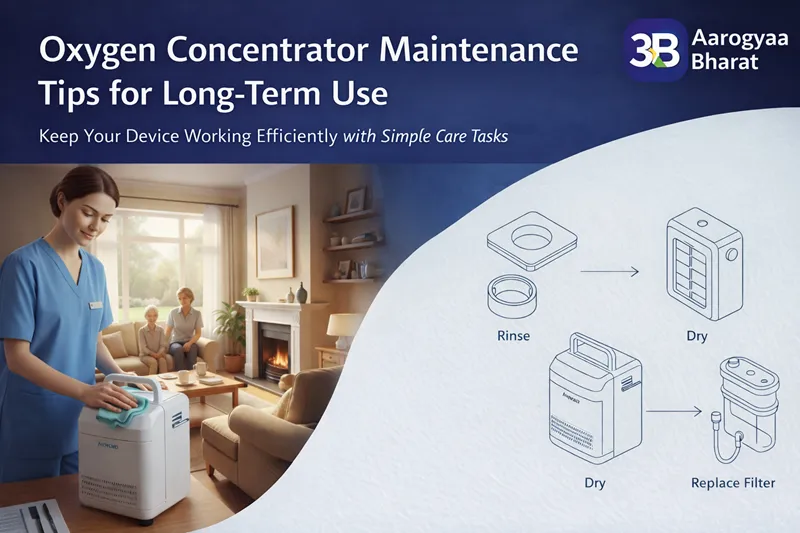
However, many families unknowingly reduce the lifespan and performance of their oxygen concentrator due to improper maintenance. Dust buildup, neglected filters, overheating, and irregular servicing can lead to lower oxygen purity, louder noise, frequent breakdowns, and even sudden machine failure during critical moments. This detailed guide explains how to maintain your oxygen concentrator for long-term use, covering daily care, weekly cleaning, monthly checks, professional servicing schedules, and real-world Indian home-care best practices.
Why Oxygen Concentrator Maintenance Is So Important
Oxygen concentrators work by drawing in ambient air,
filtering out nitrogen, and delivering purified oxygen through a compressor and
molecular sieve system. This internal mechanism runs continuously for hours or
even days, making it highly sensitive to dust, heat, moisture, and mechanical
stress.
Poor maintenance can reduce oxygen purity, forcing the
patient to inhale lower-quality oxygen without realizing it. Over time, this
can worsen breathlessness, fatigue, headaches, and recovery delays. A poorly
maintained concentrator may also overheat, become excessively noisy, or shut
down unexpectedly. Regular maintenance not only ensures stable oxygen output
but also improves patient safety, extends machine life, reduces service costs,
and maintains consistent performance for years.
Daily Maintenance Tips for Daily Concentrator
Daily care may seem small, but it makes a massive difference
in long-term reliability and oxygen quality. These quick checks take only a few
minutes and prevent serious mechanical problems. Always place the oxygen concentrator in a well-ventilated
area, at least one to two feet away from walls or curtains. Good airflow
prevents overheating and allows the cooling fan to function efficiently
throughout the day and night. Before switching on the machine, visually inspect the tubing
for bends, cracks, or moisture build-up. Kinked or damaged tubing restricts
oxygen flow and forces the compressor to work harder, increasing wear and
noise. Wipe the external body gently with a dry or slightly damp
cloth to remove surface dust. Avoid harsh chemicals or wet wipes, as moisture
can seep into ventilation grills and damage internal electronics.
Weekly Cleaning of External Filters
Most home oxygen concentrators come with external foam or
mesh filters designed to trap dust and pet hair before air enters the internal
system. These filters are the first line of defence against contamination and
must be cleaned regularly. Remove the filter as per the manufacturer’s instructions and
rinse it gently under clean running water. Avoid scrubbing aggressively, as
this can tear the foam and reduce filtration efficiency.
After washing, allow the filter to air-dry completely before
reinstalling it. Never put a wet filter back into the concentrator, as moisture
can damage the compressor and create bacterial growth inside the machine. In dusty Indian environments, Aarogyaa Bharat recommends
cleaning external filters at least once every 5-7 days for optimal airflow and
quieter operation.
Monthly Maintenance Checks for Internal Performance
Monthly checks help identify early warning signs of deeper
mechanical issues that are not visible during daily or weekly cleaning.
Inspect the oxygen outlet port and humidifier bottle (if
used) for any mineral deposits, moisture residue, or discoloration. Dirty
humidifier bottles can become breeding grounds for bacteria and should be
washed with mild soap and clean water.
Listen carefully to the sound of the concentrator during
operation. Sudden increases in noise, rattling sounds, or irregular motor
vibrations often indicate loose components or internal wear.
Check indicator lights and alarm systems to ensure they are
functioning correctly. Faulty alarms can delay detection of low oxygen purity,
overheating, or airflow blockage.
Humidifier Bottle Cleaning and Hygiene
Many patients use a humidifier bottle to prevent nasal
dryness during oxygen therapy. While helpful, humidifier bottles require strict
hygiene practices to avoid infections. Empty the bottle daily and refill it with only distilled or
boiled-cooled water. Tap water contains minerals that form scale deposits and
support bacterial growth. Wash the bottle every two to three days with mild soap and
warm water. Rinse thoroughly to remove any soap residue that could be inhaled
during therapy. Replace the humidifier bottle every three to six months,
depending on usage and visible wear. Cracked or cloudy bottles should be
replaced immediately to maintain hygiene and oxygen quality.
Oxygen Tubing and Nasal Cannula Maintenance
Oxygen tubing and nasal cannulas are often ignored, yet they
play a critical role in delivering clean oxygen to the patient.
Inspect tubing daily for bends, cracks, or yellowing. Old or
brittle tubing can leak oxygen and reduce effective flow rate.
Wash nasal cannulas once or twice a week using mild soap and
warm water. Rinse thoroughly and allow them to air-dry before reuse.
Replace nasal cannulas every two to four weeks, especially
for long-term patients. Over time, cannulas become stiff, uncomfortable, and
prone to bacterial contamination.
Temperature and Placement Guidelines for Long-Term Use
Environmental conditions significantly impact oxygen
concentrator performance and durability.
Always place the concentrator in a cool, dry, and dust-free
area. Avoid kitchens, bathrooms, balconies, or rooms with direct sunlight
exposure.
Maintain room temperature between 10°C and 35°C for optimal
operation. Excessive heat forces the compressor to overwork, leading to
overheating and premature failure. Ensure proper clearance around all sides of the machine to
allow free airflow. Never cover the concentrator with cloth, plastic sheets, or
decorative items, as this can block ventilation and cause overheating.
Professional Servicing and Annual Maintenance
Even with perfect home care, oxygen concentrators require
periodic professional servicing to maintain internal components.
Aarogyaa Bharat recommends professional servicing every 6 to
12 months, depending on usage hours and machine type. High-usage machines
running 12-24 hours daily should be serviced more frequently.
During servicing, technicians’ clean internal filters,
inspect compressor health, test oxygen purity levels, calibrate flow meters,
and replace worn-out parts.
Skipping professional servicing can result in gradual oxygen
purity decline that is not visible to the user but can seriously impact patient
health over time.
Common Maintenance Mistakes to Avoid
Many users unknowingly damage their oxygen concentrators
through small but critical mistakes.
Never use tap water in the humidifier bottle, as mineral
build-up damages internal pathways and supports bacterial growth.
Avoid placing the concentrator against walls or curtains, as
blocked ventilation causes overheating and motor strain.
Do not ignore unusual noises or alarm alerts. Early
intervention can prevent expensive repairs or complete machine failure.
Never attempt internal repairs yourself unless you are a
certified technician. Opening the concentrator voids warranty and can cause
electrical hazards.
How Aarogyaa Bharat Supports Long-Term Oxygen
Concentrator Care
At Aarogyaa Bharat, we go beyond just selling or renting
oxygen concentrators. We provide complete long-term support to ensure patients
receive uninterrupted and safe oxygen therapy. Our services include installation guidance, filter
replacement reminders, periodic servicing support, oxygen purity checks, and
emergency technical assistance. We also educate families on daily care routines, humidifier
hygiene, and tubing maintenance through easy-to-follow instructions. Our goal is to maximize machine life, reduce breakdowns, and
ensure consistent oxygen quality for every patient we serve.
Signs Your Oxygen Concentrator Needs Immediate Attention
Recognizing early warning signs can prevent sudden machine
failure during critical moments.
If the concentrator becomes unusually loud, overheats
frequently, or shuts down unexpectedly, it needs immediate servicing.
A noticeable drop in oxygen flow, frequent alarm triggers,
or difficulty breathing despite normal flow settings are also red flags.
Any burning smell, electrical sparks, or visible damage to
power cables should be treated as an emergency and addressed immediately.
Conclusion
An oxygen concentrator is a long-term investment in health,
comfort, and survival. Proper maintenance is not optional it is essential for
safe, effective, and uninterrupted oxygen therapy.
By following daily care routines, weekly filter cleaning,
monthly checks, and annual professional servicing, families can avoid costly
breakdowns and ensure consistent oxygen quality.
At Aarogyaa Bharat - Live Healthy, Live Better, we are
committed to helping you maintain your oxygen concentrator for long-term use
with expert guidance, service support, and reliable medical equipment
solutions.
Need Help with Oxygen Concentrator Servicing or
Replacement?
Contact Aarogyaa Bharat for:
- Expert
maintenance advice
- Filter
and tubing replacements
- Annual
servicing support
- Low-noise
concentrator upgrades
- Flexible
rental and purchase plans
- Doorstep
delivery across India
Your health matters. Your comfort matters. Let us take care
of the rest.