Quick Answer: Concentrator for Daily Use, Cylinder for Backup
The oxygen concentrator vs oxygen cylinder decision comes down to how long, how often, and under what conditions the patient needs supplemental oxygen.
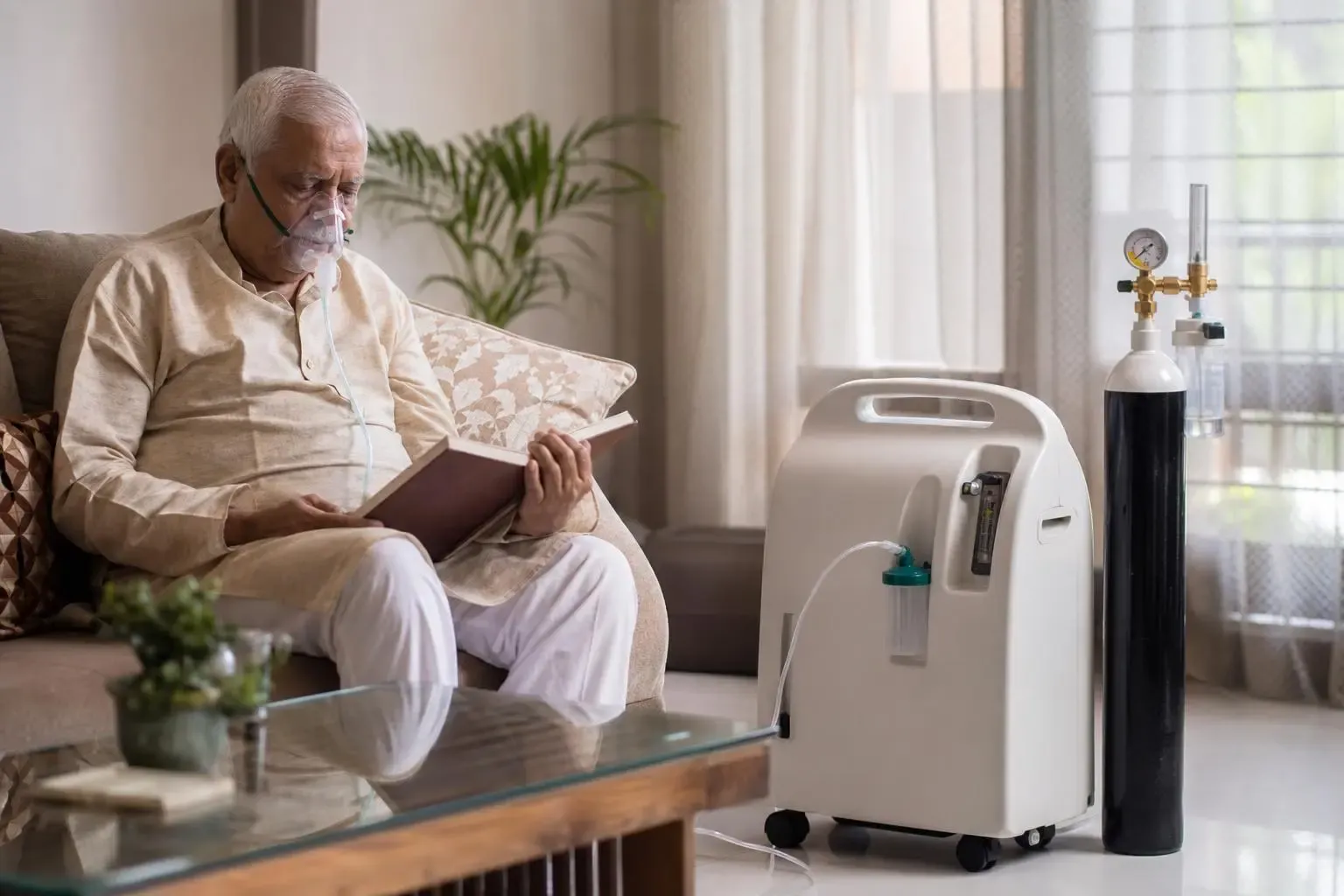
Concentrator: Best as the main device for daily home oxygen when oxygen is needed for many hours. It generates oxygen from room air and never needs refilling. It requires electricity.
Cylinder: Best for emergency backup, power cuts, ambulance transport, and short-term needs. It stores finite compressed oxygen and works without power, but it empties and must be refilled.
For most long-term home patients: The practical answer is concentrator plus backup cylinder, not one or the other.
Always: Choose based on a doctor’s prescription, not price or availability alone.
Concentrators do not need refills as long as power is available, while cylinders contain a fixed amount of stored oxygen that eventually runs out and must be replaced.
Contact Aarogyaa Bharat’s team for help choosing the right respiratory care equipment based on your doctor’s prescription.
What Is an Oxygen Concentrator?
An oxygen concentrator is an electrically powered medical device that works like an oxygen-making machine. It pulls in normal room air (which contains about 21% oxygen), removes nitrogen through a molecular sieve, and delivers oxygen-enriched air to the patient through a nasal cannula or mask.
The output is typically around 90% to 95% oxygen purity. Stationary home concentrators run on wall power, while portable models use rechargeable batteries but usually deliver lower output.
Key terms you should know
LPM (litres per minute): The flow rate at which oxygen is delivered. The correct LPM comes from the doctor’s prescription.
Continuous flow: Oxygen flows steadily all the time, whether the patient is inhaling or exhaling. Most stationary home concentrators provide continuous flow.
Pulse dose: Oxygen is delivered in bursts only when the device detects an inhalation. Many portable concentrators use pulse dose. Pulse-dose setting numbers are not always equal to continuous-flow LPM. This is a critical distinction that most buyers miss.
5L/10L concentrator: This refers to the machine’s maximum flow capacity, not the patient’s required oxygen level. A 5L concentrator delivers up to 5 litres per minute of continuous flow.
Oxygen purity: The percentage of oxygen in the gas the device delivers. A concentrator must maintain adequate purity at the prescribed flow rate.
When a concentrator works well
Daily home oxygen therapy for stable patients is where concentrators shine. Long-term oxygen therapy (LTOT) often means at least 15 hours per day for conditions like severe COPD. At that level of daily use, a concentrator avoids the constant refill logistics that cylinders demand.
Concentrators also suit homes where electricity is reliable or backup power is planned, and families who simply do not want to coordinate gas deliveries on weekends and holidays.
Limitations
A concentrator stops working during a power cut unless backed by an inverter, UPS, or generator. Output purity can decline if the device is poorly maintained or overloaded beyond its rated capacity.
Practitioners on Reddit’s pulmonary fibrosis forum describe a common misconception: one caregiver wanted a lightweight portable concentrator delivering continuous flow above 2 LPM, and a commenter explained that shoulder-style portable units generally cannot provide that level of true continuous flow. The caregiver was advised to ask the pulmonologist whether pulse dose could be tested instead.
What Is an Oxygen Cylinder?
An oxygen cylinder (also called an oxygen tank) is a metal container filled with compressed medical oxygen under high pressure. It does not need electricity. A regulator controls the flow rate, and a pressure gauge shows how much oxygen remains inside.
Compressed medical oxygen gas is typically at least 99.5% pure, which is higher than what concentrators produce. But once the oxygen inside is used up, the cylinder must be refilled or replaced. There is no way to generate more from the device itself.
When a cylinder works well
Cylinders are the right choice for emergency backup during power cuts or concentrator failure, short-term oxygen needs after hospital discharge, ambulance or patient transport, and high-flow situations where the prescribed flow exceeds a home concentrator’s capacity.
Limitations
Standard large cylinders can weigh 50 to 70 kg. They contain pressurized gas and must be stored upright and secured to prevent falling. The biggest practical risk for caregivers: the cylinder empties, and the refill does not arrive on time.
For patients needing oxygen 15 or more hours a day, a cylinder-only setup becomes a refill management problem. The math, as we will see below, makes this clear.
Oxygen Concentrator vs Oxygen Cylinder: Comparison Table
Factor | ||
|---|---|---|
Oxygen source | Generates from room air | Stores compressed medical oxygen |
Oxygen purity | Around 90% to 95% | At least 99.5% |
Electricity | Required for stationary models | Not required |
Refills | None needed | Must be refilled when empty |
Runtime | Continuous, as long as power is on | Limited by tank capacity |
Flow options | Continuous flow or pulse dose, depending on model | Continuous flow via regulator |
Noise | Produces operational noise | Silent |
Portability | Stationary units ~10 kg; portable units lighter but lower output | Small cylinders are portable but finite; large ones are very heavy |
Safety concerns | Electrical hazard, oxygen-enriched fire risk, overheating | High-pressure tank, oxygen-enriched fire risk, falling hazard |
Maintenance | Filter cleaning, sieve bed service | Regulator care, valve checks, timely refills |
Best use | Daily home oxygen therapy | Backup, emergency, transport, short-term use |
The purity difference matters less than people assume. WHO notes that oxygen from concentrators provides medically suitable concentrated oxygen from room air. The key is matching device output to the doctor’s prescription, not chasing the highest purity number.
Which One Should You Choose?
The right choice between an oxygen concentrator and oxygen cylinder depends on the patient’s prescription, usage duration, power reliability, and emergency readiness.
For long-term daily oxygen
Choose a concentrator as the primary device. When oxygen is prescribed for 15 or more hours per day, refilling cylinders becomes impractical. A single large cylinder at 2 LPM lasts about 12.5 hours, which means it may not cover one full day. A concentrator runs as long as the power stays on.
For emergency backup
Choose a cylinder. It works instantly, requires no electricity, and delivers high-purity oxygen. The American Lung Association explicitly recommends backup equipment for people who need oxygen continuously, typically a large oxygen tank.
For power cuts
A cylinder wins outright. Concentrators are useless without electricity unless backed by a UPS, inverter, or generator. Even with battery backup, coverage is limited. A caregiver on Reddit’s COPD forum described using a UPS to keep a stationary concentrator running for about 15 to 20 minutes during a power outage, enough time to switch to the oxygen tank and reduce panic. That is helpful, but it is bridge time, not a backup plan.
For transport and travel
Ask the doctor whether a portable concentrator with pulse dose is acceptable. If continuous flow is required, a small cylinder or cart-based system may be needed. Do not assume any portable concentrator can replace a continuous-flow prescription.
For high-flow oxygen
If the doctor-prescribed flow exceeds what a home concentrator can deliver (most stationary models top out at 5L or 10L continuous), a cylinder or hospital-grade system may be required. This is not a DIY decision.
For short-term post-discharge recovery
Either device can work. Renting may be the smarter financial move when the doctor plans to reassess the oxygen need within weeks.
How Long Does an Oxygen Cylinder Last?
This is one of the most common caregiver questions, and most competitor articles skip the math. The formula, per StatPearls, is straightforward:
Cylinder runtime (minutes) = usable oxygen litres ÷ prescribed flow rate (LPM)
Example: 1,500-litre cylinder
Prescribed Flow Rate | Runtime |
|---|---|
1 LPM | 1,500 minutes (25 hours) |
2 LPM | 750 minutes (12.5 hours) |
3 LPM | 500 minutes (8.3 hours) |
5 LPM | 300 minutes (5 hours) |
If a patient needs oxygen for 15 hours a day at 2 LPM, one 1,500-litre cylinder will not even last a full day. At 5 LPM, it lasts just 5 hours. This is why cylinder-only care becomes unsustainable for daily long-term oxygen therapy, and why concentrators make more sense as the primary device.
Actual runtime varies based on cylinder size, residual pressure, regulator efficiency, and wastage. Always check the gauge and plan refills before the tank drops to critical levels.
India Checklist Before Buying or Renting an Oxygen Concentrator
Buying an oxygen concentrator in India requires more caution than most people realize. During and after the COVID-19 crisis, cheap devices flooded online marketplaces. Many could not deliver medical-grade oxygen at the claimed flow rates.
India’s drug regulator (CDSCO) issued an advisory for home-setting concentrators specifying that suitable devices must provide continuous concentrated oxygen above 90%, minimum continuous flow up to 5 L/min or more, an oxygen monitor to verify concentration, and a meter displaying cumulative hours of operation.
Before you buy, verify these
Prescribed LPM. Know exactly what the doctor ordered. Do not guess.
Continuous flow capacity. Confirm the device delivers continuous flow at the prescribed LPM, not just pulse dose.
Oxygen purity at prescribed flow. Some devices claim 93% purity at 1 LPM but drop significantly at 3 or 5 LPM. Ask for purity data at the flow you need.
Oxygen monitor/purity alarm. The device should display oxygen concentration and alert if purity drops.
Cumulative hours meter. Helps track servicing intervals and device lifespan.
Warranty and service support. Buy from suppliers who offer after-sales service and replacement parts.
Documentation. Ensure proper invoicing, compliance information, and manufacturer details.
Red flags to watch for
A highly upvoted thread on Reddit’s COPD forum describes a patient who was scammed by a cheap device marketed as a portable oxygen concentrator. It failed to improve blood oxygen levels. Commenters explained the “concentration trap”: some devices claim high LPM, but oxygen purity drops sharply when flow is actually increased to the claimed level.
Avoid a device if the seller cannot demonstrate stable oxygen purity at your prescribed flow, if the product is labeled “oxygen generator” rather than “medical oxygen concentrator,” if there is no warranty or service support, or if the flow claim is high but the machine is suspiciously small and cheap.
Check city-wise availability for Aarogyaa Bharat’s respiratory care equipment, including oxygen concentrators with verified specifications.
Power Cut and Emergency Backup Plan
A concentrator without a backup plan is an incomplete setup for an oxygen-dependent patient. Here is what every caregiver should arrange.
Keep a filled backup cylinder. This is the single most important step. Batteries and inverters may cover a few hours at best. In caregiver discussions on Reddit’s prepping forum, families consistently recommend backup cylinders over relying solely on battery power. One commenter emphasized planning for outages longer than 6 to 8 hours if oxygen is medically necessary.
Use a UPS as bridge time, not the full solution. A UPS can keep a concentrator running for 15 to 20 minutes, enough time to calmly switch to the cylinder. It is useful, but it is not the backup itself.
Backup readiness checklist
Filled cylinder available at home.
Regulator attached or stored alongside the cylinder.
Caregiver knows how to open the valve and set the correct flow.
Cylinder gauge checked weekly.
Spare nasal cannula or tubing available.
Emergency contact numbers (doctor, supplier, ambulance) posted visibly.
Power backup (inverter/UPS) tested periodically.
Concentrator alarm meanings understood by at least two household members.
Do not wait for a midnight power outage to figure out the cylinder regulator for the first time. Practice the switch during the daytime.
Safety Checklist for Home Oxygen
Oxygen itself is not flammable. But it supports combustion, meaning anything that can catch fire will burn faster and hotter in an oxygen-enriched environment. The American Lung Association stresses this distinction: the risk is not oxygen exploding, it is oxygen making existing fire sources more dangerous.
This applies equally whether comparing an oxygen concentrator vs oxygen cylinder for home safety. The fire rules are the same for both.
Rules for every home oxygen setup
No smoking anywhere near oxygen equipment. This is the number one real-world danger. Practitioners on LinkedIn consistently list this as the top safety rule.
Keep oxygen away from open flames. Gas stoves, candles, diyas, agarbatti, heaters, and matchsticks. Maintain at least five feet of distance.
Never use aerosols or oil-based products near oxygen. Use water-based lubricants around cannula contact points, not petroleum jelly.
Keep concentrator vents open. Do not place it in a closed cupboard or cover it with cloth.
Do not use extension cords for a concentrator. Plug directly into a wall outlet.
Secure cylinders upright. A falling high-pressure cylinder is a serious hazard.
Turn oxygen off when not in use.
Keep equipment clean and serviced on schedule.
Families on Reddit who manage home oxygen describe the initial fire anxiety as intense but the practical reality as manageable: follow the rules, remove ignition sources, and the risk stays low.
Rent or Buy?
This question depends on how long oxygen therapy will last.
Renting makes sense when oxygen is needed for a short recovery period after hospital discharge, the doctor plans to reassess the requirement within weeks, the family wants to test a specific device before committing to purchase, or the need is urgent and temporary.
Buying makes sense when the patient has a chronic condition like COPD requiring daily oxygen for months or years, the prescription is stable, long-term cost savings matter, and the family wants a new device with full warranty and service support.
Aarogyaa Bharat offers both purchase and rental options for respiratory care equipment. Purchases ship pan-India, while rentals are currently available in Pune, Maharashtra. Check the purchase and rental FAQs for details on delivery timelines, payment methods, and demo availability. You can also review the terms and conditions for rental scope and return policies.
Common Mistakes to Avoid
Buying a concentrator without knowing the prescribed LPM. The device must match the prescription. A 5L concentrator is wrong for a patient who needs 8 LPM continuous flow.
Assuming “portable” means it replaces a stationary unit. Portable concentrators typically have lower output and often deliver pulse dose, not continuous flow. These are not interchangeable unless the doctor explicitly confirms pulse dose is acceptable.
Keeping a concentrator but no backup cylinder. Power cuts happen. Device failures happen. Backup equipment is not optional for oxygen-dependent patients.
Buying cheap online “oxygen generators” with unclear purity. If a device cannot show stable oxygen concentration at the prescribed flow rate, it is not a medical oxygen concentrator. It is a risk.
Using oxygen without medical supervision. The American Thoracic Society is clear: oxygen is a medication requiring a prescription. Too little oxygen can strain the heart and brain. Too much can be dangerous for patients with certain conditions. Self-prescribing is never safe.
Not calculating cylinder runtime. Caregivers who do not know how long their cylinder will last risk running out at the worst possible time. Use the formula in the section above.
Storing cylinders near heat or leaving them unsecured. A cylinder near a gas stove or lying on its side is a preventable hazard.
Final Recommendation
The oxygen concentrator vs oxygen cylinder choice is not about which device is universally better. It is about which one fits the patient’s situation.
If oxygen is prescribed for daily home use and the flow requirement falls within the machine’s capacity, an oxygen concentrator is the better primary device. It generates oxygen continuously, avoids refills, and simplifies long-term care.
A filled oxygen cylinder should always be available as backup for power cuts, transport, or device failure. For short-term or emergency-only oxygen needs, a cylinder may be the more practical first choice.
The safest home oxygen setup for a long-term patient is almost always: primary concentrator, backup cylinder, trained caregiver, and a doctor’s prescription guiding every decision. Learn more about Aarogyaa Bharat and the respiratory care equipment they support across India.
For more guides on home healthcare equipment, visit the Aarogyaa Bharat blog.
Need help choosing between a concentrator and cylinder? Speak with Aarogyaa Bharat’s team with your doctor’s prescription ready, and they will help match the right device to your needs.
Medical disclaimer: This article is for education only. Oxygen should be used only under medical advice. Do not start, stop, or change oxygen flow without a doctor’s guidance. Seek urgent medical help if breathing worsens, SpO2 remains low, or the patient develops chest pain, confusion, blue lips, severe breathlessness, or drowsiness.