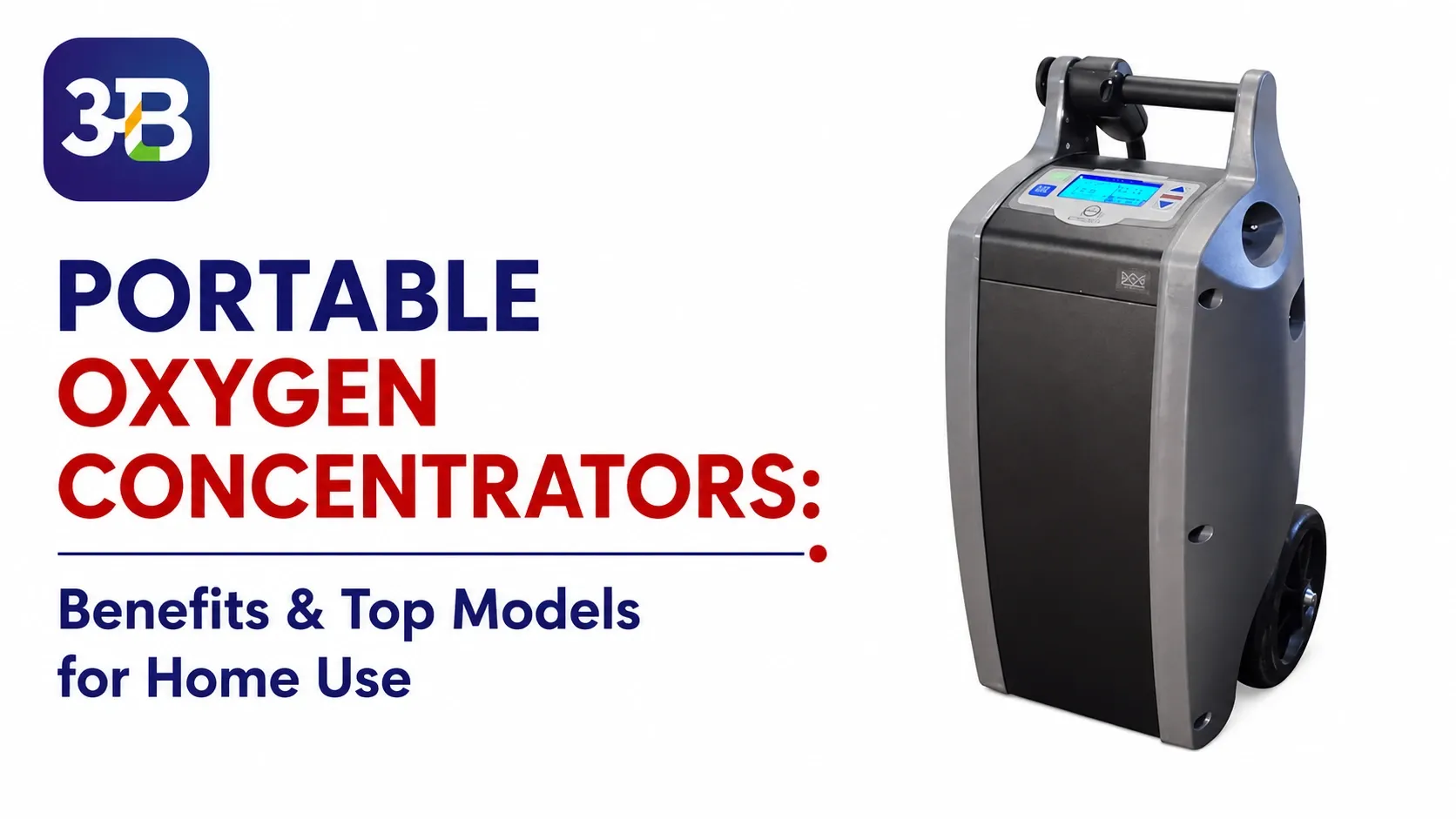
Unlike traditional oxygen cylinders that store compressed or
liquid oxygen, a portable oxygen concentrator (POC) is a sophisticated medical
device that draws in ambient air, filters out nitrogen, and delivers purified,
medical-grade oxygen directly to the user. This fundamental shift in how oxygen
is generated and delivered has opened up a world of possibilities. In this
comprehensive guide, we will explore the multitude of advantages these devices
offer, from unprecedented mobility to enhanced mental well-being, and why they
have become the gold standard in modern respiratory therapy.
Unmatched Mobility and Independence
Perhaps the most celebrated of all the portable oxygen
concentrators benefits is the sheer freedom of movement they provide.
Traditional oxygen tanks are notoriously heavy. Even the so-called
"portable" cylinders can weigh upwards of 10 to 20 pounds, making
them exhausting to carry and difficult to maneuver. In contrast, modern POCs
are engineering marvels of miniaturization. Many top-tier models weigh as
little as 2 to 5 pounds.
This drastic reduction in weight means that users are no
longer tethered to a heavy cart or confined to their living rooms. You can
easily carry a lightweight POC in a specialized backpack or over-the-shoulder
bag. This facilitates improving patient mobility in profound ways. Whether you
want to walk around your garden, go grocery shopping, attend a grandchild's
school play, or simply navigate the hallways of your home without gasping for
air, a POC makes it possible. The psychological lift that comes from no longer
feeling like a prisoner in your own home cannot be overstated. By restoring
your physical freedom, these devices play a crucial role in enhancing daily
life with oxygen therapy.
The Ability to Travel Without Boundaries
For individuals requiring supplemental oxygen, travel used
to be a logistical nightmare. Airlines had strict, often prohibitive,
regulations regarding compressed oxygen tanks due to the extreme explosion
hazard they pose in pressurized cabins. Traveling by car required careful
planning, calculating how many tanks you would need for the trip, and finding
medical supply vendors at your destination for refills.
This is where the benefits of FAA-approved oxygen
concentrators truly shine. The Federal Aviation Administration (FAA) and nearly
all international aviation authorities explicitly permit the use of specific,
battery-operated portable oxygen concentrators on commercial flights. Because
POCs do not store compressed gas they simply filter the existing cabin air they
are inherently safe.
This FAA approval unlocks the world for respiratory
patients. You can now visit family across the country, take international
vacations, and board flights with confidence. Furthermore, because they operate
on rechargeable batteries, you are not tied to a wall outlet. By understanding
traveling with medical devices, you can pack your POC in your carry-on,
ensuring that your oxygen supply is completely uninterrupted from the moment
you leave your house to the moment you arrive at your hotel. For road trippers,
plugging the device into the car's DC power outlet ensures continuous oxygen
while driving, eliminating the frantic search for oxygen refill stations.
Advanced Technology: Pulse Flow vs. Continuous Flow
To fully appreciate the portable oxygen concentrators
benefits, one must understand the technological advancements that make them so
effective, specifically regarding how they deliver oxygen. Historically,
patients were given continuous flow, meaning oxygen streamed into their
nostrils constantly, whether they inhaled or not. This was highly inefficient.
Modern POCs utilize sophisticated pulse flow technology.
Pulse flow devices are incredibly "smart." They use a proprietary
sensor to detect the exact moment you take a breath. Only then do they deliver
a precise, measured bolus (puff) of oxygen at the very beginning of your
inhalation. This ensures that the maximum amount of oxygen makes it deep into
your lungs, rather than being wasted in the dead space of your nasal cannula
when you exhale.
Because pulse flow is so efficient, the device conserves
battery power and allows the internal compressor to work less, resulting in a
smaller, lighter machine. However, it is important to note that some patients
with severe conditions or specific sleep disorders require a steady stream of
oxygen. For these individuals, there are continuous flow portable concentrators
available. While slightly heavier than pulse-flow models, they still offer
vastly superior portability compared to traditional tanks. The ability to
choose between pulse dose oxygen delivery and continuous flow ensures that
patients receive highly customized care tailored to their specific
physiological needs.
Significant Improvements in Mental Health and Social Well-Being
The physical advantages of POCs are immediately obvious, but
the impact on a user's mental health is equally profound. Chronic lung diseases
are heavily correlated with anxiety and depression. The fear of breathlessness
(dyspnea) can cause patients to withdraw from social activities, leading to
severe social isolation and COPD. When you are afraid to leave the house
because you might run out of oxygen or fall over from the weight of your tank,
your world shrinks dramatically.
By providing a reliable, lightweight, and long-lasting
oxygen supply, POCs directly combat this isolation. They offer profound mental
health benefits of oxygen therapy. When you know you have hours of battery life
and a device that is easy to carry, the anxiety associated with leaving the
house diminishes significantly. You can go out to dinner with friends, attend
social gatherings, and participate in family events without feeling
self-conscious about dragging a bulky metal tank behind you. This restored social
engagement is vital for emotional health. Breaking the cycle of isolation helps
reduce depressive symptoms, improves cognitive function (which is heavily
dependent on adequate oxygenation), and fosters a much more positive outlook on
life.
Cost-Effectiveness Over Time
When evaluating portable oxygen concentrators benefits, it
is impossible to ignore the financial aspect. It is true that the upfront cost
of purchasing a high-quality POC can be higher than paying a monthly rental fee
for a few oxygen tanks. However, when you look at the long-term economics, POCs
are remarkably cost-effective.
Traditional oxygen therapy requires continuous logistical
support. You must pay for the physical gas, the delivery services, the rental
of the tanks, and the regulators. If you travel, you have to pay out-of-pocket
for oxygen refills in different cities or pay expensive medical supply delivery
fees.
In stark contrast, a POC runs on electricity and ambient
air both of which are free. Once you have purchased the device, your ongoing
costs are limited to replacing the disposable sieve beds every few years (a
relatively inexpensive maintenance task) and the minimal cost of charging the
battery. Over a span of two to three years, a portable concentrator essentially
pays for itself. Furthermore, many insurance plans, including Medicare under
specific circumstances, will cover a portion of the cost of oxygen therapy
devices if strict medical necessity criteria are met.
Superior Safety Profile
Safety is a paramount concern in home oxygen safety, and
this is an area where portable concentrators vastly outperform traditional
tanks. Compressed oxygen tanks are essentially high-pressure cylinders. If the
valve is damaged, cracked, or broken off, the tank can become a dangerous,
high-velocity projectile. More commonly, the pure, pressurized oxygen leaking
into a room creates an extreme fire safety with medical devices hazard. In an
environment with supplemental oxygen, a simple spark from a static shock, a lit
candle, or a stove burner can cause a fire to ignite instantly and burn with
terrifying intensity.
A portable oxygen concentrator completely eliminates these
risks. Because it does not store oxygen, it cannot explode, and it does not
create a highly oxygen-enriched environment in your home. If the device is
dropped or bumped, there is no risk of a pressurized gas leak. The only
byproduct of a POC is a small amount of harmless, filtered nitrogen gas that is
released back into the room. For patients and their families, this immense
reduction in fire and explosion risk brings invaluable peace of mind.
No Need for Costly Refills or Deliveries
The logistical nightmare of managing an oxygen supply is a
burden that affects both the patient and their caregivers. Relying on tanks
means you are at the mercy of a delivery schedule. If a snowstorm hits, or if
the medical supply company experiences a delay, you could find yourself
rationing your oxygen, which is an incredibly stressful and dangerous
situation.
One of the most liberating portable oxygen concentrators
benefits is total autonomy. Because the device manufactures its own oxygen from
the surrounding air, you never have to wait for a delivery truck. You never
have to call a supplier to schedule a drop-off. You never have to worry about
running out of oxygen in the middle of the night. As long as you have access to
a standard electrical outlet to charge the battery, you have an infinite supply
of medical-grade oxygen. This autonomy empowers patients to take complete
control of their managing respiratory health at home without relying on
third-party logistics.
Discreet and Quiet Operation
The stigma associated with visible medical equipment can be
a significant psychological hurdle for many patients. Large metal tanks with
hissing valves draw unwanted attention and can make users feel overly
medicalized or vulnerable.
Modern POCs are designed with aesthetics and discretion in
mind. They look less like medical equipment and more like standard electronics,
such as a sleek shoulder bag or a small piece of carry-on luggage. Furthermore,
they are remarkably quiet. Older concentrators were notoriously loud, emitting
a constant droning noise that could disrupt conversations or interfere with
watching television. Today’s devices utilize advanced sound-dampening materials
and quieter compressors, allowing for discreet oxygen therapy in public spaces.
You can sit in a quiet restaurant, attend a movie theater, or go to a religious
service without your device causing a disturbance or drawing unwanted eyes.
Promoting Physical Rehabilitation and Exercise
Exercise is vital for everyone, but it is especially crucial
for individuals with chronic lung diseases. Pulmonary rehabilitation programs
heavily emphasize physical activity to strengthen the respiratory muscles,
improve endurance, and enhance overall lung efficiency. However, attempting to
exercise while tethered to a heavy oxygen tank is incredibly difficult and
often discourages patients from even trying.
POCs remove this barrier. The lightweight nature of these devices means that patients can comfortably walk, use a stationary bike, or participate in light yoga while receiving their required exercise with supplemental oxygen. By preventing oxygen desaturation during physical exertion, POCs allow patients to exercise for longer durations and with greater intensity. This leads to better physical outcomes, improved cardiovascular health, and a breaking of the vicious cycle where breathlessness leads to inactivity, which in turn leads to further deconditioning and more breathlessness.