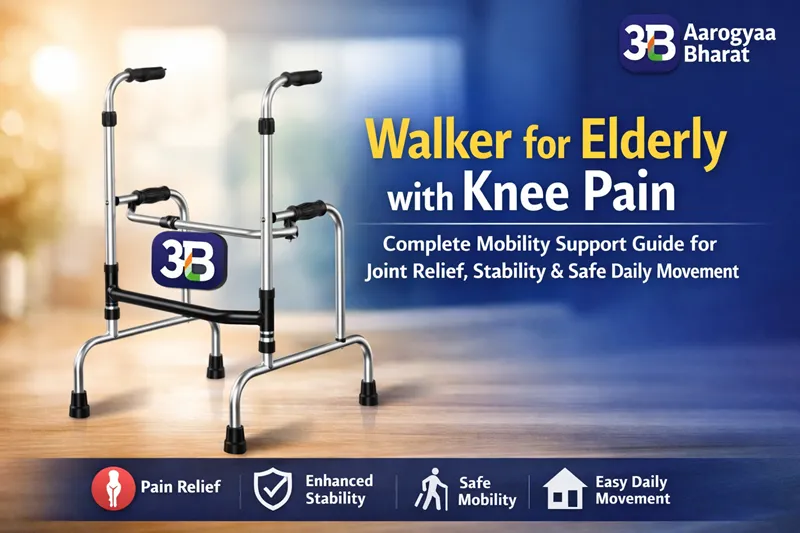
A walker for elderly with knee pain provides essential joint relief, improved balance, and added stability to reduce strain during daily activities. At Aarogyaa Bharat, we help seniors choose supportive, ergonomic mobility solutions that promote comfort, safety, and confident independent movement at home and outdoors.
Understanding Knee Pain in Elderly Individuals
Knee pain is one of the most common mobility issues among
elderly individuals, often caused by osteoarthritis, ligament weakness,
cartilage degeneration, or recovery from knee replacement surgery. As joint
cushioning reduces over time, walking without support can increase pain and
instability, making daily activities difficult. Seniors with knee pain often
limit movement due to discomfort, which can lead to muscle weakness and reduced
flexibility over time. A walker provides structured support by distributing
body weight evenly across the frame, reducing pressure on the knees and
allowing safer movement. Families planning long-term elderly care frequently
explore hospital pages alongside mobility aid sections to combine
walkers with supportive solutions such as orthopedic beds, transfer aids, and
physiotherapy accessories, creating a complete joint-friendly mobility setup.
Why a Walker is Beneficial for Knee Pain Relief
Using a walker significantly reduces weight-bearing stress
on painful knees, allowing seniors to walk with better balance and less
discomfort. By shifting part of the body weight onto the walker frame, elderly
individuals can reduce strain on inflamed joints and improve posture during
walking. Walkers also encourage slow and controlled movement, which prevents
sudden twisting or missteps that can worsen knee pain. Many caregivers explore
rehabilitation categories to integrate walkers into physiotherapy routines
designed to strengthen muscles around the knee, improving long-term joint
stability. When combined with elderly care solutions such as anti-slip mats and
grab bars, walkers become part of a comprehensive strategy that prioritizes
both comfort and safety.
Types of Walkers Suitable for Elderly with Knee Pain
Choosing the right walker depends on the severity of knee
pain and overall mobility level. Standard walkers without wheels provide
maximum stability and are ideal for seniors experiencing significant knee
weakness or post-surgery recovery. Front-wheel walkers allow smoother movement
and reduce lifting effort, making them suitable for moderate knee pain.
Rollator walkers with seats are especially beneficial for seniors who require
frequent rest breaks during longer walks, as they offer both mobility and comfort.
Lightweight foldable walkers are practical for daily indoor use and easy
storage in compact living spaces. Families often compare walker options within
mobility aid categories and hospital pages to ensure that the chosen
design provides both joint relief and long-term durability.
Walker Types and Knee Pain Support Comparison
|
Walker
Type |
Ideal
Condition |
Key
Benefit |
Recommended
Use |
|
Standard
Walker |
Severe knee
pain |
Maximum
stability & weight support |
Indoor
rehabilitation |
|
Front-Wheel
Walker |
Moderate knee
discomfort |
Smooth
forward movement |
Daily home
mobility |
|
Rollator
Walker |
Mild to
moderate pain |
Seat for
resting |
Indoor &
outdoor walking |
|
Lightweight
Foldable Walker |
Limited
storage space |
Easy handling |
Small homes
& travel |
Important Features to Look for in a Walker for Knee Pain
When selecting a walker for knee pain, comfort and joint
protection are the primary considerations. Adjustable height ensures proper
posture, preventing additional strain on knees and hips. Ergonomic hand grips
reduce pressure on wrists, allowing better control and stability. Anti-slip
rubber tips or durable wheels provide traction on smooth flooring surfaces,
reducing the risk of slipping. Lightweight aluminium frames make the walker
easier to manoeuvre, especially for seniors who may have reduced arm strength.
Many families use healthcare calculators and elderly care planning tools to
estimate long-term mobility expenses when combining walkers with knee support
braces, physiotherapy equipment, and hospital beds, ensuring a balanced and
practical mobility solution.
Role of Walkers in Knee Replacement Recovery
For seniors recovering from knee replacement surgery,
walkers play a critical role during early rehabilitation stages. They provide
stable support while the joint heals and allow controlled walking that prevents
overexertion. Physiotherapists often recommend walker-assisted walking
exercises to improve joint mobility gradually without placing excessive strain
on the healing area. Combining walkers with rehabilitation categories such as
exercise pedals and physiotherapy aids helps seniors strengthen surrounding
muscles and regain flexibility safely. Consistent and structured walker use
accelerates recovery while minimizing the risk of setbacks or re-injury.
Indoor and Outdoor Mobility for Seniors with Knee Pain
Mobility needs differ between indoor and outdoor
environments, and selecting the right walker design enhances comfort in both
settings. Indoor walkers focus on stability and compact movement, allowing
seniors to navigate tight spaces and furniture easily. Outdoor walkers with
wheels and brakes provide smoother mobility across uneven surfaces and reduce
strain during longer walks. Families exploring mobility aid sections frequently
compare walker designs within hospital pages to ensure that the chosen
model suits daily lifestyle requirements while protecting painful knee joints.
Safety Tips for Using a Walker with Knee Pain
Proper usage of a walker ensures maximum joint relief and
safety. The walker should be adjusted to wrist level to maintain correct
posture and prevent leaning forward, which can increase knee strain. Seniors
should walk at a steady pace and avoid sudden turns or uneven surfaces.
Caregivers should regularly inspect rubber tips, wheels, and frame stability to
ensure safe performance during daily use. Adding hospital safety accessories
such as anti-slip mats, grab bars, and bedside rails from elderly care sections
further reduces fall risks and creates a supportive environment for independent
movement.
Emotional and Psychological Benefits of Mobility Support
Knee pain can limit independence and negatively impact
emotional well-being, but using a walker restores confidence and encourages
active participation in daily routines. Seniors who feel secure while walking
are more likely to engage in light exercise and social interaction, improving
overall mental health. Walkers allow elderly individuals to manage daily tasks
independently without constant supervision, enhancing dignity and quality of
life. Families often combine walkers with rehabilitation equipment and elderly
care solutions to create a positive recovery environment that supports both
physical and emotional comfort.
Cost and Practical Considerations
Budget and durability play an important role when selecting
a walker for knee pain. Standard walkers are generally more affordable, while
rollator walkers may involve higher costs due to added features such as wheels
and seating. Families often use healthcare calculators to evaluate expenses
when mobility aids are part of a broader home healthcare setup that includes
physiotherapy equipment, beds, and joint support accessories. Choosing a
durable and adjustable walker ensures long-term value while providing
consistent joint relief.
Important Feature Checklist Before Final Selection
|
Feature |
Why It
Matters |
What to
Check |
|
Adjustable
Height |
Proper
posture alignment |
Wrist-level
handle position |
|
Lightweight
Frame |
Easy handling |
Aluminium
construction |
|
Grip Comfort |
Reduced wrist
strain |
Ergonomic
padded handles |
|
Anti-Slip
Tips/Wheels |
Stable
walking |
High-traction
rubber or smooth wheels |
|
Strong Frame |
Long-term
durability |
Steel or
reinforced aluminium build |
Conclusion
A walker for elderly individuals with knee pain is an
essential mobility solution that reduces joint strain, improves stability, and
restores confidence during daily movement. By understanding walker types,
evaluating key features, and integrating mobility aids with hospital pages, rehabilitation categories, elderly care solutions, and healthcare
planning tools, families can create a comprehensive home care environment that
supports safe and comfortable living. A carefully selected walker not only
protects painful knees but also encourages active movement, helping seniors
maintain independence and dignity in their everyday lives.