Understanding the Nature of Chronic Illness and Daily
Care Needs
Chronic illnesses differ from temporary conditions because
they require continuous management rather than short recovery periods. Patients
often experience fluctuating energy levels, progressive muscle weakness, joint
stiffness, neurological impairments, or breathlessness that worsen over time.
Daily activities that once seemed effortless slowly become physically demanding
and mentally draining. Toileting, in particular, demands repeated movements
throughout the day and night, often when patients are tired, dizzy, or
experiencing pain. Without proper support, these repeated demands increase fall
risk, caregiver strain, and emotional stress. A commode chair integrates
seamlessly into chronic illness care by adapting to the patient’s limitations
rather than forcing the patient to adapt to the environment, making everyday
living safer and more sustainable.
Why Toileting Becomes a Major Challenge in Chronic
Illness
For chronically ill patients, toileting difficulties are
rarely due to a single factor. Reduced mobility, slow reflexes, muscle
weakness, tremors, balance loss, breathlessness, and joint pain often combine
to make bathroom access unsafe. Frequent night time urination, medication side
effects, and urgency further increase risk. Indian bathrooms may have slippery
tiles, squat toilets, narrow layouts, or steps that are extremely difficult for
someone with limited strength or coordination. Over time, fear of falling or
embarrassment may cause patients to delay bathroom visits, leading to urinary
infections, constipation, dehydration, and worsening health. A commode chair
addresses these layered challenges by bringing a stable, supportive toilet
option close to the patient’s living or sleeping area.
What Is a Commode Chair and How It Supports Long-Term
Care
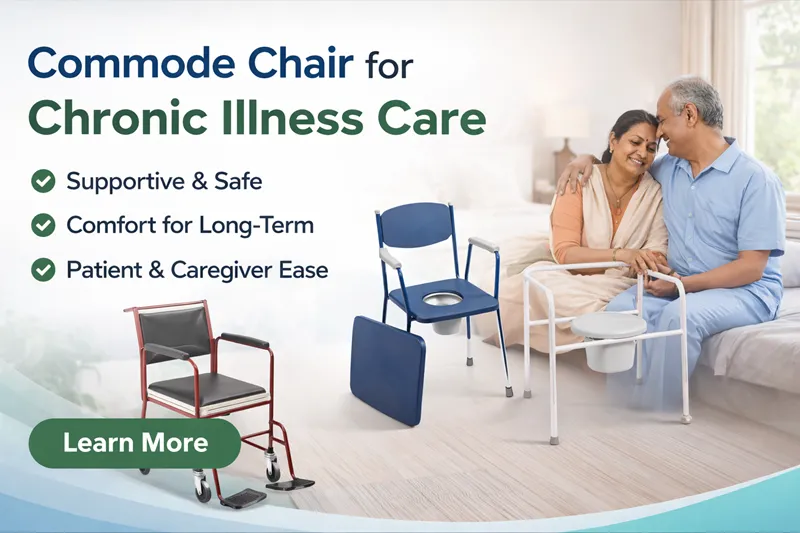
A commode chair is a portable toileting device designed for
individuals who cannot safely use a standard bathroom. It consists of a
supportive frame, a toilet seat with an opening, armrests for leverage, a
backrest for posture support, and a removable bucket for waste. In chronic
illness care, the commode chair is not a temporary solution but a long-term
assistive device that becomes part of the patient’s daily routine. Unlike
hospital equipment, modern commode chairs are designed to blend into home environments
while offering medical-grade safety. They allow patients to toilet
independently or with minimal assistance, preserving dignity while reducing
physical strain on caregivers.
Chronic Conditions That Commonly Require Commode Chairs
Many long-term medical conditions benefit significantly from
the use of a commode chair. Patients with arthritis experience severe pain when
bending or standing from low seats. Parkinson’s disease and neurological
disorders cause balance issues and delayed movements. Stroke survivors often
have one-sided weakness that makes transfers dangerous. Chronic lung and heart
patients experience breathlessness that worsens with walking and exertion.
Advanced diabetes may cause neuropathy and poor balance. Elderly individuals
with multiple co-morbidities often face general weakness and fatigue. In all
these conditions, a commode chair provides predictable support, reduces energy
expenditure, and minimizes injury risk during daily toileting.
Role of a Commode Chair in Preserving Patient Dignity
Dignity is one of the most overlooked aspects of chronic
illness care. Dependence on others for intimate activities like toileting can
deeply affect self-esteem, emotional health, and social behaviour. Patients may
feel embarrassed, ashamed, or burdensome, leading to withdrawal and depression.
A commode chair restores a sense of autonomy by allowing patients to manage
toileting privately or with minimal help. This psychological relief is as
important as physical safety because emotional well-being directly influences
appetite, sleep quality, treatment adherence, and overall quality of life.
Reducing Caregiver Burden in Long-Term Illness Management
Chronic illness care places significant physical and
emotional demands on caregivers, especially family members. Assisting patients
to the bathroom multiple times a day requires lifting, bending, supporting body
weight, and constant vigilance to prevent falls. Over time, this leads to
caregiver fatigue, back pain, and emotional burnout. A commode chair reduces
caregiver strain by minimizing transfers, shortening assistance time, and
providing stable support during use. This allows caregivers to focus on other
aspects of care such as medication management, nutrition, and emotional
support.
Types of Commode Chairs Used in Chronic Illness Care
Different chronic conditions require different commode chair
designs depending on mobility level, body weight, and caregiver involvement.
|
Type of
Commode Chair |
Best
Suited For |
Key
Benefit |
|
Limited
mobility patients |
Maximum
stability |
|
|
Height
Adjustable Commode |
Arthritis and
joint issues |
Reduced joint
strain |
|
Fully
assisted patients |
Safer
transfers |
|
|
Space-constrained
homes |
Easy storage |
|
|
Heavy-weight
users |
Reinforced
safety |
Choosing the Right Commode Chair for Long-Term Use
Selecting a commode chair for chronic illness care requires
long-term thinking rather than short-term convenience. The chair must support
the patient’s weight comfortably, maintain stability over repeated daily use,
and remain easy to clean. Seat height should reduce strain on knees and hips,
while armrests must be strong enough to support controlled sitting and
standing. For progressive illnesses, adjustable or wheeled options may be more
suitable as mobility changes over time. Aarogyaa Bharat emphasizes durable,
rehabilitation-grade commode chairs that can withstand continuous use without
compromising safety.
Steel vs Plastic Commode Chairs for Chronic Care
Material choice significantly impacts durability and safety
in long-term illness care.
|
Feature |
Steel
Commode Chair |
Plastic
Commode Chair |
|
Durability |
Very high |
Moderate |
|
Load capacity |
High |
Limited |
|
Stability |
Excellent |
Good |
|
Maintenance |
Easy |
Easy |
|
Best use |
Long-term
chronic care |
Short-term
support |
Hygiene and Infection Control in Chronic Illness Care
Chronically ill patients often have weakened immunity,
making hygiene a critical aspect of daily care. The commode bucket must be
emptied and cleaned after every use, and the seat and armrests disinfected
regularly. Poor hygiene can lead to urinary tract infections, skin irritation,
and unpleasant odors that affect both patient comfort and home environment.
Choosing commode chairs with smooth surfaces, removable buckets, and
rust-resistant frames simplifies cleaning and ensures long-term hygiene. Aarogyaa
Bharat prioritizes designs that support easy infection control in home
settings.
Placement of a Commode Chair in the Home Environment
Correct placement improves both safety and convenience. For
patients with severe mobility issues, the chair should be placed near the bed
with clear access and proper lighting. For partially mobile patients,
positioning near the bathroom allows gradual independence. Floors should be
non-slippery, pathways free of obstacles, and privacy maintained through
screens or curtains. Thoughtful placement reduces anxiety and encourages
consistent use without fear.
Emotional Stability and Quality of Life in Long-Term Care
Chronic illness often brings emotional challenges such as
frustration, anxiety, and loss of confidence. Consistent use of supportive aids
like commode chairs helps patients feel secure in their daily routines. Knowing
that toileting can be managed safely reduces mental stress and allows patients
to focus on meaningful activities, social interaction, and treatment goals.
Over time, this stability contributes to a better quality of life despite
ongoing health challenges.
Why Aarogyaa Bharat Focuses on Chronic Illness Home Care
Aarogyaa Bharat understands that chronic illness care is a
long journey that requires reliable, practical, and dignified solutions. Our
commode chairs are selected keeping Indian homes, Indian caregiving systems,
and long-term usage needs in mind. By prioritizing safety, durability, comfort,
and hygiene, Aarogyaa Bharat supports families in providing compassionate and
effective care at home without unnecessary hardship.
Conclusion
A commode chair is not just a mobility aid but a cornerstone
of effective chronic illness care. By ensuring safe, dignified, and stress-free
toileting, it protects patients from injury, preserves emotional well-being,
and significantly reduces caregiver burden. In long-term conditions where daily
routines define quality of life, the right commode chair becomes an essential
partner in care. Aarogyaa Bharat remains committed to empowering chronic
illness management at home by offering dependable solutions that uphold
comfort, dignity, and safety every day.