What Are Pressure Sores and Why Do They Occur?
Pressure sores develop when:
- Constant
pressure cuts off blood supply
- Skin
and underlying tissue are starved of oxygen
- Tissue
begins to break down
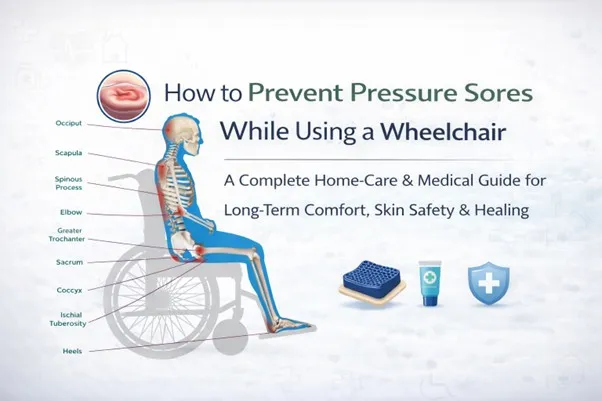
Common Pressure Points in Wheelchair Users
- Tailbone
(coccyx)
- Sitting
bones (ischial tuberosities)
- Hips
- Lower
back
- Heels
and elbows
Who Is at Highest Risk of Pressure Sores?
Pressure sores are more likely in:
- Elderly
wheelchair users
- Stroke
and paralysis patients
- Diabetic
patients
- Underweight
or obese individuals
- Users
sitting for long hours
- People
with poor sensation
If sensation is reduced, pain warning signals are absent making
prevention even more critical.
Early Warning Signs You Should Never Ignore
Watch for:
- Redness
that doesn’t fade after pressure relief
- Warm
or swollen skin
- Skin
discoloration
- Pain
or burning sensation
- Skin
hardening
Early detection prevents severe ulcers.
Choose the Right Pressure-Relief Cushion (MOST IMPORTANT)
Cushion Types Explained
Foam Cushions
- Basic
comfort
- Short
sitting durations
- Not
ideal for high-risk users
Gel Cushions
- Better
pressure distribution
- Good
for moderate risk
Air Cushions
- Best
pressure relief
- Ideal
for long-term users
- Requires
proper maintenance
For long-term wheelchair use, air or gel cushions are
strongly recommended.
Maintain Correct Sitting Posture
Poor posture increases pressure concentration.
Correct Posture Checklist
- Back fully supported
- Hips positioned properly
- Feet resting flat
- No sliding forward
- Shoulders relaxed
Incorrect posture causes pressure to focus on one point,
accelerating sores.
Regular Pressure Relief Movements (Every 30-60 Minutes)
Wheelchair users should:
- Shift
weight every 30-60 minutes
- Lean
side-to-side
- Perform
push-ups if possible
- Recline
slightly (if wheelchair allows)
Even 30 seconds of relief restores blood flow.
Keep Skin Clean, Dry & Nourished
Moisture increases skin breakdown.
Skin Care Best Practices
- Clean
skin daily
- Dry
thoroughly (especially folds)
- Use
pH-balanced cleansers
- Apply
barrier creams if needed
Avoid harsh soaps and alcohol-based products.
Wear Breathable Clothing
Tight or synthetic clothing:
- Traps
heat
- Increases
friction
- Raises
ulcer risk
Choose:
- Cotton clothing
- Seam-free
innerwear
- Properly
fitted pants
Ensure Proper Wheelchair Fit
Wrong seat size causes:
- Excess
pressure
- Sliding
- Skin
friction
Correct wheelchair sizing:
- Seat
width fits hips comfortably
- Seat
depth supports thighs
- Backrest
supports spine
Daily Skin Inspection (Caregiver Role)
Caregivers should:
- Inspect
skin daily
- Check
pressure points
- Look
for redness or marks
- Report
changes immediately
Use a mirror or phone camera for hard-to-see areas.
Nutrition Plays a Bigger Role Than You Think
Poor nutrition delays skin healing.
Key Nutrients for Skin Health
- Protein
- Vitamin
C
- Zinc
- Adequate
hydration
Malnourished patients develop sores faster and heal slower.
Special Considerations for Long-Term Wheelchair Users
- Upgrade
cushions periodically
- Reassess
posture every few months
- Rotate
seating surfaces
- Use
pressure-mapping if available
Prevention must evolve with time.
When to Seek Medical Help
Seek immediate help if:
- Skin
breaks
- Ulcer
deepens
- Signs
of infection appear
- Pain
increases
Delaying treatment leads to hospitalization and surgery.
Aarogyaa Bharat: Supporting Pressure Sore Prevention
Aarogyaa Bharat offers:
- Pressure-relief
wheelchair cushions
- Posture-support
wheelchairs
- Long-term
rental options
- Expert
home-care guidance
Choosing the right equipment early prevents complications
later.
Conclusion: Pressure Sores Are Preventable Neglect Is the
Real Risk
Pressure sores are not inevitable. They are a sign that:
- Pressure
relief is insufficient
- Posture
is incorrect
- Skin
care is neglected
With the right wheelchair fit, cushion, posture, skin care,
and awareness, wheelchair users can live comfortably without fear of ulcers.
Prevention is always easier, safer, and more affordable than
treatment.