What Is Sterilization in Healthcare?
Sterilization is the process of completely eliminating all
forms of microbial life from medical instruments and surfaces. This includes:
- Bacteria
- Viruses
- Fungi
- Parasites
- Bacterial
spores
Sterilization is different from disinfection. While
disinfection reduces microorganisms, sterilization aims for total elimination,
which is essential for invasive and surgical procedures.
Why Doctors Must Understand Sterilizer Equipment
Doctors are not just users of sterile instruments they are
responsible for patient safety. Knowing how sterilizer equipment works helps
doctors:
- Choose
the right instruments for procedures
- Ensure
proper infection control
- Reduce
hospital-acquired infections (HAIs)
- Work
safely with nursing and CSSD teams
- Maintain
clinical standards and compliance
1. Steam Sterilizer (Autoclave)
The steam sterilizer, commonly known as an autoclave, is the
most widely used sterilization equipment in hospitals.
How It Works
Uses high-pressure saturated steam at high temperatures to
destroy microorganisms.
Used For
- Surgical
instruments
- Metal
tools
- Linen
and dressings
Advantages
- Highly
effective
- Non-toxic
- Cost-efficient
Limitations
- Not
suitable for heat- or moisture-sensitive instruments
Autoclaves are the backbone of hospital sterilization
systems.
2. Dry Heat Sterilizer
Dry heat sterilizers use hot air rather than steam.
How It Works
Destroys microorganisms through oxidation and protein
damage.
Used For
- Glassware
- Metal
instruments
- Powders
and oils
Advantages
- No
moisture involved
- Suitable
for materials damaged by steam
Limitations
- Requires
higher temperatures and longer cycles
3. Ethylene Oxide (EtO) Sterilizer
Ethylene oxide sterilizers use a chemical gas to sterilize
delicate equipment.
How It Works
Gas penetrates packaging and materials to destroy microbial
DNA.
Used For
- Plastic
medical devices
- Endoscopes
- Electrical
and optical equipment
Advantages
- Excellent
penetration
- Suitable
for heat-sensitive items
Limitations
- Toxic
gas
- Long
aeration time
- Strict
safety controls required
4. Hydrogen Peroxide Plasma Sterilizer
This is a modern, low-temperature sterilization method.
How It Works
Uses vaporized hydrogen peroxide combined with plasma
energy.
Used For
- Endoscopes
- Fiber-optic
instruments
- Sensitive
surgical tools
Advantages
- Fast
cycle time
- No
toxic residue
Limitations
- Limited
penetration
- Higher
equipment cost
5. Chemical (Liquid) Sterilizer
Chemical sterilizers use liquid agents to sterilize
instruments.
Common Agents
- Glutaraldehyde
- Peracetic
acid
Used For
- Endoscopes
- Respiratory
equipment
Advantages
- Suitable
for heat-sensitive devices
- Simple
setup
Limitations
- Risk
of chemical exposure
- Requires
precise handling
6. Radiation Sterilizer
Radiation sterilization is commonly used for pre-packaged
medical supplies.
Types
- Gamma
radiation
- Electron
beam radiation
Used For
- Disposable
syringes
- Catheters
- Surgical
gloves
Advantages
- Highly
effective
- No
heat or moisture
Limitations
- Not
suitable for in-hospital use
7. Filtration Sterilizer
Filtration sterilization removes microorganisms from liquids
and gases.
How It Works
Uses specialized filters to trap microorganisms.
Used For
- IV
fluids
- Vaccines
- Pharmaceutical
solutions
Advantages
- Preserves
chemical integrity
Limitations
- Not
suitable for solid instruments
8. Low-Temperature Steam and Formaldehyde (LTSF)
Sterilizer
This method combines low-temperature steam with
formaldehyde.
Used For
- Heat-sensitive
medical devices
Advantages
- Effective
at lower temperatures
Limitations
- Formaldehyde
exposure risks
- Requires
proper ventilation
How Doctors Choose the Right Sterilizer Equipment
The choice depends on:
- Type
of medical instrument
- Material
and heat sensitivity
- Risk
level of the procedure
- Turnaround
time
- Safety
for staff and patients
Doctors work closely with CSSD teams to ensure the correct
sterilization method is used.
Role of Doctors in Sterilization Safety
Doctors should:
- Ensure
instruments are sterile before use
- Follow
aseptic techniques
- Report
sterilization failures
- Support
infection control protocols
Sterilization is a shared responsibility across the
healthcare system.
Conclusion
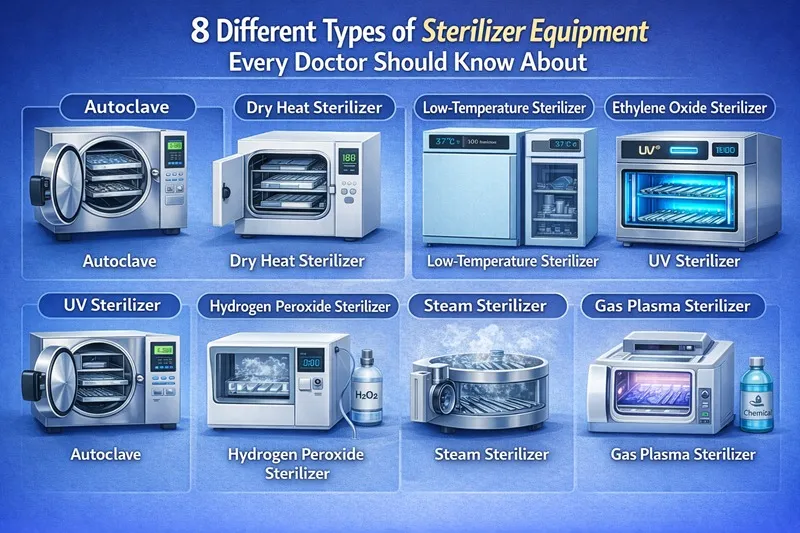
Understanding the 8 different types of sterilizer equipment
is essential knowledge for every doctor. From traditional autoclaves to
advanced low-temperature sterilizers, each system plays a crucial role in
protecting patients and healthcare workers from infections.
Sterilization is not just a technical process it is a
foundation of safe medical practice. At Aarogyaa Bharat, we are committed to
spreading clear, practical healthcare knowledge that strengthens infection
control and improves patient outcomes.