What Is an AED Machine?
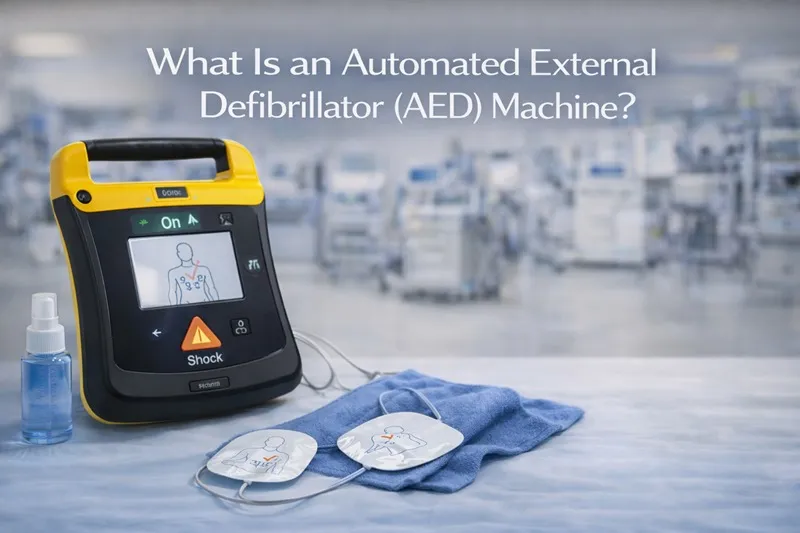
An Automated External Defibrillator (AED) is a portable
medical device used to treat people experiencing sudden cardiac arrest. It
works by:
- Analyzing
the heart’s electrical rhythm
- Identifying
life-threatening abnormal rhythms
- Delivering
an electric shock if needed
The shock helps the heart reset and return to a normal
rhythm.
What makes AEDs unique is that they are fully or
semi-automated and provide clear voice and visual instructions, allowing even
non-medical users to act confidently in emergencies.
Why AED Machines Are So Important
Sudden cardiac arrest is different from a heart attack. In
SCA:
- The
heart’s electrical system malfunctions
- The
heart quivers or stops pumping blood
- Oxygen
supply to the brain stops within seconds
Without immediate treatment:
- Brain
damage can begin within 4-6 minutes
- Death
can occur within minutes
Every minute without defibrillation reduces survival chances
by 7-10%. AEDs bring early defibrillation to the scene, long before an
ambulance can arrive.
Who Can Use an AED Machine?
One of the biggest advantages of an AED is its simplicity.
AEDs can be used by:
- Bystanders
- Office
staff
- Security
personnel
- Teachers
- Gym
trainers
- Family
members
No medical background is required. The device:
- Tells
you what to do
- Tells
you when to do it
- Will
not deliver a shock unless it is medically necessary
How Does an AED Machine Work? (Step-by-Step)
AEDs are designed to guide users calmly through every step.
Step 1: Turn On the AED
- Open
the lid or press the power button
- The
AED immediately starts voice instructions
Step 2: Attach the Electrode Pads
- Pads
are placed on the person’s bare chest
- Diagrams
on the pads show correct placement
Step 3: Analyse Heart Rhythm
- The
AED checks the heart’s electrical activity
- No
one should touch the person during analysis
Step 4: Deliver the Shock (If Advised)
- The
AED announces whether a shock is needed
- Some
models ask you to press a button
- Fully
automatic models deliver the shock themselves
Step 5: Continue CPR
- The
AED instructs you to perform CPR
- The
device rechecks the heart rhythm every few minutes
This process continues until medical professionals arrive.
Types of AED Machines
AED machines are classified based on how they deliver shocks
and where they are used.
1. Fully Automatic AED
Key Features
- Automatically
delivers a shock if needed
- No
button press required
Best For
- Public
places
- Offices
and residential areas
2. Semi-Automatic AED
Key Features
- Analyzes
rhythm automatically
- User
presses a button to deliver the shock
Best For
- Trained
responders
- Hospitals
and ambulances
3. Public Access AED (PAD)
Key Features
- Designed
for non-medical users
- Simple
instructions and visuals
Best For
- Airports
- Schools
- Gyms
- Malls
4. AED with Paediatric Mode or Pads
Key Features
- Lower
energy shock suitable for children
- Paediatric
pads or child mode
Best For
- Schools
- Paediatric
clinics
- Homes
with children
Where Are AED Machines Commonly Installed?
AEDs are increasingly placed in areas with high public
footfall, including:
- Airports
and railway stations
- Shopping
malls
- Offices
and corporate buildings
- Schools
and colleges
- Gyms
and sports complexes
- Hospitals
and clinics
- Residential
societies
Easy access saves critical time during emergencies.
Benefits of Using an AED Machine
1. Saves Lives
Early defibrillation is the most effective treatment for
sudden cardiac arrest.
2. Easy and Safe to Use
AEDs are designed to prevent mistakes and guide users step
by step.
3. Works Along with CPR
AEDs complement CPR by restoring heart rhythm while CPR
maintains blood flow.
4. Portable and Readily Available
Compact design allows AEDs to be placed wherever people
gather.
5. Reduces Fear in Emergencies
Clear voice prompts help users stay calm and focused.
6. Builds Safer Communities
Widespread AED availability improves survival rates in
public spaces.
Maintenance and Care of AED Machines
AEDs require minimal but regular checks.
Basic Maintenance Includes
- Checking
battery status
- Ensuring
electrode pads are not expired
- Keeping
the device clean and accessible
- Performing
routine self-tests
Proper maintenance ensures the AED works when it’s needed
most.
Common Myths About AED Machines
- “I
might harm the person” - AEDs deliver shock only if required
- “I
need medical training” - No training is required
- “CPR
alone is enough” - CPR helps, but defibrillation is essential
Understanding the truth saves lives.
AED vs CPR: Why Both Matter
- CPR
keeps blood flowing
- AED
restores normal heart rhythm
Together, they form the most effective emergency response
for sudden cardiac arrest.
Conclusion
An Automated External Defibrillator (AED) machine is one of
the most powerful life-saving tools available today. By making early
defibrillation possible outside hospitals, AEDs give ordinary people the power
to act in extraordinary moments.
Understanding what an AED is and how it works removes fear,
builds confidence, and prepares communities to respond effectively during
cardiac emergencies.
At Aarogyaa Bharat, we believe awareness saves lives.
Knowing how an AED works and ensuring it is accessible can turn a moment of
crisis into a moment of hope.