What Is a Hearing Aid?
A hearing aid is an electronic device that:
- Captures
sound from the environment
- Amplifies
it appropriately
- Delivers
clearer sound into the ear
Hearing aids do not “cure” hearing loss, but they
significantly improve hearing ability, speech understanding, and participation
in daily life.
They are commonly used by people with:
- Age-related
hearing loss
- Noise-induced
hearing loss
- Congenital
or hereditary hearing loss
- Hearing
loss due to illness or medication
Why Hearing Aids Are Important
Untreated hearing loss can lead to:
- Social
withdrawal
- Communication
difficulties
- Depression
and anxiety
- Reduced
workplace performance
- Cognitive
decline in older adults
Using a hearing aid early helps preserve mental, emotional,
and social well-being.
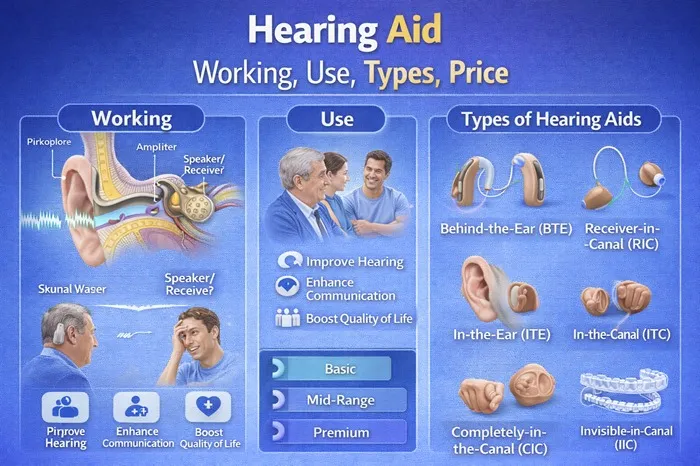
How Does a Hearing Aid Work?
Although modern hearing aids are small, they contain
powerful technology. Most digital hearing aids work through a simple yet
effective process.
Basic Working of a Hearing Aid
- Microphone
Picks up sound from the environment, including speech and background noise. - Amplifier
/ Processor
Converts sound into digital signals and amplifies them based on the user’s hearing loss pattern. - Speaker
(Receiver)
Sends the amplified sound into the ear canal. - Power
Source
Uses disposable or rechargeable batteries to run the device.
Modern hearing aids also include software that:
- Reduces
background noise
- Enhances
speech clarity
- Adapts
to different environments automatically
Uses of Hearing Aids
Hearing aids are used in various real-life situations to
improve hearing and communication.
Common Uses
- Understanding
conversations clearly
- Hearing
on phone calls and video calls
- Watching
television at comfortable volumes
- Participating
in meetings and social events
- Improving
safety by hearing alarms and traffic sounds
For many users, hearing aids restore confidence and
independence.
Types of Hearing Aids
Hearing aids are available in different styles and
technologies to suit individual needs, preferences, and budgets.
1. Behind-The-Ear (BTE) Hearing Aids
These hearing aids sit behind the ear and connect to an ear
mold or tube.
Best For
- Mild
to profound hearing loss
- Children
and adults
Advantages
- Powerful
amplification
- Durable
and easy to handle
- Suitable
for long-term use
2. Receiver-In-Canal (RIC) / Receiver-In-The-Ear (RITE)
A smaller variation of BTE with the receiver placed inside
the ear canal.
Best For
- Mild
to severe hearing loss
Advantages
- Better
sound quality
- More
discreet appearance
- Comfortable
for long daily use
3. In-The-Ear (ITE) Hearing Aids
These are custom-made to fit the outer ear.
Best For
- Mild
to moderate hearing loss
Advantages
- Easy
to insert and remove
- Larger
size allows more features
4. In-The-Canal (ITC) Hearing Aids
Smaller than ITE, placed partly in the ear canal.
Best For
- Mild
to moderate hearing loss
Advantages
- Less
visible
- Natural
sound experience
5. Completely-In-Canal (CIC) Hearing Aids
These fit deep inside the ear canal and are nearly
invisible.
Best For
- Mild
to moderate hearing loss
Advantages
- Very
discreet
- Minimal
visibility
Limitations
- Smaller
batteries
- Fewer
advanced features
6. Body-Worn Hearing Aids (Older Type)
These were the earliest portable hearing aids.
Current Use
- Rarely
used today
- Sometimes
for severe hearing loss in specific cases
Modern digital hearing aids have largely replaced them.
Advanced Features in Modern Hearing Aids
Today’s hearing aids are smarter than ever.
Common Features
- Digital
noise reduction
- Directional
microphones
- Bluetooth
connectivity
- Smartphone
app control
- Rechargeable
batteries
- Feedback
(whistling) control
These features make hearing aids more comfortable and
user-friendly.
Hearing Aid Price Range
The price of a hearing aid depends on:
- Type
and style
- Technology
level
- Features
included
- Brand
and warranty
- After-sales
support
Approximate Hearing Aid Prices (India)
- Basic
hearing aids: ₹10,000 - ₹25,000 (per ear)
- Mid-range
hearing aids: ₹25,000 - ₹60,000 (per ear)
- Advanced
digital hearing aids: ₹60,000 - ₹1,50,000+ (per ear)
Prices may vary based on features, fitting services, and
service plans.
Factors to Consider Before Buying a Hearing Aid
- Degree
and type of hearing loss
- Lifestyle
and daily activities
- Comfort
and appearance preference
- Budget
- Availability
of service and support
A professional hearing test is essential before choosing a
hearing aid.
Getting Used to a Hearing Aid
It’s normal for new users to take time to adjust.
What to Expect
- Sounds
may feel loud initially
- Brain
needs time to adapt
- Gradual
improvement over weeks
With consistent use and proper fitting, most users
experience significant benefits.
Maintenance and Care of Hearing Aids
- Clean
regularly
- Keep
away from moisture
- Store
safely when not in use
- Replace
or recharge batteries on time
- Schedule
periodic check-ups
Proper care extends device life and performance.
Conclusion
A hearing aid is not just a medical device it is a
tool that reconnects people to conversations, relationships, and everyday joys.
Understanding how hearing aids work, their types, uses, and price range helps
remove fear and confusion from the decision-making process.
With the right hearing aid and proper guidance, hearing loss
does not have to limit life.
At Aarogyaa Bharat, we are committed to providing clear,
trustworthy, and human-cantered health information so every individual can
hear, connect, and live better.